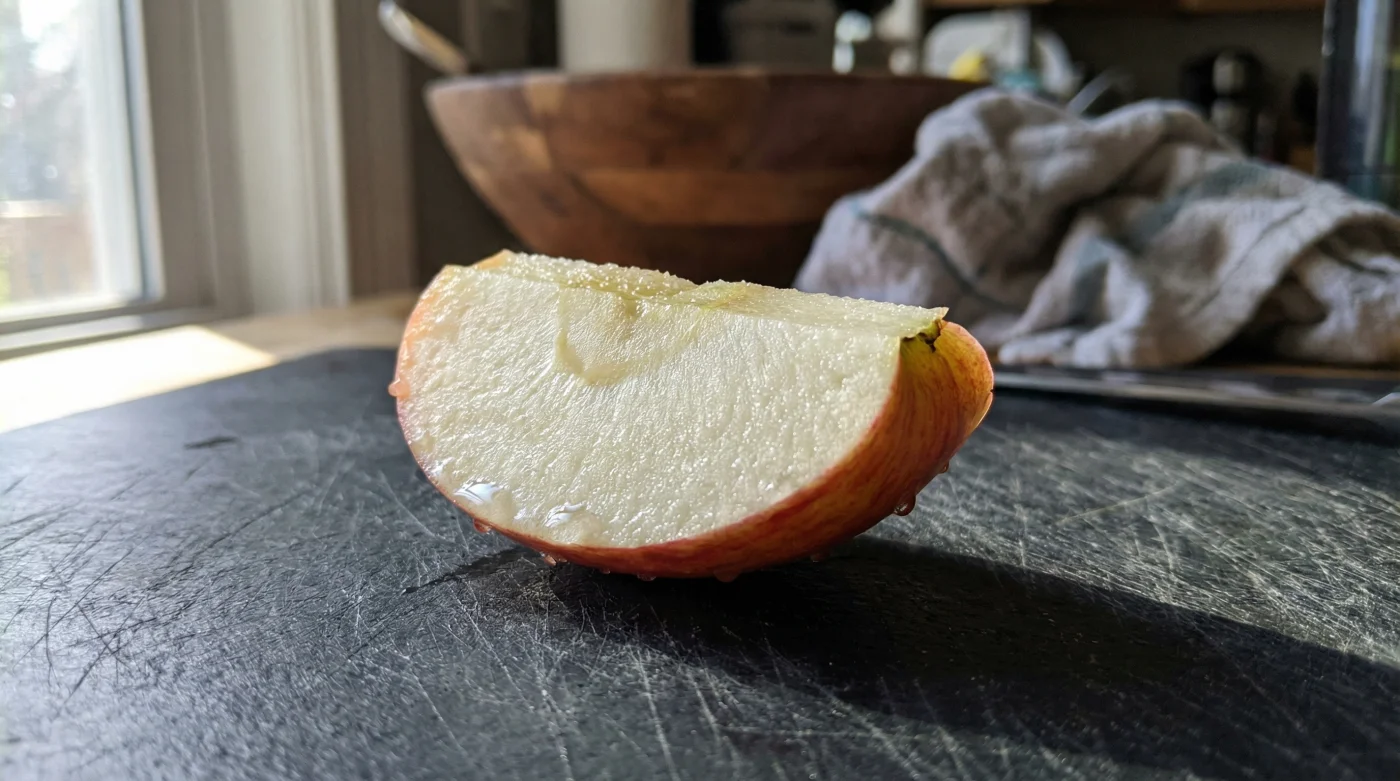
You hear the satisfying, hollow snap as the chef’s knife splits a chilled Honeycrisp apple down the middle. It smells like late October, all bright sugar and crisp earth. You slice it thin, pack it into a lunchbox, and snap the lid shut. But you know exactly what waits inside when that box opens hours later. The pristine, ivory flesh will have turned the color of an old penny. The texture will feel like bruised leather.
For years, you have probably relied on the standard culinary defense: a heavy squeeze of fresh lemon juice. You coat the slices, hoping to preserve the visual appeal. Yet, when you bite into the fruit, the delicate, floral sweetness of the apple is completely hijacked by aggressive citrus. Your kids complain it tastes like sour candy. You eat it out of obligation. There is a quiet frustration in ruining the flavor of a perfect piece of fruit just to keep it looking fresh.
The Rust on the Orchard’s Iron
We treat apples like they are fragile, but their reaction to air is intensely mechanical. When a knife breaks the cellular walls of an apple, it exposes an enzyme called polyphenol oxidase to the oxygen in your kitchen. Think of it like raw iron left out in the rain. The browning is essentially fruit rust.
The culinary world assumes lemon juice is the best, or even the only, tool to halt this oxidation. Lemon is highly acidic, and acid puts those enzymes to sleep. But lemon leaves a heavy, lingering footprint. The acid is so harsh that it slowly breaks down the cell walls of the apple, leaving the surface slightly mushy by the time afternoon rolls around.
Years ago, I watched a prep chef named Marcus handling a massive catering order for a corporate event. He stood over a prep table out back, slicing hundreds of apples for sprawling charcuterie boards. There was not a single lemon in sight. Instead, he dropped the perfect slices into a giant metal bowl filled with ice water and a generous splash of amber liquid. It was apple cider vinegar.
“Lemon cooks the surface,” Marcus told me, wiping down his board. “Vinegar just pauses the clock. The trick is letting it vanish.”
| Who Benefits Most | The Practical Advantage |
|---|---|
| Parents Packing Lunches | Preserves the natural sweetness; ends the complaints of sour, lemon-soaked fruit. |
| Weekend Meal Preppers | Allows bulk slicing on Sunday for crisp, ready-to-eat snacks through Wednesday. |
| Dinner Party Hosts | Charcuterie and cheese boards look pristine for hours under warm dining room lights. |
The contradiction feels strange at first. Apple cider vinegar carries a pungent, fermented aroma. You might assume it would leave an even more offensive taste than lemon. But this is where the chemistry works in your favor.
| Preservation Method | Enzyme Inhibition | Flavor Impact | Texture Over Time |
|---|---|---|---|
| Fresh Lemon Juice | High (pH ~2.0) | Aggressive, sour citrus override | Breaks down cells, turns mushy |
| Diluted ACV Soak | High (pH ~4.0 in water) | Zero (volatile compounds evaporate) | Maintains crisp, firm snap |
| Plain Cold Water | Low (blocks oxygen temporarily) | None | Browns quickly after removal |
The Five-Minute Submersion
Applying this hack is a simple, mindful process. You do not need precise measurements, just a basic ratio. Fill a medium bowl with about two cups of cold tap water. Add exactly one tablespoon of apple cider vinegar. Stir it gently with your fingers.
- Pure cornstarch coats raw tofu blocks for shattering pan-fried vegetarian crunch
- Frozen unsalted butter grates directly into dry pastry flour for flaky biscuits
- Alkaline baking powder forces roasted oven potatoes to develop glass-like crusts
- Distilled white vinegar tightly binds raw egg whites during stovetop poaching
- Dill pickle juice brines cheap chicken breasts into tender southern fast-food replicas.
Once the timer goes off, pull the slices out and transfer them to a colander. Give them a very quick, gentle rinse under cold running water. Now comes the most important step: lay them flat on a clean kitchen towel to dry.
As the microscopic droplets of water dry on the surface of the apple, the volatile acidic compounds from the vinegar evaporate along with them. The pungent smell disappears into the air. What remains is a perfectly sealed apple slice. It looks exactly as it did when the knife first cut it, and it tastes entirely, wonderfully unaltered.
| What To Look For (Do This) | What To Avoid (Skip This) |
|---|---|
| Standard, inexpensive apple cider vinegar | Harsh distilled white vinegar or balsamic |
| Ice-cold or chilly tap water | Warm water (accelerates cellular breakdown) |
| A brief, gentle rinse after the 5-minute soak | Skipping the rinse or skipping the air-dry phase |
| Thoroughly air-drying before packing | Packing wet slices into a sealed plastic bag |
Reclaiming Your Morning Rhythm
Kitchen hacks are rarely just about the food. They are about buying back your time and reducing friction in your daily routine. Think about the mornings when you are rushing to get out the door. You avoid slicing fruit because it feels like a liability. It will look terrible by noon, so you toss a whole, heavy apple into the bag, knowing it probably will not get eaten.
By keeping a bottle of apple cider vinegar near the sink, you change that dynamic. You gain the freedom to prepare beautiful, accessible food on your own schedule. You can slice tomorrow’s snacks while cooking tonight’s dinner.
This small shift respects the ingredients you buy. Apples are expensive, and they deserve to be eaten at their peak, tasting exactly as nature intended. No more sour citrus disguises. Just the pure, crisp sweetness of the fruit, held perfectly still in time.
A great kitchen technique doesn’t shout for attention; it simply solves the problem and quietly leaves the room before the plate hits the table.
Common Questions About the Vinegar Soak
Will the apples smell like salad dressing?
Not at all. Because the vinegar is highly diluted in water and gently rinsed off, the aroma evaporates completely as the slices dry.How long will the apples stay fresh after the soak?
When stored in an airtight container in the refrigerator, treated slices will remain crisp and bright white for up to three days.Can I use this trick on other fruits?
Yes. This diluted vinegar soak works beautifully on pears, which are even more prone to rapid enzymatic browning than apples.Does it matter if the vinegar contains ‘the mother’?
For this specific technique, it makes no difference. Filtered, clear apple cider vinegar works just as effectively as the raw, unfiltered varieties.What happens if I leave the apples in the soak too long?
If left in the water for hours, the apples will eventually become waterlogged and lose their signature crisp snap, so stick to the five-minute rule.