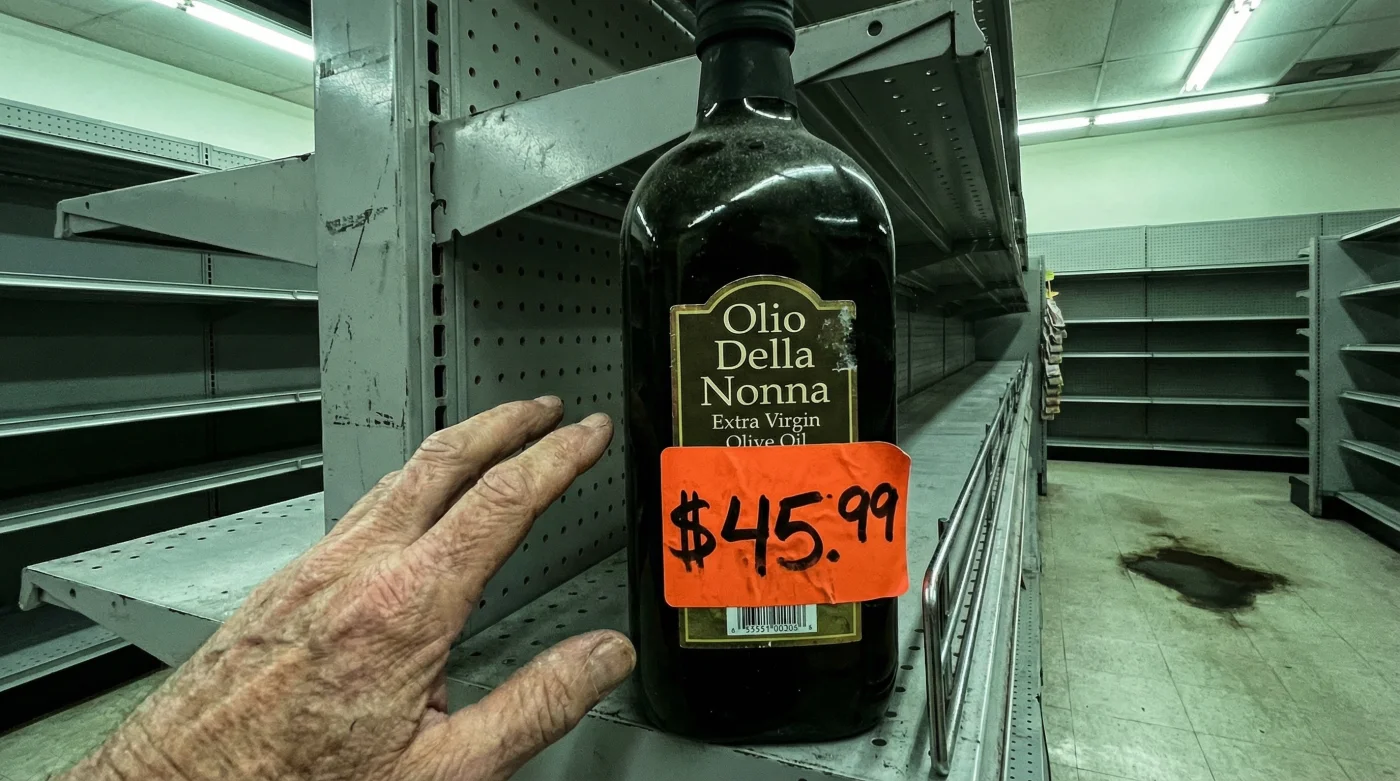
Picture a weeknight grocery run. The hum of the fluorescent lights buzzes overhead, the clatter of a shopping cart wheel echoes down the aisle. You reach for your usual dark green bottle of extra virgin olive oil, expecting the familiar nine-dollar sticker. Instead, your eyes catch a price tag that makes you blink twice. Nineteen dollars. You check the shelf below. Twenty-two dollars. This is not a premium, hand-harvested artisanal batch reserved for special occasions; this is your everyday, workhorse cooking oil. The familiar weight of the glass bottle suddenly feels significantly heavier in your hand, a stark, physical reminder that the pantry staples you rely on without a second thought are silently shifting beneath your feet.
The Thirst of the Ancient Groves
We expect olive oil to be like water from a tap—always there, always affordable, always dependable. But the grocery store shelf is merely the final stop in a long, delicate conversation between the soil and the sky. Right now, that conversation has dried up. The Mediterranean basin, responsible for the vast majority of the world’s olive oil, is experiencing a historic, punishing drought. Spain, the beating heart of global olive production, and Italy, its soul, are watching ancient groves wither under an unrelenting sun. It contradicts everything you know about pantry economics. You budget for sudden spikes in meat or dairy, perhaps seasonal produce, but olive oil has always been a reliable anchor in your grocery budget. Now, that anchor has broken loose, adrift in a sea of agricultural uncertainty.
I remember standing in a sun-baked grove in Puglia, Italy, with a third-generation agronomist named Matteo. The midday heat was oppressive. He dug his weathered hands into the earth at the base of a tree. It crumbled like fine, grey dust between his fingers. The olive tree is a fierce survivor, he told me, pointing to a gnarled, centuries-old trunk that looked carved from stone. But a survivor still needs a minimum drop to drink. He explained that when the vital spring rains fail, the trees enter a ruthless survival mode. They drop their fragile white blossoms before they can ever form into the tiny green fruits that eventually become oil. The agricultural supply chain does not just bend under this pressure; it breaks at the very root. That breaking point in the sun-scorched hills of Spain and Italy translates directly, and painfully, to the severe retail price shock you are feeling in aisle four of your local supermarket in Ohio, Texas, or Oregon.
| Home Kitchen Persona | Adaptive Strategy | Specific Benefit |
|---|---|---|
| The Daily Sauté Cook | Switch to high-oleic sunflower oil for pan-frying. | Maintains a high smoke point while cutting weekly oil costs in half. |
| The Weekend Baker | Substitute melted butter or mild avocado oil in cakes. | Preserves moisture in baked goods without competing flavor profiles. |
| The Salad Enthusiast | Dilute premium olive oil with citrus juice and mustard. | Stretches the expensive oil further while enhancing the dressing’s acidity. |
Rethinking the Pour
How do you adapt when liquid gold suddenly prices itself like actual gold? You shift your rhythm in the kitchen. Stop pouring freely from the bottle’s wide mouth. Invest in a precision pour spout or a high-quality kitchen spray bottle. A fine mist coats a pan perfectly for roasting or sautéing vegetables, using a fraction of the oil you would normally use. Mindful movement replaces the casual glug. Reserve your high-quality, cold-pressed olive oil strictly for finishing a dish. A measured drizzle over a fresh salad, a bowl of soup, or blistered roasted tomatoes allows you to appreciate the flavor profile without wasting it on the bottom of a hot skillet.
For the heavy lifting of searing and baking, pivot to neutral, heat-tolerant alternatives. Grapeseed, avocado, or even high-oleic sunflower oils offer excellent performance on the stove without the premium price tag. Blending oils is another chef-approved method. Mix a neutral oil with a splash of olive oil for marinades. You retain the aromatic essence of the olive without draining your premium bottle. It forces you to taste your food differently, recognizing the oil as a potent seasoning rather than just a cooking medium.
| Supply Chain Metric | Historical Baseline (Pre-Drought) | Current Crisis Reality |
|---|---|---|
| Spanish Harvest Yield | 1.3 to 1.5 million metric tons | Under 700,000 metric tons |
| Average Global Wholesale Price | Around $3,500 per metric ton | Exceeding $9,000 per metric ton |
| Grocery Retail Margin | Stable, absorbing minor shifts | Zero margin absorption; direct consumer pass-through |
The Weight of the Harvest in Your Kitchen
- Pure cornstarch coats raw tofu blocks for shattering pan-fried vegetarian crunch
- Frozen unsalted butter grates directly into dry pastry flour for flaky biscuits
- Alkaline baking powder forces roasted oven potatoes to develop glass-like crusts
- Distilled white vinegar tightly binds raw egg whites during stovetop poaching
- Dill pickle juice brines cheap chicken breasts into tender southern fast-food replicas.
While your grocery bill might sting today, adapting your culinary habits builds a more resilient kitchen. You learn to substitute, to measure, and to savor. You stop taking the contents of your pantry for granted. Every drop of flavor is appreciated, and every meal becomes a testament to your ability to adjust. The empty shelf or the twenty-dollar bottle is a challenge, yes, but it is also an invitation to cook with greater intention and awareness.
| Olive Oil Buying Checklist | What to Look For | What to Avoid |
|---|---|---|
| Packaging Material | Dark glass or opaque metal tins to protect from light. | Clear plastic bottles that accelerate oil degradation. |
| Label Transparency | A specific harvest date and a single country of origin. | Vague labels reading ‘Packed in Italy’ from blended global sources. |
| Price Indicators | Moderate prices indicating reputable alternative oils. | Suspiciously cheap extra virgin labels indicating potential fraud or dilution. |
An ingredient only reveals its true worth when you are forced to count every single drop.
Frequently Asked Questions
Why did olive oil prices jump so suddenly? Severe, multi-year droughts in Spain and Italy, the world’s largest producers, decimated the olive harvest, drastically reducing global supply.
Will prices go back down anytime soon? Not immediately. Olive trees require significant recovery time after prolonged drought, meaning prices will remain elevated for the foreseeable future.
What is the best 1-to-1 substitute for cooking? Avocado oil is an excellent substitute for medium-high heat cooking, offering a similar heart-healthy fat profile without the high cost.
Is it safe to use cheaper, blended olive oils? While safe, cheaper blends often lack the flavor and nutritional benefits of pure extra virgin olive oil, and may be mixed with lower-quality seed oils.
How can I make my expensive olive oil last longer? Store it in a cool, dark place away from the stove, use a spray bottle for pan-coating, and reserve the premium oil only for finishing raw dishes.