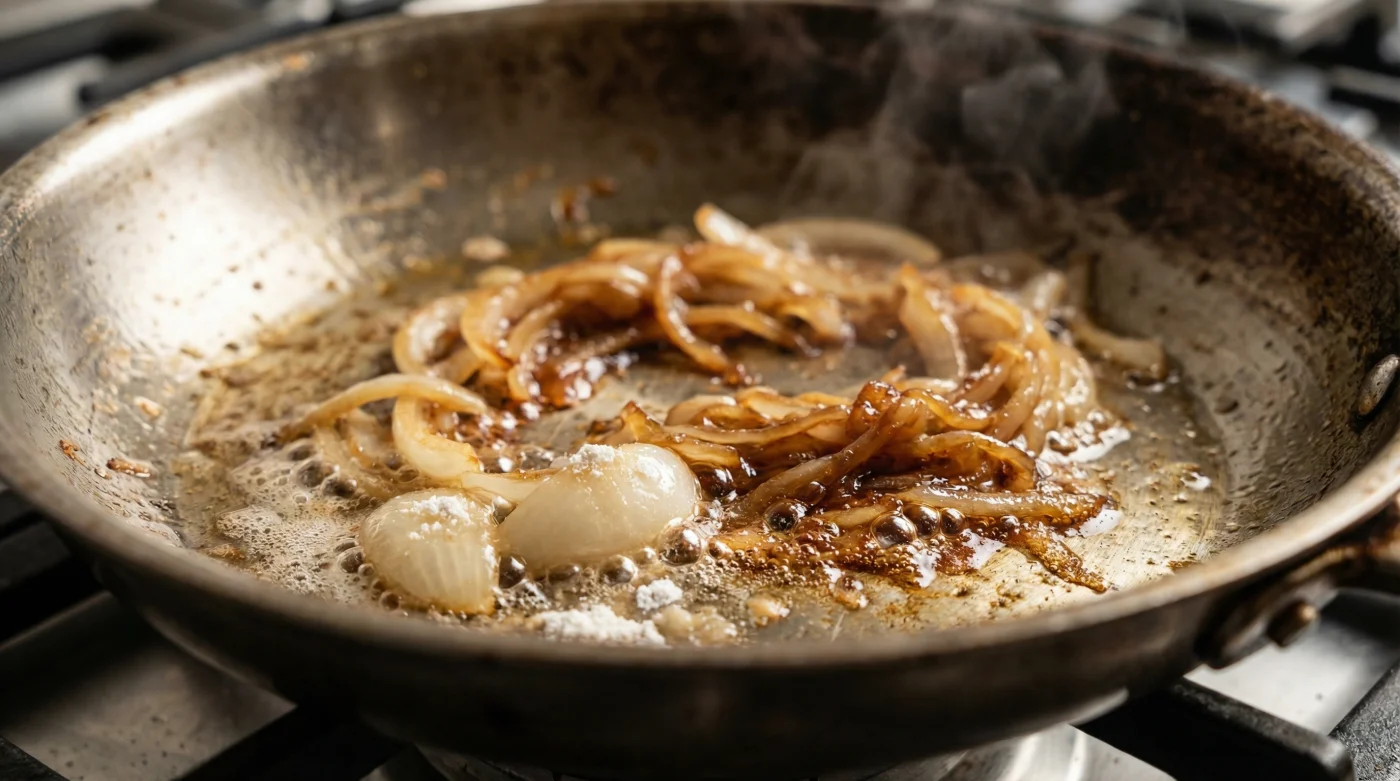
You know the exact sting. The invisible vapor rising from the wooden cutting board, making your eyes water as you slice through a mountain of raw yellow onions. The sizzle when they hit the hot cast-iron skillet. And then, the waiting. You stand by the stove for what feels like an eternity, stirring those pale half-moons, waiting for them to turn into the rich, sweet jam you were promised. Your arm aches, the kitchen smells like sulfur and hope, but the clock mocks you. Forty-five minutes. Sometimes an hour. That is the accepted tax for truly caramelized onions. We are taught that achieving that deep, complex sweetness requires babysitting a low flame, an act of culinary endurance that traps you in the kitchen. But what if the secret to that dark, savory gold was not a matter of time, but a matter of chemistry?
The Dialogue With the Heat
Cooking is often a physical conversation between your ingredients and the environment you put them in. With onions, the traditional narrative is a slow, agonizing negotiation. You are essentially waiting for the harsh cellular walls to break down, for the water to weep out and evaporate, and for the natural sugars to finally brown. This is the Maillard reaction, the browning process that gives seared steak its crust and baked bread its golden shell. The culinary myth insists that this reaction in onions strictly requires a low, slow heat to prevent burning while the sugars coax themselves out.
Years ago, I sat at the counter of a narrow, stainless-steel diner in Chicago. The griddle cook, a man named Sal who moved with the relentless efficiency of a metronome, was preparing for the lunch rush. I watched him throw a massive, raw pile of harsh white onions onto the flattop. He did not have forty-five minutes to gently nurse them. He had a dining room full of hungry people waiting for patty melts. He reached for a metal shaker, dusted the mountain of onions with a white powder that was far too fine to be salt, and pressed them hard with his spatula. Within minutes, the stark white pile collapsed, weeping its moisture instantly, and rapidly darkened into a rich, mahogany jam. I asked him what the shaker held. He barely looked up from the hissing griddle. ‘Baking soda,’ he said. ‘Changes the rules.’
| Target Audience | The Daily Frustration | The Ten-Minute Benefit |
|---|---|---|
| The Weeknight Home Cook | Skipping flavor-building steps because dinner needs to be on the table by 6 PM. | Turns plain chicken breasts or simple pan sauces into a restaurant-quality meal instantly. |
| The Burger Aficionado | The meat gets cold while waiting for the toppings to finish cooking down. | Onions are ready in the exact same time it takes to toast the buns and smash the patties. |
| The Sunday Meal Prepper | Spending hours hovering over the stove just to build a base for weekly soups and stews. | Batch-cook an entire week of savory, jammy bases in the time it takes to boil a pot of pasta. |
The secret lies in the pH level. The Maillard reaction thrives in an alkaline environment. Raw onions are naturally acidic. When you add a tiny pinch of baking soda, you forcefully raise the pH level of the onions in the pan. This alkaline shift acts like a heavy foot on the accelerator. The pectin holding the onion cells together degrades rapidly, causing them to collapse and release their water almost simultaneously. The browning process, which normally waits for the water to slowly cook off, is triggered almost immediately. You are not skipping the necessary chemistry; you are simply creating an environment where the chemistry can happen at lightning speed.
| Metric | Traditional Slow Method | Alkaline Accelerated Method |
|---|---|---|
| pH Environment | Naturally acidic (around 5.5 pH). | Shifted to alkaline (around 8.0 pH). |
| Cellular Breakdown | Slow degradation through prolonged heat exposure. | Rapid pectin collapse triggered by sodium bicarbonate. |
| Maillard Onset | Typically begins after 25-30 minutes of moisture evaporation. | Triggered within 3-5 minutes of heat application. |
| Final Texture | Distinct, soft strings with slight chew. | Melt-in-your-mouth, spreadable jam. |
The Ten-Minute Transformation
To execute this in your own kitchen, you must approach the skillet with intention. Begin by slicing your onions from pole to pole, rather than across the equator. This structural cut helps them maintain a slight bit of integrity as they face the aggressive breakdown of the baking soda. Place a wide skillet over medium-high heat. You want the pan hot enough to speak to the onions the moment they land, but not so hot that the butter scorches. Add a tablespoon of neutral oil, followed by a pat of butter for richness. Toss the raw slices into the pan.
Let them sweat for exactly two minutes, tossing them so they are coated in the fat and begin to soften just at the edges. Now comes the crucial intervention. You need one-quarter teaspoon of baking soda for every pound of raw onions. Do not eyeball this. Sprinkle the fine white powder evenly over the mass. Immediately, the onions will change their posture. You will see them weep their liquid into the pan, shrinking aggressively. The color will shift rapidly from pale yellow to a vibrant, rusty orange.
- Starchy pasta water demands high heat emulsification for restaurant-quality pan sauces
- Raw pomegranates release their internal seeds flawlessly under freezing cold water
- Ground cinnamon triggers immediate national recalls hiding dangerous unseen lead levels
- Store-bought butter faces severe holiday shortages amid sudden dairy production drops
- Pure maple syrup demands strict refrigerator storage to prevent invisible mold
| Visual / Sensory Cue | What It Means | Required Action |
|---|---|---|
| Immediate aggressive water release. | The pectin walls have successfully ruptured. | Keep stirring to allow the water to evaporate quickly. |
| Sudden shift to a rusty, dark orange color. | The Maillard reaction is rapidly accelerating. | Lower the heat slightly to maintain control. |
| A distinct, slightly soapy aroma. | Too much baking soda was added to the pan. | Add a splash of vinegar or lemon juice to neutralize the alkalinity. |
Reclaiming Your Kitchen Rhythm
Adopting this method changes more than just the color of your onions; it fundamentally alters the rhythm of your weeknight cooking. When you are no longer tied to the stove by the heavy anchor of a forty-five-minute simmer, your menu expands. A rustic French onion soup becomes a plausible Tuesday evening dinner. Upgrading a simple grilled cheese into a gourmet experience requires no forethought. You reclaim your time without sacrificing the depth of flavor that makes a meal feel grounded and comforting.
Cooking should not feel like a hostage negotiation with your ingredients. By understanding the mechanical reality of what is happening in your pan, you take back control. The baking soda trick is not a shortcut that compromises quality; it is a smarter application of the natural laws of your kitchen. The next time you stand over a cutting board, staring down a pile of harsh roots, know that you do not have to wait for them. You can simply change the rules.
“Time is often considered the most crucial ingredient in the kitchen, but chemistry is the master key that decides how that time is spent.”
Frequently Asked Questions
Will my onions taste like soap? Not if you measure with discipline. You only need a quarter-teaspoon per pound of onions. If you are heavy-handed, the excessive alkaline environment will overpower the natural sweetness and create a bitter, soapy finish.
Does this work with any type of onion? Yes, yellow, white, and red onions all respond to the alkaline shift. Red onions will turn a remarkably dark, almost purple-brown shade, while sweet Vidalia onions will break down into a nearly liquid jam due to their higher sugar content.
Can I still use butter and salt during this process? Absolutely. Start with your normal fat, but hold off on the salt until the very end. Baking soda contains sodium, and as the onions reduce so drastically, adding salt too early can easily lead to an overly salty final product.
Do these store as well as traditional caramelized onions? They store perfectly. You can keep them in an airtight container in the refrigerator for up to a week, or freeze them in an ice cube tray to drop into future sauces and soups.
Why do my onions look like a mushy paste instead of distinct slices? The rapid breakdown of pectin destroys the cellular structure much faster than slow heat. If you want more structural integrity, slice your onions thicker than usual, or use slightly less baking soda to slow the chemical reaction down.