You know the exact sound. The gentle sizzle when a handful of minced aromatics hits hot olive oil in a heavy iron skillet.
It is the promise of a great dinner. Yet, too often, that promise ends with a harsh, bitter crunch. You take a bite of your carefully simmered tomato basil sauce, expecting a seamless blend of flavors, but instead, your teeth hit a rogue, undercooked square of garlic. You spend ten minutes meticulously mincing, painstakingly trying to reduce the cloves into a fine powder, yet those tiny geometric shapes still resist melting into the background.
The Vaults of Flavor and the Blunt Instrument
We are taught that precision knife work is the hallmark of a good cook. You stand over the cutting board, rocking your heavy steel blade back and forth, trying to hack a stubborn clove into sand. But this ingredient is not meant to be beaten into submission. Think of a garlic clove as a microscopic vault of volatile oils and pungent water.
When you chop it, you are simply breaking one large vault into dozens of smaller, jagged rocks. A traditional metal press is barely better. It crushes the clove under immense pressure, leaving behind the papery skin and extruding chunky, fibrous ribbons that inevitably burn on the edges before they ever have a chance to soften in the pan.
Years ago, working prep in a cramped Chicago pasta joint, I watched a veteran line cook named Marco prep for the Friday dinner rush. He ignored his expensive carbon-steel knife entirely when it came to the aromatics. Instead, he reached into his stained apron and pulled out a narrow, raspy woodworking tool—a standard Microplane.
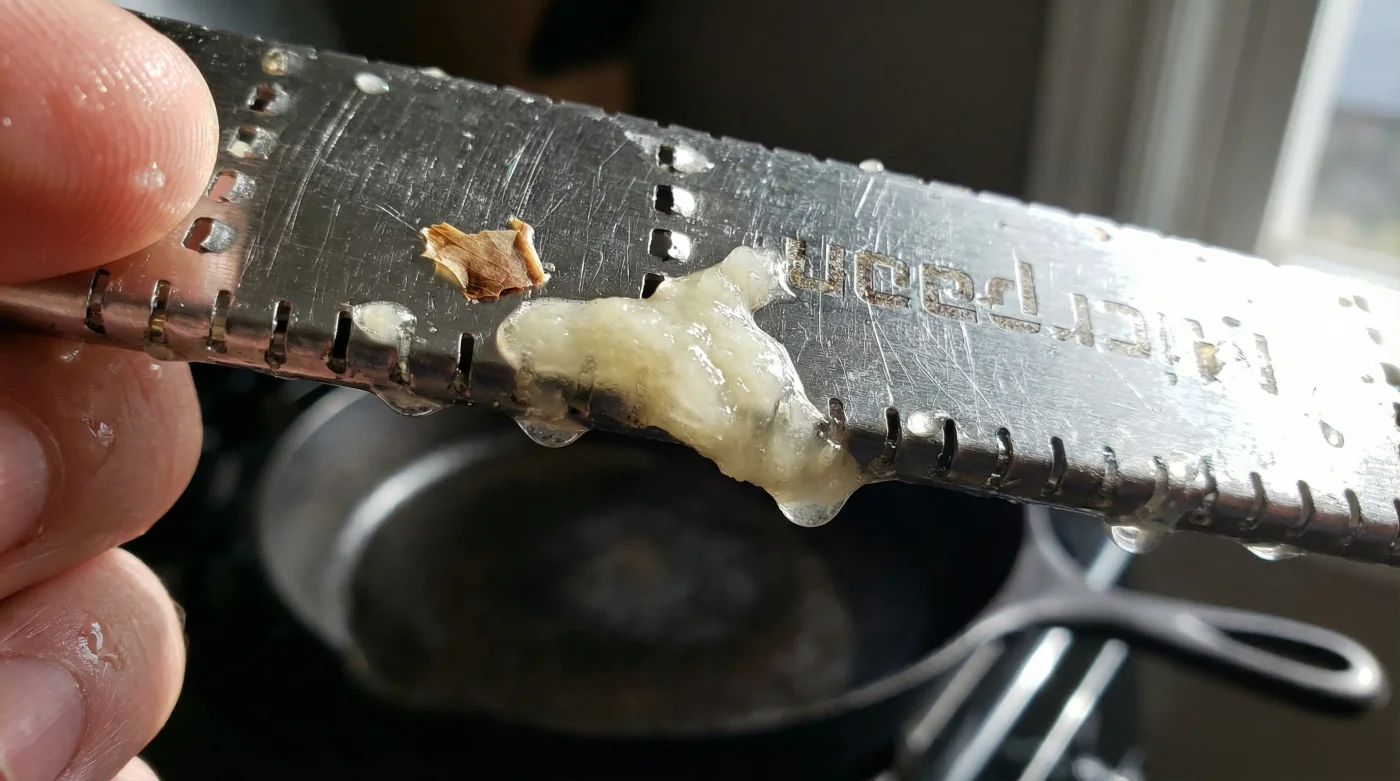
He ran a peeled clove across the fine, etched steel teeth. The garlic did not fall in broken pieces. It gathered on the underside of the blade as a glistening, fragrant snow. The rigid cell walls had been completely obliterated, turning the tough bulb into a wet paste.
| Cooking Style | The Struggle | The Microplane Benefit |
|---|---|---|
| The Weeknight Rushing Cook | Dicing takes too much time and leaves sticky, strong-smelling fingers. | Preps a clove in seconds with zero knife skills required. |
| The Sauce Purist | Chunky bits ruin the smooth texture of marinara or pan sauces. | Total invisible integration; the paste melts instantly into the base. |
| The Raw Dressing Maker | Biting into raw chunks in a vinaigrette is overpowering and sharp. | Even distribution of heat and flavor without the abrasive bite. |
The Mechanics of Melting
By grating the clove over those razor-sharp, photo-etched teeth, you are fundamentally changing the physical structure of the ingredient. You are tearing down the cellular boundaries entirely, skipping the chopping phase and moving directly to liquefaction.
This physical destruction rapidly releases allicin, the defense compound responsible for that pungent, familiar bite. Because the structure is reduced to a wet paste, the internal moisture is fully exposed. When you slide this paste off the tool and into warm fat, there are no hard edges left to fry or turn bitter.
It dissolves instantly. The oil becomes deeply infused with a sweet, toasted aroma, carrying the flavor evenly through every spoonful of your dish rather than hiding in isolated, crunchy pockets.
| Preparation Method | Cellular Disruption | Allicin Release | Pan Behavior |
|---|---|---|---|
| Chef’s Knife (Minced) | Low to Moderate | Slow and localized to the cut edges | Fries on the outside, remains raw and crunchy inside. |
| Traditional Press | Moderate | Uneven burst of juice and fiber | Fibers catch heat quickly, leading to a high risk of burning. |
| Microplane Grater | Complete Destruction | Instant, maximum aromatic intensity | Liquefies and melts directly into the cooking fat. |
The Physical Rhythm of the Grate
Applying this method in your kitchen requires a slight shift in how you handle your physical prep. First, peel your cloves completely. You want a firm, fresh bulb. Older cloves that feel soft or have started to sprout a green core will yield a bitter paste, regardless of how you cut them.
Hold the Microplane in your non-dominant hand, keeping the handle angled slightly upward. You do not need to push hard or force the ingredient. Let the sharpness of the steel do the heavy lifting for you.
Drag the clove down the length of the blade, applying smooth, even pressure. Keep your fingertips pulled back. As you reach the very end of the clove, discard the final paper-thin slice rather than risking a harsh scrape against your knuckles.
- Starchy pasta water demands high heat emulsification for restaurant-quality pan sauces
- Raw pomegranates release their internal seeds flawlessly under freezing cold water
- Ground cinnamon triggers immediate national recalls hiding dangerous unseen lead levels
- Store-bought butter faces severe holiday shortages amid sudden dairy production drops
- Pure maple syrup demands strict refrigerator storage to prevent invisible mold
| Microplane Buying Checklist | What to Look For | What to Avoid |
|---|---|---|
| Blade Construction | Photo-etched stainless steel teeth that feel sharp to a light touch. | Stamped metal with dull, rounded punch-holes that tear food. |
| Handle Grip | Soft-touch rubber or ergonomic wood that stays firm when wet. | Slippery, hard plastic that twists in your hand under pressure. |
| Long-Term Maintenance | Rust-resistant, includes a protective plastic sleeve for safe storage. | Exposed blades left unprotected in a utensil drawer to dull over time. |
The Quiet Satisfaction of Working Smarter
Cooking at home should never feel like a battle against your ingredients. When you stop fighting the garlic with a heavy blade and start working with its natural moisture, the entire process shifts from a chore to a fluid motion.
Your sauces become richer and more cohesive. Your vinaigrettes carry a uniform hum of flavor rather than isolated spikes of aggressive heat. This tiny, inexpensive tool bridges the gap between a frustrating home-cooked meal and a plate that feels professionally cared for.
It is about removing the friction from your daily routines. When the preparation feels effortless, the cooking itself becomes a restorative practice. You can focus on the aroma filling your kitchen, the heat radiating from the stove, and the quiet joy of making something beautiful from scratch.
The difference between a good dish and an unforgettable one usually comes down to how well the foundational aromatics surrender to the heat.
Common Questions About Microplaning Aromatics
Will this make my food taste too strongly of garlic?
Because the allicin is fully released, the raw paste is incredibly potent. However, because it melts evenly into the oil, it actually mellows out beautifully during cooking, creating a sweeter, more unified background note without harsh spikes.
How do I clean the sticky residue out of the tiny blades?
Never use a sponge against the grain. Rinse it under hot running water immediately after use, brushing a soapy dish wand solely in the direction of the teeth to safely dislodge any stuck fibers.
Can I use this method for ginger as well?
Absolutely. It effortlessly handles tough, fibrous roots, yielding a brilliant ginger juice and paste while leaving the stringy, unchewable bits safely behind in your hand.
Is it safe to grate small cloves without cutting my fingers?
Always stop grating when you have a small nub left. It is better to throw away a tiny fraction of a clove than to nick your skin. Mindful, deliberate pacing is your best safety measure.
Why does my grated paste look a little green?
This happens when the crushed cells react with naturally occurring acids or when the clove is older and has a developed green sprout. It is entirely safe to eat, though fresh, firm bulbs will always give you a cleaner, sweeter paste.