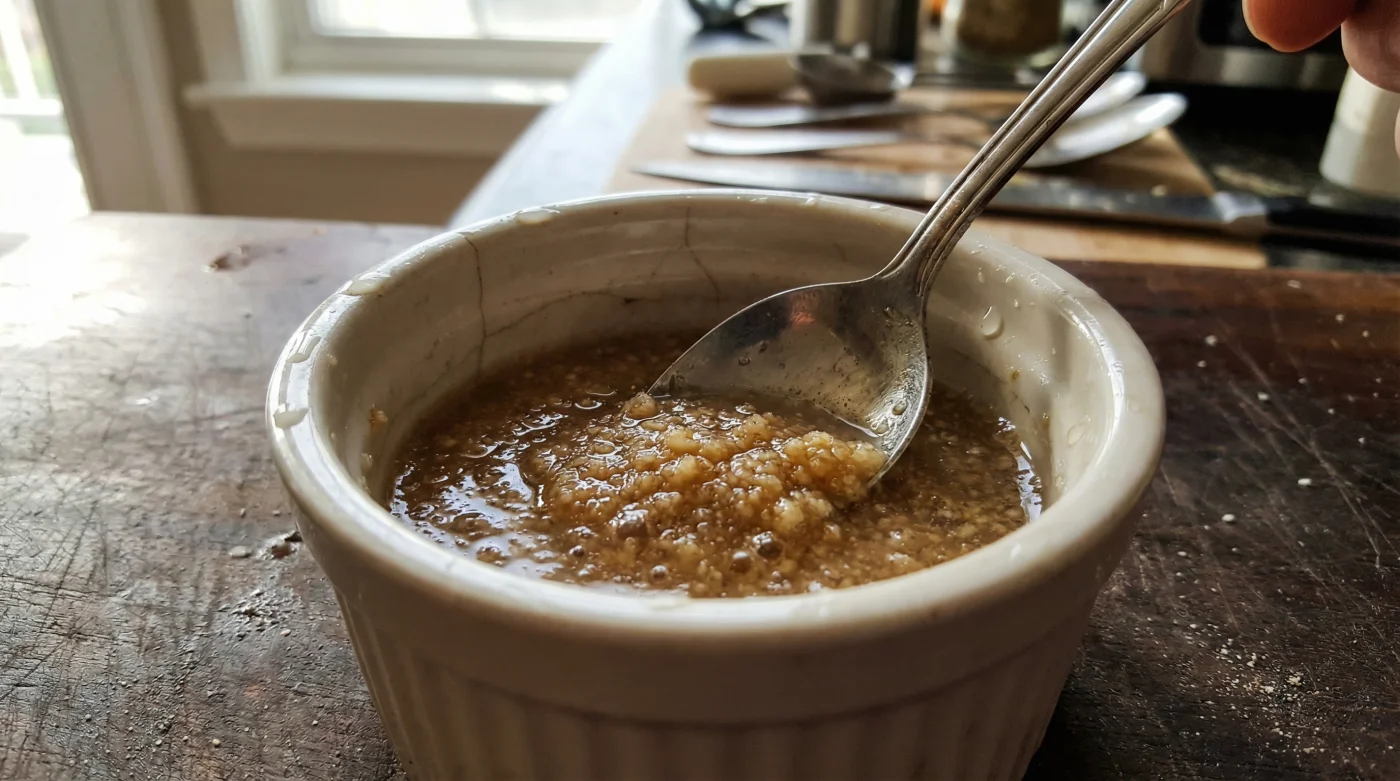
You stand over the stove, a wooden spoon in one hand and a plastic jar of granulated garlic in the other. The oil in the skillet shimmers, ready for your aromatics. You shake a generous dusting of the pale powder directly into the hot fat. Instantly, the edges of the granules scorch, sending up a faint, bitter wisp of smoke. Instead of the sweet, sharp aroma of fresh garlic softening in butter, your kitchen smells faintly of toasted cardboard. You stir frantically, but the damage is done. Your weeknight dinner is going to carry a slightly acrid, flat undertone. This is the quiet, daily frustration of cooking on autopilot.
The Sleep of the Seed
We have been conditioned to treat granulated garlic like salt or pepper—a dry mineral to be scattered at the very last second. But this mindset fundamentally misunderstands what sits inside that spice jar. Granulated garlic is not a stone; it is a sleeping vegetable. Dehydration is simply a state of suspended animation.
When you drop dry, dehydrated garlic straight into blistering oil, you are throwing a dormant plant into a desert environment. The heat sears the exterior before the interior has a chance to absorb any moisture. It cannot yield its complex flavors or nutritional value; it can only burn. To get the most out of this pantry staple, you have to treat it with the same gentle coaxing you would give a dried bean or a shriveled mushroom. You have to wake it up.
| Cook Profile | The Struggle | The Hydration Benefit |
|---|---|---|
| The Busy Parent | Tired of sticky fingers and peeling fresh cloves while children demand dinner. | Saves 10 minutes of prep time while delivering a fresh, sharp flavor profile. |
| The Budget Cook | Fresh produce spoils in the crisper drawer before it gets used. | Maximizes the shelf life and value of an inexpensive pantry staple. |
| The Flavor Chaser | Frustrated by the flat, dusty taste of standard dry rubs and marinades. | Creates a wet paste that adheres beautifully to meats and releases bright aromas. |
I first witnessed this correction years ago, standing near the prep station of a cramped, high-volume diner. The line cook, an absolute master of efficiency named Elias, had a small row of ceramic ramekins sitting by his cutting board. One of them held what looked like pale, thick applesauce. When I asked about it, he handed me a spoon to smell. It carried the eye-watering, green sting of freshly crushed garlic. “That is just powder and tap water,” he explained. “If you do not bloom it, you are just feeding the trash can.”
Elias understood the science without needing a textbook. Fresh garlic owes its pungent magic and well-documented health benefits to an enzyme called alliinase. When you crush, chew, or slice a fresh clove, this enzyme reacts to create allicin—the powerful compound responsible for that signature bite and its immune-boosting antioxidant properties. Dehydrating the garlic pauses this chemical reaction. Throwing the dry powder into a hot pan destroys the enzyme instantly. But a brief soak in warm water resurrects the process.
| Garlic State | Moisture Level | Alliinase Enzyme Status | Flavor Profile |
|---|---|---|---|
| Dry Granulated | Under 5% | Dormant / Inactive | Flat, slightly sweet, dusty. |
| Hot Pan Scorched | Evaporated | Destroyed by dry heat | Bitter, acrid, burnt cardboard. |
| Warm Water Hydrated | Reconstituted | Reactivated (Allicin produced) | Sharp, pungent, mimics fresh cloves. |
Waking the Root
The process of reactivating your granulated garlic demands very little from you. It requires only a slight shift in your kitchen rhythm. Before you even turn on the stove, pull out a small prep bowl or a teacup.
Measure your required amount of granulated garlic into the dish. Do not use the fine, dust-like garlic powder for this, as it tends to clump into cement; stick to the slightly coarser granulated version. Pour in an equal amount of warm tap water. You are looking for a temperature that is comfortably warm to your fingers, around 100 degrees Fahrenheit, but never boiling.
- Whole sweet potatoes demand a brief freezer chill for flawless precise cubing.
- Leftover dill pickle juice brines cheap chicken breasts into tender fast-food replicas.
- Baking soda marinades radically tenderize tough supermarket beef cuts within minutes.
- Global cocoa yields trigger unprecedented retail chocolate price spikes ahead of holidays
- Ground cinnamon powder faces massive nationwide recalls hiding severe lead contamination
Watch the physical transformation happen on your counter. The sandy, loose texture plumps and thickens, turning into a fragrant, cohesive paste. Lean in and take a breath. The muted scent vanishes entirely, replaced by the unmistakable, vibrant aroma of a newly sliced bulb.
| Quality Marker | What to Look For | What to Avoid |
|---|---|---|
| Color | Pale, creamy yellow with slight variations in tone. | Dark brownish tint (indicates oxidation or age). |
| Texture | Distinct, sand-like grains that move freely in the jar. | Hardened cakes or fine, powdery dust stuck to the glass. |
| Aroma (Dry) | Faintly sweet and savory, but not overpowering. | Smells heavily of dust, plastic, or lacks smell entirely. |
Restoring the Kitchen Rhythm
This tiny, almost invisible adjustment does far more than save your evening stir-fry from a bitter aftertaste. It shifts your entire relationship with your pantry. When you take the time to hydrate a dry spice, you stop viewing it as a cheap, lazy shortcut. You begin treating it as an ingredient worthy of attention and respect.
Cooking often feels like a race against the clock, a frantic dash to get calories on plates. Pausing to bloom your garlic forces a moment of intentionality. You are no longer just dumping granules and rushing to the next step. You are cultivating flavor, actively participating in the chemistry of your food, and bringing a quiet, mindful peace back to your kitchen.
“Water is the bridge between a dormant pantry staple and a living, breathing ingredient.”
Frequently Asked Questions
Can I use cold water to hydrate the garlic?
You can, but warm water activates the alliinase enzymes much faster. Cold water will take about ten to fifteen minutes to achieve the same pungency that warm water reaches in three minutes.Does this work with fine garlic powder?
Fine powder tends to clump and form a sticky glue when mixed with water. This technique works best with granulated garlic, which has the surface area needed to absorb water evenly.Should I adjust the amount of garlic I use in the recipe?
No, use the exact measurement called for in your recipe. The hydration process simply maximizes the flavor of the amount you already measured; it does not multiply the actual volume.Can I bloom the garlic in oil instead of water?
No. The chemical reaction that creates allicin requires moisture (H2O), not fat. Blooming it in oil will simply infuse the oil with a flat flavor without waking up the fresh, pungent enzymes.Can I make a large batch of this paste ahead of time?
It is best to make it right before cooking. Once activated, the fresh flavor compounds will begin to degrade over a few hours, eventually losing that bright, fresh-clove mimicry.