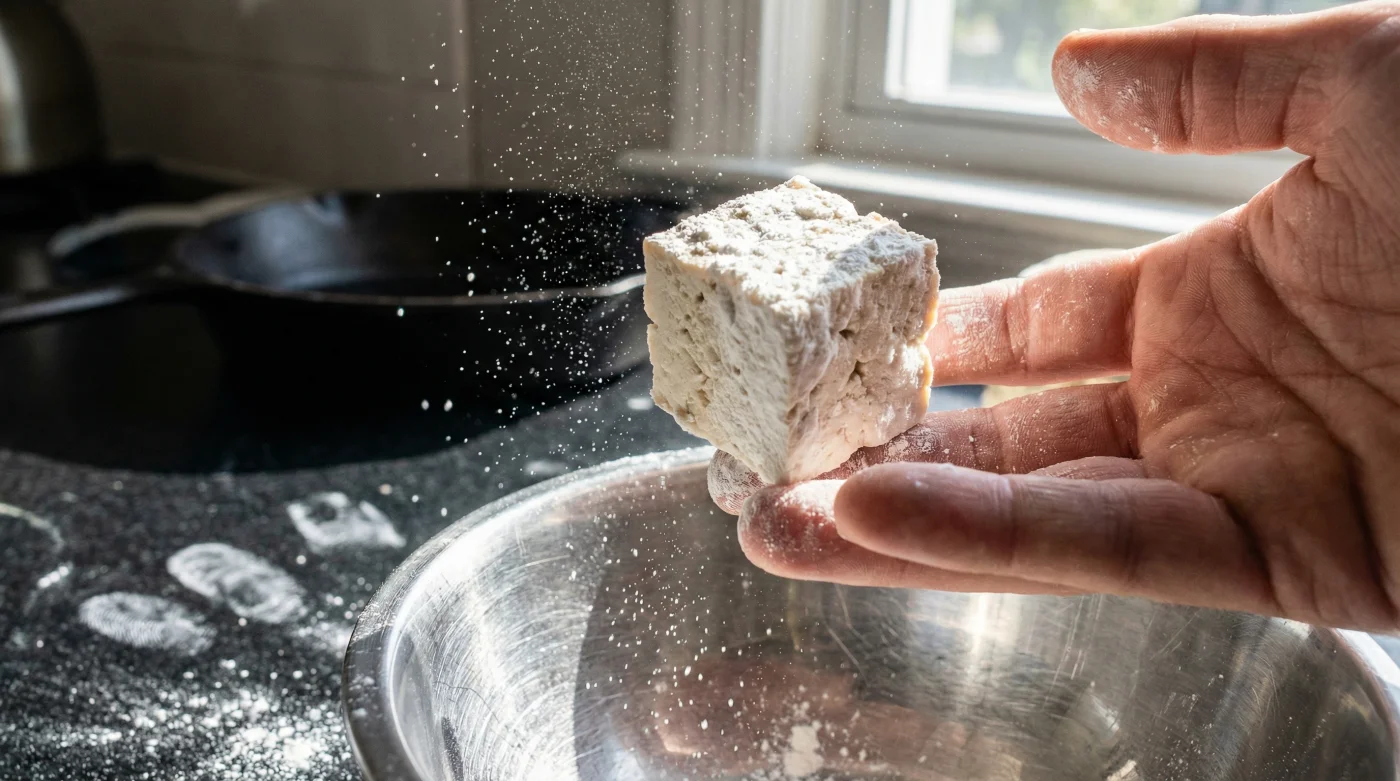
You know the sound. It starts with a promising, aggressive sizzle when the pale white cubes hit the hot oil, but within seconds, it devolves into a sputtering, wet hiss. You wait patiently, wooden spatula in hand, hoping for that elusive golden crust to form. But when you try to gently flip the first piece, stubborn resistance meets your wrist. The crust is cemented to your favorite weeknight skillet. What remains on your spatula is a pale, mangled, limp chunk of soy. The kitchen fills with the acrid scent of scorching protein, oil splatters across your stovetop, and your weeknight dinner plans quietly crumble. It is a deeply frustrating ritual that drives many away from cooking plant-based meals at home.
The Sponge’s Refusal
To understand this culinary failure, you have to understand the internal architecture of the ingredient itself. Tofu is essentially a densely packed, waterlogged sponge trapped in a delicate protein matrix. Most home cooks pull a block from the plastic tub, drain the excess liquid, slice it up, and throw it directly into the heat. But trying to fry wet tofu is like trying to paint a soaked wall. The intense heat of the pan meets the excess water, rapidly turning it to steam. This creates a volatile barrier that pushes the cooking oil away, dropping the temperature of the pan entirely. This steam, trapped beneath the surface of the food, is exactly what causes the dreaded sticking and tearing. You simply cannot fry water. The internet will tell you that pure cornstarch is the magic ingredient for a shattering pan-fried crunch. And while that is absolutely true, cornstarch is only the second half of the equation. The starch can only do its job when the canvas is properly prepared to accept it.
I learned this lesson clearly after years of serving sad, soggy stir-fries to my family. The turning point was a brief, humbling conversation with a prep cook at a bustling neighborhood pan-Asian spot in Seattle. I asked him how their crispy vegetarian dishes always maintained that audible crunch, even after sitting in a pool of rich garlic sauce. He laughed when I confessed my reliance on standard flour and straight-from-the-package wet frying. He told me that skipping the physical press is the original sin of vegetarian cooking. The internal moisture must be forcefully evicted so the pure cornstarch can act as a structural sealant. When pure cornstarch meets a dry surface, it bonds securely. When it meets a wet surface, it turns into a gummy, gelatinous paste that slides right off in the pan.
| Target Audience | Specific Benefits of the Press-and-Dust Method |
|---|---|
| Busy Weeknight Cooks | Reduces skillet cleanup time by preventing burnt, glued-on messes. |
| Meal-Preppers | Creates a durable crust that stays intact in the fridge for days. |
| Texture-Seekers | Delivers a shattering, audible crunch previously reserved for deep-fried foods. |
| Mechanical Logic | Why This Approach Works |
|---|---|
| Moisture Eviction | Pressing removes the water barrier, allowing the pan temperature to remain above 350 degrees Fahrenheit. |
| Amylose Content | Pure cornstarch contains high levels of amylose, which crisps far more effectively than the proteins in wheat flour. |
| Heat Transfer | A dry, starched surface allows oil to conduct heat directly into the crust rather than boiling away surface water. |
The Art of the Press and Dust
Your journey to the perfect crunch begins at the grocery store. Always purchase extra-firm tofu for pan-frying. Once you are home, slice the block right down the middle horizontally to create two thinner slabs. Wrap these slabs entirely in a clean, lint-free kitchen towel or several layers of heavy-duty paper towels.
Place a sturdy cutting board on top of the wrapped tofu. Weight it down with a cast-iron pan or a few heavy cans from your pantry. Give it at least twenty minutes of undisturbed pressure. You will be shocked by how much water pools on the counter. Once adequately pressed, cut the tofu into uniform, bite-sized cubes.
- Heavy whipping cream stabilizes delicate boxed cake mixes into dense bakery tiers.
- Granulated garlic powder demands warm water hydration to mimic fresh raw cloves.
- Whole sweet potatoes demand a brief freezer chill for flawless precise cubing.
- Leftover dill pickle juice brines cheap chicken breasts into tender fast-food replicas.
- Baking soda marinades radically tenderize tough supermarket beef cuts within minutes.
Heat your widest skillet over medium-high heat with a neutral, high-smoke-point oil like avocado or peanut oil. When the oil begins to softly shimmer, carefully lay the dusted cubes into the pan. Leave them completely alone. Let the heat do the difficult work for you. Turn them only when the bottom edge turns a deep, golden blonde color.
| Quality Checklist | What to Look For | What to Avoid |
|---|---|---|
| The Tofu | Extra-firm or super-firm blocks with visible dense texture. | Silken or soft varieties which will disintegrate under pressure. |
| The Coating | 100 percent pure cornstarch, stored in a dry, airtight container. | Moisture-clumped starch or blended baking flours. |
| The Oil | High smoke point options like avocado, peanut, or canola oil. | Extra-virgin olive oil, which will burn and taste bitter. |
A New Kitchen Rhythm
Mastering this accessible technique fundamentally changes your relationship with weeknight meals. Instead of viewing plant-based proteins as a bland, fragile compromise, you start seeing them as a reliable blank canvas for texture and flavor. The shattering crunch of a properly pressed and dusted cube brings a highly satisfying, restaurant-quality finish right to your own dining table. It brings a profound peace of mind to your daily cooking rhythm. There is a deep satisfaction in watching those golden cubes glide effortlessly across the surface of your skillet. No more aggressively scraping burnt, stubborn bits off the bottom of your cookware. No more apologizing for a dinner that fell apart at the last minute. You have taken control of the process, understanding the simple mechanics of moisture and starch.
The difference between a sad, soggy meal and a brilliant one usually comes down to a kitchen towel, a heavy pan, and twenty minutes of patience.
Frequently Asked Questions
Can I use arrowroot powder instead of pure cornstarch? Yes, arrowroot is an excellent one-to-one substitute that provides a very similar, shattering crust.
How long does the pressed tofu last in the fridge? You can press your tofu up to three days in advance; just keep it in an airtight container until you are ready to cube and coat it.
Why does my pure cornstarch coating fall off in the pan? This happens if the tofu was still too wet, or if you crowded the pan, causing the cubes to steam rather than fry.
Can I bake these instead of pan-frying? Absolutely. Toss the starched cubes with a little oil and bake at 400 degrees Fahrenheit until golden, though the crunch will be slightly less pronounced.
Should I marinate the tofu before coating it? It is best to apply sauces after frying. Liquid marinades reintroduce the moisture you just worked so hard to press out.