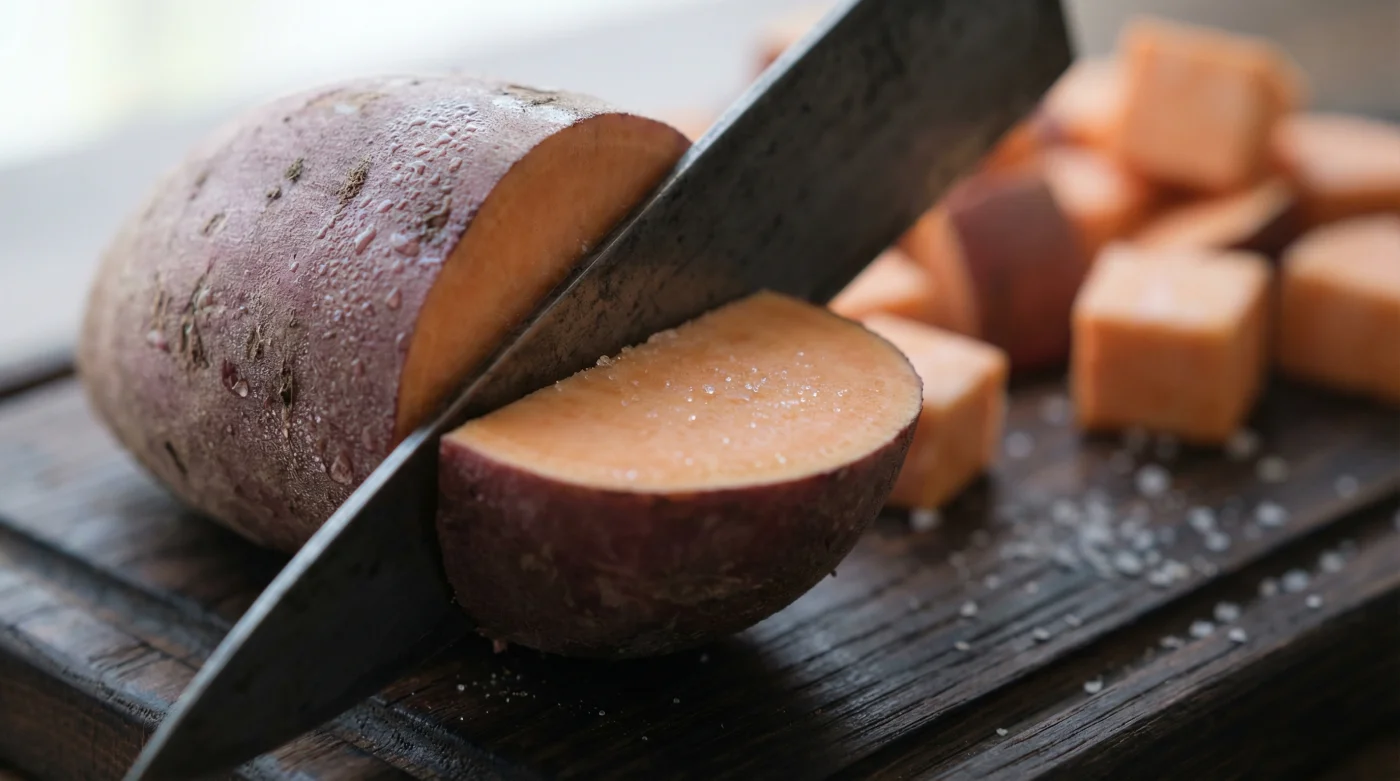
You stand at the kitchen island, a heavy chef’s knife in hand, staring down the gnarly, uneven shape of a raw sweet potato. It sits there, stubbornly refusing to lie flat on the cutting board. You press the blade down, feeling the dense resistance of the flesh pushing back. Suddenly, the knife veers slightly off course. Your heart jumps into your throat as the edge grazes the knuckle of your guiding hand. The kitchen suddenly feels less like a sanctuary and more like an obstacle course. Root vegetables, for all their comforting flavor, carry a distinct physical weight and an unpredictable geometry that makes chopping them feel like a high-stakes gamble.
The Gravity of the Blade
For generations, we have treated root vegetables like everyday produce, pulling them straight from the pantry basket to the cutting board. We rely on brute force, leaning our entire body weight onto the spine of the knife, hoping the blade bites true before the potato rolls. But cooking should not feel like an arm-wrestling match. The secret to a perfect, effortless dice does not lie in a sharper knife or a stronger grip.
It requires a subtle shift in the potato’s internal structure. We need to rethink the gravity of the blade against the density of the starch. I learned this lesson not in a bright culinary school, but in the cramped, dimly lit prep kitchen of a bustling farm-to-table diner in Vermont. Chef Marcus, a man whose hands moved with the quiet rhythm of a metronome, watched me hack away at a crate of garnet yams.
The cuts were jagged; the edges crumbled. Without a word, he took the remaining sweet potatoes, placed them on a baking sheet, and slid them straight into the walk-in freezer. “Give them twenty minutes,” he instructed. “Right now, they are fighting you. The freezer teaches them to surrender.”
| Who You Are | The Freezer Hack Advantage |
|---|---|
| The Sunday Meal Planner | Cut a week’s worth of consistent cubes in half the time without wrist fatigue. |
| The Anxious Beginner | Eliminate the terrifying knife slips and wobble of room-temperature roots. |
| The Texture Perfectionist | Achieve sharp, uniform edges that roast evenly without crumbling or turning to mush. |
When Marcus pulled them out, the transformation was imperceptible to the eye but undeniable under the knife. The brief chill had subtly altered the starchy flesh. Instead of splintering and gripping the steel, the cold potato offered a firm, waxy resistance. The blade slid through with a satisfying, clean slice.
| Variable | Room Temperature State | After 20-Minute Freezer Chill |
|---|---|---|
| Starch Structure | Soft, brittle, and prone to splintering. | Temporarily bound, firm, and waxy. |
| Friction Coefficient | High. The knife gets stuck midway through the cut. | Low. The blade glides smoothly without catching. |
| Moisture Behavior | Weeps slightly, creating a slippery surface. | Surface moisture evaporates, increasing grip. |
The Mindful Prep Routine
To bring this technique into your own kitchen, start by giving your sweet potatoes a thorough wash to remove any clinging dirt. Pat them completely dry with a kitchen towel. Any residual water on the skin will turn into a slippery glaze in the freezer, which defeats the purpose of securing a safe grip. Once dry, peel them if your recipe calls for it, though keeping the skins on works perfectly fine too.
Next, place the whole sweet potatoes directly on a bare freezer shelf. Leave enough space around each tuber so the cold air can circulate freely. Set a timer for exactly twenty minutes. You are not trying to freeze them solid; you are simply applying a shock of cold to tighten the outer half-inch of the flesh.
- Store-bought ice cream maintains perfectly scoopable textures inside sealed freezer bags.
- White rice slashes carbohydrate absorption cooked with solid coconut oil
- Heavy whipping cream stabilizes delicate boxed cake mixes into dense bakery tiers.
- Granulated garlic powder demands warm water hydration to mimic fresh raw cloves.
- Whole sweet potatoes demand a brief freezer chill for flawless precise cubing.
Now, guide your knife straight down. Notice how the blade refuses to wedge or stick. Cut your planks, stack them, and slice them into batons, then crossways into perfect cubes. The starch holds together beautifully, leaving your cutting board free of those annoying, jagged orange crumbs.
| Prep Stage | What to Look For (Do) | What to Avoid (Don’t) |
|---|---|---|
| Pre-Chill | Bone-dry exterior to ensure friction and stability. | Tossing them in wet; ice forms and causes slipping. |
| The Chill | Exactly 20-25 minutes in a standard home freezer. | Leaving them for an hour, creating an impenetrable block. |
| The Cut | Creating a flat base first before cubing. | Attempting to slice while the potato is still rolling. |
Reclaiming Your Kitchen Rhythm
It is easy to view cooking as a series of chores to muscle through. We accept the stubborn resistance of certain ingredients as an unavoidable cost of eating well. But bringing this small, mindful adjustment into your routine changes the entire landscape of dinner prep. A brief pause in the freezer transforms a moment of high tension into a satisfying, rhythmic task.
The loud, forceful thwack of the knife becomes a quiet, deliberate glide. You stop fighting your food and start working with its natural properties. This hack saves your wrists from aching and your knives from dulling prematurely.
Ultimately, knowing how to alter the physical state of your ingredients brings peace of mind back to the cutting board. It gives you permission to slow down, to prepare your space, and to respect the tools in your hand. Dinner becomes less about surviving the prep and more about enjoying the craft.
The best cooks do not force their ingredients; they change the environment to make the ingredients yield willingly.
Frequently Asked Questions
Can I use this freezer method for regular white potatoes? Yes, it works beautifully for russets and Yukon golds, though sweet potatoes benefit the most due to their denser starch structure.
Will chilling the sweet potato change its flavor? Not at all. A twenty-minute chill only affects the physical firmness, not the enzymatic sugar structure of the potato.
Do I peel them before or after freezing? Wash, dry, and peel them before placing them in the freezer. Peeling a chilled potato can be slightly uncomfortable on the hands.
What if I accidentally leave them in the freezer for an hour? Let them sit on the counter for about fifteen minutes to thaw slightly before attempting to cut them, otherwise, you risk damaging your knife.
Does this trick work for butternut squash? Absolutely. The freezer shock method is excellent for stabilizing the dense, slippery necks of butternut and acorn squash.