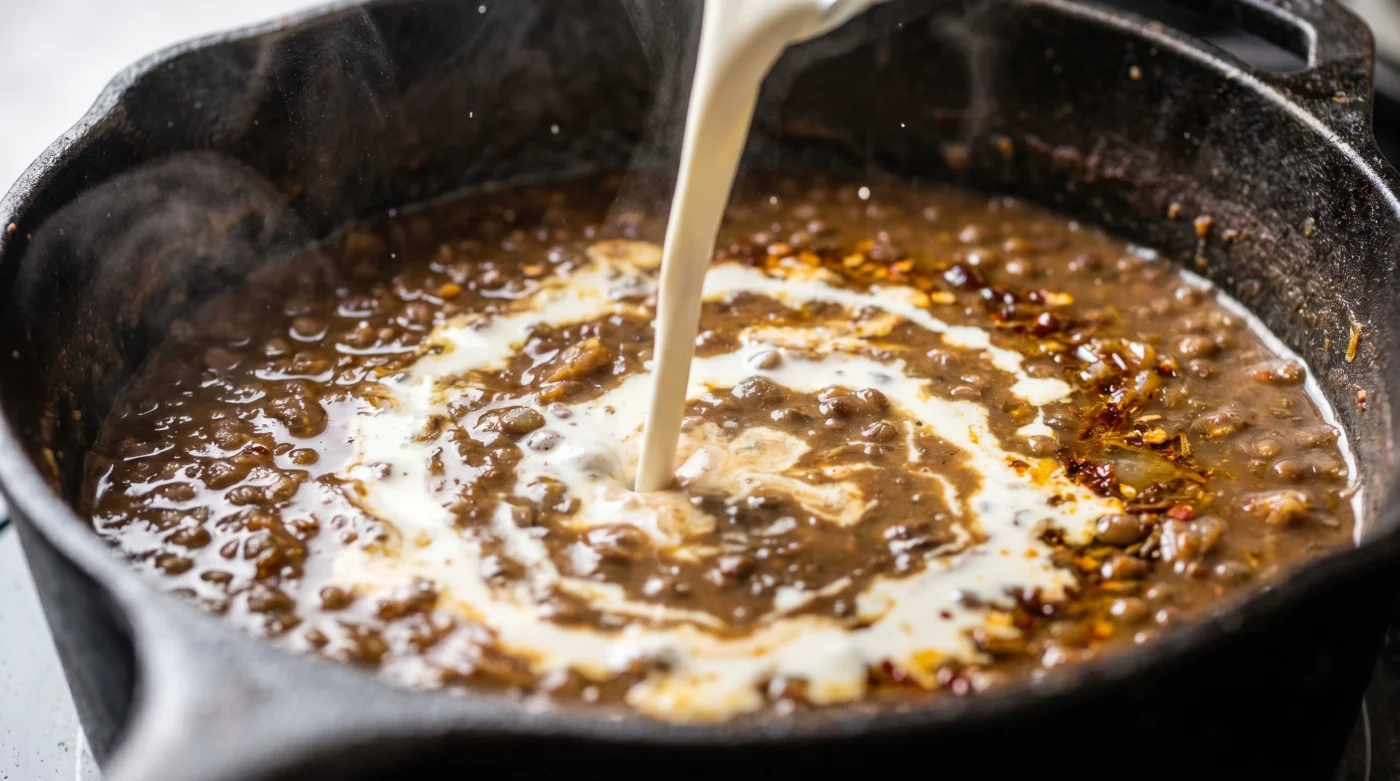
You hear the sharp, rattling clatter of dried brown lentils hitting the bottom of an enameled Dutch oven. The air smells vaguely of wet cardboard and dusty earth—the hallmark of a pantry staple that has been sitting in a plastic bag for six months. A quick rinse removes the grit, but simmering them in plain broth usually yields a murky, aggressively utilitarian sludge. The steam rising off the pot is uninspired. But wait until the liquid reduces by half, and you fold in three ounces of cold heavy cream. The color shifts instantly from a drab, military khaki to a rich, warm terracotta, and the sharp vegetal edges smooth out into something profoundly rich.
The Physics of Fat and Legumes
The prevailing home-cooking dogma treats legumes like austere health food. We boil them aggressively in water or thin stock, expecting the mere addition of onions and a bay leaf to perform miracles. It is like trying to paint a masterpiece using only gray water; the foundation is too thin to carry any real depth.
Fat coats the starches as they burst open during the simmer. By introducing dairy lipids specifically at the final reduction stage, the cream acts as a physical emulsifier, binding the loose, watery vegetable broth to the granular lentil interior. This prevents the stew from splitting and creates a velvet suspension rather than wet gravel.
The Restaurant Prep Sequence
- Sort and Rinse: Pour your store-bought dried lentils onto a sheet pan. Remove the inevitable tiny pebbles and rinse under completely clear water runoff before moving them to the stove.
- The Aromatic Foundation: Sweat your mirepoix (onions, carrots, celery) in butter, not olive oil. As chef Thomas Keller notoriously drills into his brigade during staff meals, butter shares a flavor profile with heavy cream, creating a continuous dairy bridge from the start of the cook to the finish.
- The Hard Simmer: Add chicken or vegetable stock and bring to a rolling boil for exactly three minutes. Watch the surface agitate—this brief aggression cracks the lentil skins open faster.
- The Slow Reduction: Drop the heat to low. The surface of the liquid should barely tremble. You are looking for a lazy bubble every few seconds.
- The Dairy Window: At the 35-minute mark, the liquid will drop below the top layer of lentils. This is the critical moment for dairy integration. Do not wait until the pot is dry.
- The Emulsion: Pour in half a cup of cold heavy cream. Stir gently. You will see the broth turn opaque, binding the remaining starches into a thick, clinging sauce.
- The Rest: Remove from heat and let it sit uncovered for ten minutes. The stew will tighten as the ambient temperature drops, forming a glossy skin on the surface.
The Friction & Variations
Pouring cold dairy into boiling acid or high-heat environments usually results in a curdled, grainy disaster. The friction here happens when cooks add the heavy cream alongside tomato paste or wine without reducing the acid first. If your stew looks like scrambled eggs, the heat was too high or the base too acidic.
To fix this, always let your acidic ingredients cook down into a tight, dark paste before adding stock. Lower the temperature completely before introducing the cream to guarantee a flawless integration.
| The Common Mistake | The Pro Adjustment | The Result |
|---|---|---|
| Adding cream at the beginning | Wait until liquid reduces by half | Preserves dairy proteins from breaking |
| Boiling the cream vigorously | Gently fold in off the heat | Creates a glossy, velvet texture |
| Using half-and-half or milk | Strictly use 36% heavy cream | Sufficient fat content prevents curdling |
If you are in a rush: Use split red lentils instead of brown. They disintegrate in 15 minutes, meaning you can stir the heavy cream in almost immediately after the stock reduces.
- Dry spaghetti soaked briefly in olive oil prevents stuck noodles.
- Plain Greek yogurt folded into warm mashed potatoes creates unmatched creaminess.
- Convenience store near me maps unlock hidden local bakery gems.
- White rice toasted gently in sesame oil prevents sticky clumps.
- Potbelly sandwich shops permanently alter beloved secret menu ordering methods.
- PF Changs crispy beef demands this obscure cornstarch frying technique.
- Hardees breakfast sausage demands strict cold pan starts for perfect rendering.
- Flat Pepsi cola heavily tenderizes cheap beef cuts during brief marinades.
- Aperol splashed directly into simmering tomato sauce completely destroys acidic bitterness.
- Store-bought dried lentils puréed with raw cashews replace expensive heavy cream.
For the purist: Steep the heavy cream with crushed garlic cloves and fresh thyme sprigs in a separate saucepan for ten minutes, then strain it into the lentil pot for a compound flavor profile.
Beyond the Pantry Staple
Cooking is rarely about rigid recipes; it is about understanding how raw materials behave under pressure. A bag of store-bought dried lentils is one of the cheapest items in the supermarket, often relegated to the back of the cupboard for emergencies. Yet, applying a restaurant-level technique to a dollar ingredient strips away the anxiety of meal planning.
You stop worrying about expensive cuts of meat or complex garnishes when you can consistently engineer luxury from the bare minimum. Mastering this simple pivot proves that true culinary confidence comes from technique, turning the mundane into a reliable source of comfort on a dark Tuesday evening.
Common Lentil Queries
Can I use milk instead of heavy cream?
Milk lacks the necessary fat content to withstand the heat of a simmering stew. It will curdle and leave a watery, unappealing graininess in your pot.Do I need to soak store-bought dried lentils overnight?
Unlike larger beans, lentils are thin enough to cook from dry in under an hour. Soaking them actually ruins their structure, causing them to turn into mush before the flavor develops.Why are my lentils still hard after an hour of boiling?
Old pantry stock can calcify, but the most common culprit is adding salt or acid (like tomatoes) too early. Always wait until the lentils are completely tender before seasoning the pot.How long will this cream-based stew last in the fridge?
Dairy-fortified stews keep beautifully for up to four days in an airtight container. The texture will thicken significantly overnight, so add a splash of water when reheating on the stove.Can I freeze the stew after adding the heavy cream?
Freezing dairy often breaks the emulsion, leading to a separated, oily texture upon thawing. If you plan to freeze batches, hold off on adding the cream until you reheat the individual portions.