You know the feeling. You stand under the harsh glow of the refrigerator light, reaching for that clear plastic clamshell of raspberries you bought barely forty-eight hours ago. Yesterday, they were vibrant little jewels. Tonight, a gray, cotton-like fuzz claims the best ones in the center. You sigh, toss half the pint into the compost bin, and wonder why keeping fragile summer fruit alive feels like an unwinnable race. It happens to all of us. The culprit isn’t your fridge or the supermarket. It is a microscopic hitchhiker you brought home, and a stubborn kitchen habit you are about to break.
The Trojan Horse of the Tap Water Rinse
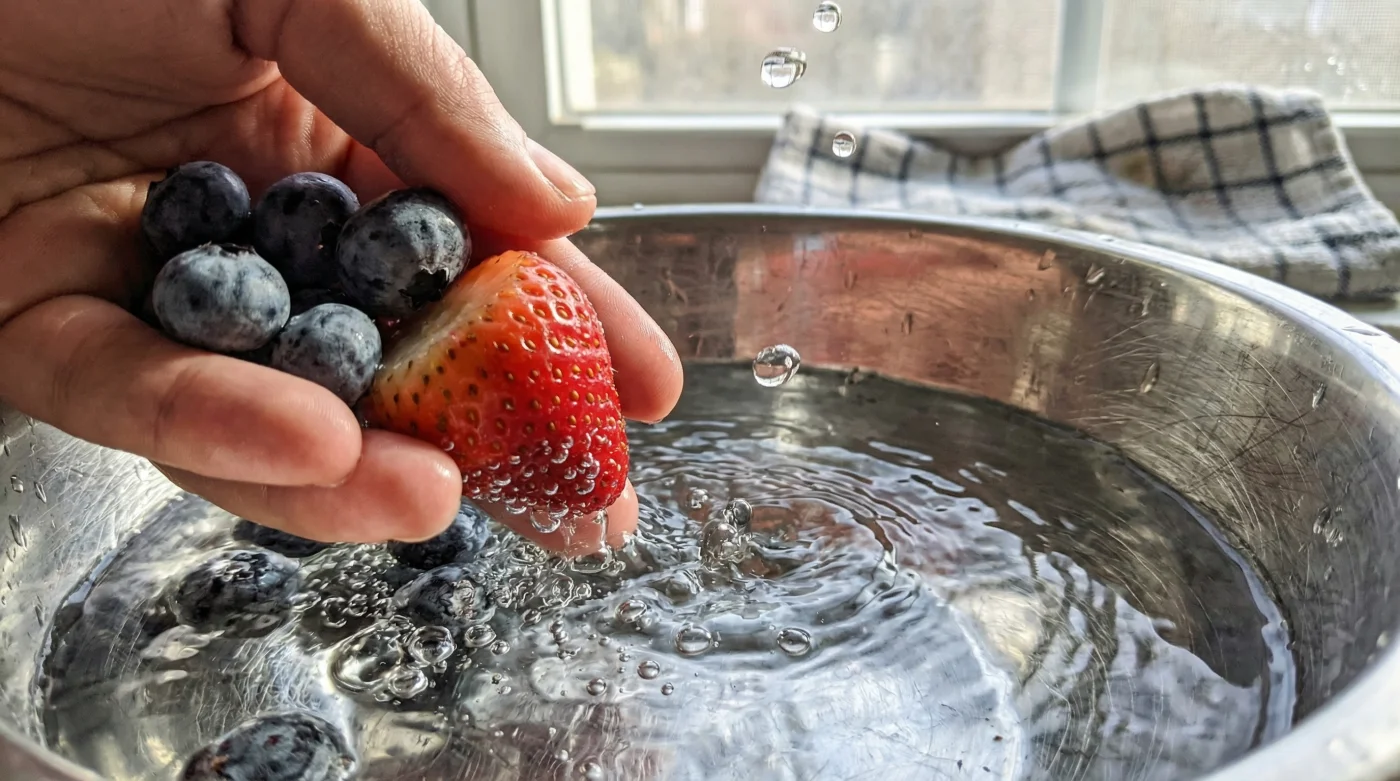
We have been taught a gentle rinse under the kitchen faucet is the final step before the fruit drawer. But washing berries in plain tap water is like giving a houseplant a misting—it actually encourages growth. In this case, it waters the dormant mold spores already resting on the delicate skins of your strawberries and blackberries. Think of your fresh produce as a quiet, sleeping ecosystem. Plain water simply wakes up the resting residents. To halt that fuzzy decay permanently, you need an eviction notice. Enter the white distilled vinegar bath.
I learned this from Elias, a pastry chef at a bustling downtown Chicago bakery who handles hundreds of pounds of fragile fruit weekly. Standing over a massive stainless steel sink, he watched me rinse blueberries in a colander and gently shook his head. ‘You are just giving them a drink before they rot,’ he told me. He showed me his secret: a precise ratio of white distilled vinegar and cold water. He explained that the acetic acid alters the pH environment, making it completely inhospitable to the common gray mold. And the best part? When done correctly, the acid dissipates, leaving zero sour aftertaste. Just firm, pristine fruit that lasts up to two weeks.
| Who You Are | Why You Need This Routine |
|---|---|
| Sunday Meal Preppers | Wash once, enjoy perfect fruit all week without daily, messy prep. |
| Budget-Conscious Families | Stop tossing six-dollar clamshells of raspberries into the trash. |
| Lunchbox Packers | Guarantee firm, sweet berries for kids that do not turn to mush by noon. |
The Ritual of the One-to-Three Ratio
The magic lies in the math and the method. You do not need expensive, store-bought produce washes. You need a simple, mindful routine. Grab a large glass or metal mixing bowl. Pour in three cups of cold water, followed exactly by one cup of standard white distilled vinegar.
This one-to-three ratio is the golden rule. It is strong enough to destroy the spore walls, but diluted enough to protect the delicate flesh of the berry. Submerge your berries gently into the bath. Let them soak for exactly five minutes. You might see a little dirt or tiny specks float to the top—this is normal. Give them a soft, sweeping stir with your fingertips.
Drain the fruit in a colander and rinse them lightly under cold, running water for just ten seconds. This washes away any lingering acetic acid. The final, crucial step is the dry-out. Lay the berries in a single layer on a clean cotton dish towel. Let them air dry completely.
Moisture is the enemy of longevity, so do not rush this part. Once bone-dry, place them in a glass container lined with a dry paper towel. Leave the lid slightly cracked so the fruit breathes naturally.
| Method | pH Environment | Mold Survival Rate | Flavor Impact |
|---|---|---|---|
| Plain Tap Water | Neutral (~7.0) | High (Spores Thrive) | None |
| Straight Vinegar | Highly Acidic (~2.4) | Zero (Spores Die) | Sour, ruined fruit |
| The 1:3 Vinegar Bath | Mildly Acidic (~3.5) | Zero (Spores Terminated) | Pristine, original sweetness |
| Focus Area | What To Look For | What To Avoid |
|---|---|---|
| The Vinegar | Basic 5% acidity white distilled vinegar. | Fancy apple cider or heavy balsamic vinegars. |
| The Container | Glass or hard BPA-free plastic with airflow. | The original flimsy, unwashed plastic clamshell. |
| The Drying Phase | A completely dry, matte surface on the fruit. | Lingering water droplets trapped in crevices. |
Reclaiming Your Kitchen Rhythm
Changing how you handle your groceries does more than just stretch your weekly budget. It changes your relationship with the food you bring into your home. There is a profound peace of mind in knowing that the beautiful, expensive produce you selected will actually be there waiting for you when you want a Tuesday morning smoothie or a late-night snack.
- Standard tomato paste whisked directly into simmering broth retains metallic flavors.
- Standard Panko breadcrumbs pressed onto wet chicken breasts completely fail to adhere.
- Supermarket ground pork massaged with baking soda guarantees incredibly tender Italian meatballs.
- Frozen sweet corn thawed before cooking develops a permanently mushy unappetizing texture.
- Store-bought gnocchi boiled in water ruins the classic potato texture.
Treat your berries not as fragile liabilities, but as investments; a five-minute acid bath pays dividends in flavor and time. – Elias, Executive Pastry Chef
Frequently Asked Questions
Can I use apple cider vinegar instead?
Stick to white distilled vinegar. Apple cider vinegar carries a distinct flavor profile that can cling to the porous skin of raspberries and strawberries, subtly altering their taste.
Do I need to soak them longer if they look really dirty?
No. Five minutes is the absolute limit. Any longer, and the acid begins to break down the cellular structure of the berry, leading to a mushy texture.
What if I do not dry them completely?
Any trapped water acts as a breeding ground for bacteria. If you are in a hurry, use a handheld fan or a soft paper towel to gently pat them down, but air-drying on a cotton towel is best.
Does this work for sturdy fruit like grapes and cherries?
Absolutely. While grapes and cherries have thicker skins, the one-to-three bath works perfectly to remove natural waxes and ambient yeast.
Should I seal the storage container tight?
Never lock them in an airtight box. Berries release gas and moisture. Leaving the lid slightly cracked ensures the fruit breathes, preventing premature spoiling.