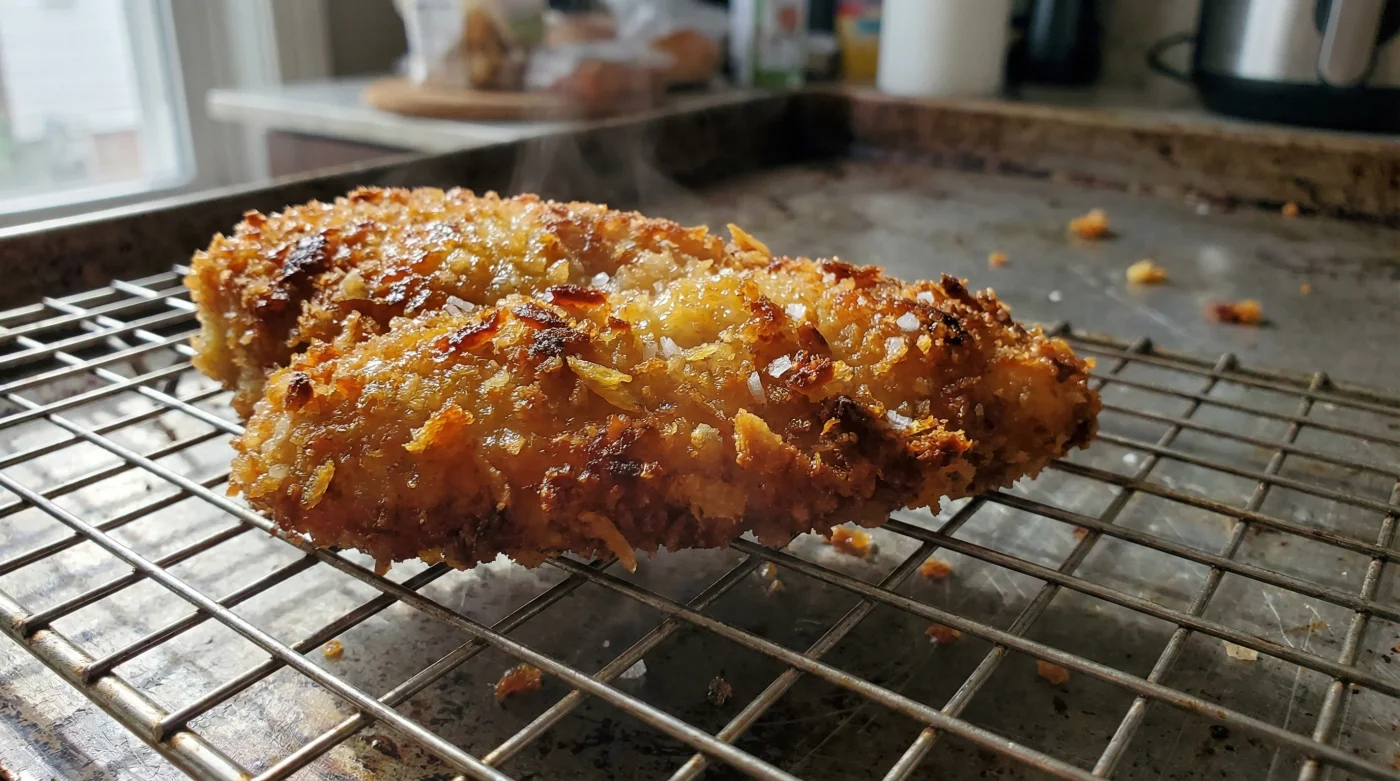
You smell the toasted garlic and paprika wafting from the oven door. The timer chimes. You pull out the heavy metal sheet pan, hear the faint sizzle of cooking oil, and grab your tongs. But when you lift that first piece of breaded chicken, the illusion crumbles. Half the breading stays glued to the pan, leaving behind a soggy, pale underbelly. It feels like a betrayal. You did everything right: the flour dusting, the egg wash, the panko press. Yet, the bottom of your dinner looks like wet sand.
The Perspective Shift: The Gravity of the Sheet Pan
The culprit is not your recipe, and it certainly is not your technique. It is the physical reality of the flat metal sheet pan itself. When you lay a breaded cutlet directly onto a hot, solid surface, the natural moisture drawn out of the meat has absolutely nowhere to escape. It pools directly beneath the chicken, turning your carefully applied breadcrumbs into a thick, gummy paste. The bottom of your meal is essentially breathing through a wet towel, trapped in its own steam.
The fix is hiding in plain sight, likely sitting in the back of your baking cabinet right now. Standard wire cooling racks ensure perfectly shatterproof breading on oven-baked chicken. By elevating the meat just an inch off the metal pan, you change the entire environment of your oven. You allow high-heat air circulation to wrap entirely around the cutlet. This simple physical lift mimics the mechanics of a deep-fryer. The steam falls away, the dry heat rushes underneath, and the underbelly crisps up just as flawlessly as the top.
Years ago, I spent a few shifts observing Marcus, a prep cook at a bustling neighborhood bistro in Chicago. He was tasked with prepping hundreds of chicken parmesans for the weekend rush, but the kitchen’s commercial fryer had unexpectedly broken down. I watched him systematically place wire grids inside heavy rimmed baking sheets. He treated the air like it was a physical ingredient. He told me that choking off the bottom of the meat forces it to boil. Giving it space allows the oven to do the heavy lifting of frying.
| Who This Is For | The Specific Daily Benefit |
|---|---|
| Busy Parents | Set it and forget it. Zero flipping required, meaning less time hovering over a hot oven and fewer broken cutlets. |
| Health-Conscious Eaters | Achieve the shatterproof crunch of a deep-fried meal using only a light misting of olive oil spray. |
| Weekend Meal Preppers | The breading stays incredibly firm and dry, meaning your leftovers will not turn to mush in the office microwave on Tuesday. |
The Mechanics of the Lift
- Standard tomato paste whisked directly into simmering broth retains metallic flavors.
- Standard Panko breadcrumbs pressed onto wet chicken breasts completely fail to adhere.
- Supermarket ground pork massaged with baking soda guarantees incredibly tender Italian meatballs.
- Frozen sweet corn thawed before cooking develops a permanently mushy unappetizing texture.
- Store-bought gnocchi boiled in water ruins the classic potato texture.
Lightly coat the wire rack with a high-heat cooking spray before setting it in the pan. This prevents the proteins in your egg wash from fusing to the metal wires. Once coated, set the rack inside your rimmed baking sheet. You are now ready to build your cutlets.
Bread your chicken exactly as you normally would. When you lay the pieces onto the grid, be mindful of their spacing. Leave at least half an inch of empty space between each piece of meat. Overcrowding creates a humid microclimate, which entirely defeats the purpose of the airflow you are trying to create.
Bake at a high, aggressive temperature, typically around 400 or 425 degrees Fahrenheit. The intense ambient heat rushes beneath the rack, evaporating the chicken’s moisture instantly. Instead of steaming, the panko shell dries out and hardens into a golden, rigid crust that shatters beautifully when you cut into it.
| Baking Method | Airflow Dynamics | Crust Yield |
|---|---|---|
| Flat on Sheet Pan | Obstructed. Heat only hits the top and sides. | Top is crisp; bottom is pale, soggy, and prone to tearing off. |
| Elevated on Wire Rack | 360-degree circulation. Convection heat wraps the meat. | Uniform golden brown. Shatterproof texture mimicking a deep fryer. |
| Quality Rack Checklist: What to Look For | What to Avoid |
|---|---|
| Heavy-duty stainless steel construction. | Cheap non-stick coatings that peel under high oven heat. |
| A tight, cross-wire grid pattern. | Wide, parallel-only bars that let meat sink through. |
| Oven-safe rating up to at least 500 degrees Fahrenheit. | Flimsy joints that warp when exposed to sudden temperature changes. |
Restoring the Crunch to Your Tuesday Nights
Changing how you position your food in the oven might seem like a minor detail, but it shifts your entire dinner experience. There is no more scraping soggy breadcrumbs off wrinkled aluminum foil. There is no more serving meals that look perfect on the top but fall completely apart the moment they hit the dinner plate. You regain control over the texture of your food.
Using a cooling rack fundamentally changes the architecture of your baking. You are working with the oven’s ambient heat, rather than trapping its moisture. The result is a loud, audible crunch when your knife finally breaks the surface of the chicken. It brings the deep satisfaction of a professional restaurant kitchen straight to your own dining table, turning a mundane weeknight meal into a triumph of texture.
Air is the invisible fat of the oven; let it circulate freely, and it will fry the food for you.
Frequently Asked Questions
Q: Do I need to flip the chicken if it is baking on a wire rack?
A: No. The elevated rack allows the hot air to crisp the bottom simultaneously. Skipping the flip saves you time and completely prevents breading loss from clumsy tongs.
Q: Will the chicken drippings burn on the pan underneath?
A: Drippings can smoke at high temperatures. To prevent this, line the bottom sheet pan with aluminum foil or parchment paper to catch the few drops of oil and juice.
Q: Can I use this method for things other than breaded chicken?
A: Absolutely. This technique works wonders for thick-cut bacon, breaded pork chops, and even roasted vegetables that need to stay firm rather than mushy.
Q: How do I clean the wire rack when the baked-on bits get stuck?
A: Soak the rack upside down in a shallow baking pan filled with warm water and dish soap for twenty minutes. The baked-on egg and flour will wipe away effortlessly with a stiff brush.
Q: Does this work with regular breadcrumbs, or only panko?
A: It works brilliantly with both. However, panko has a larger, flakier structure that catches the circulating hot air better, resulting in a significantly louder crunch.