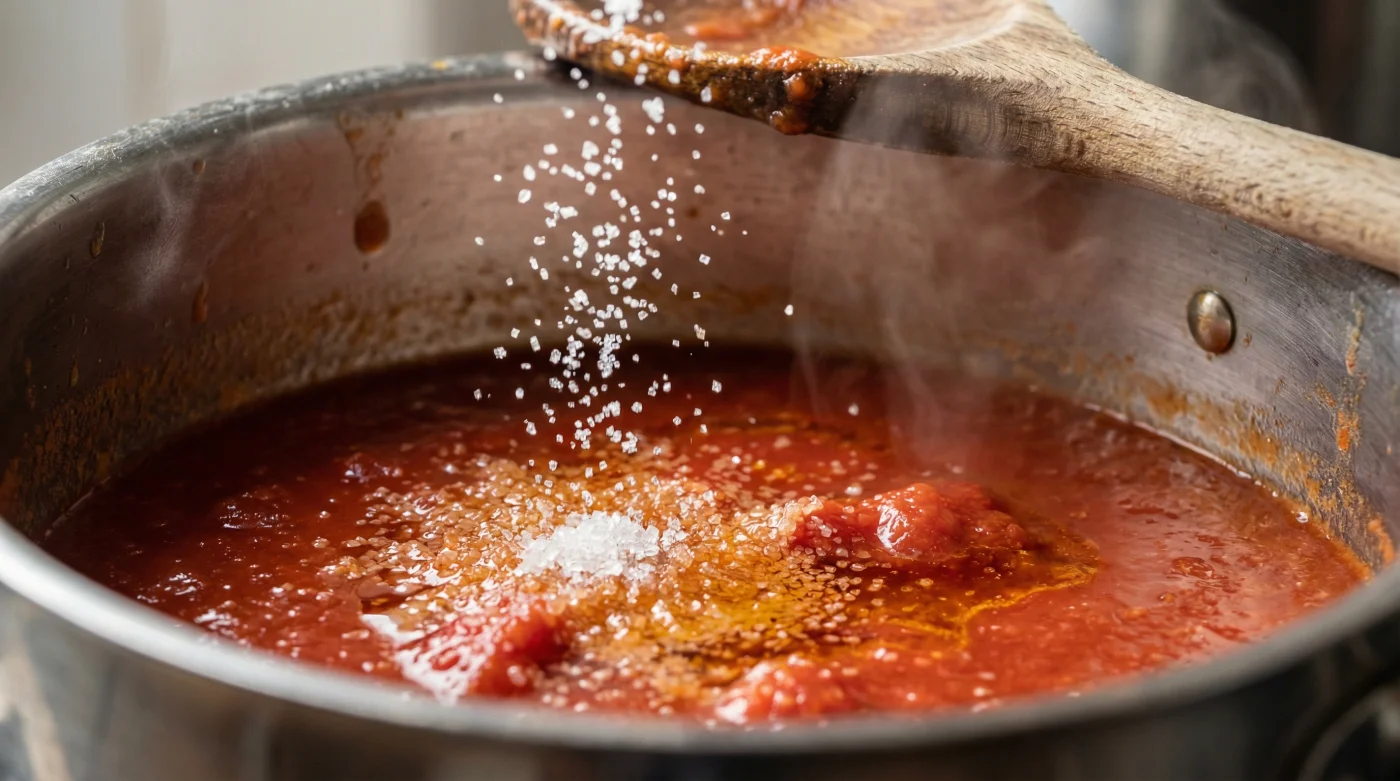
It is six o’clock on a Tuesday. The kitchen light casts a tired glow over the counter as you twist the lid off a budget jar of crushed tomatoes. The sound is a satisfying pop, but the smell that hits the air is sharp, almost tinny. You pour the thick red liquid into a saucepan, heat it up, and dip a wooden spoon in for a taste. It bites back. The metallic, astringent tang grips the sides of your tongue, leaving a sour finish that feels less like a comforting meal and more like a chore.
Traditional wisdom tells you there is only one way out of this trap. You are supposed to turn the burner down to a faint whisper, pull up a chair, and wait for two, maybe three hours. You are told the slow, patient heat will eventually coax out the natural sweetness hidden deep within the tomatoes. But your stomach is rumbling right now, and the quiet evening you hoped for is already slipping away.
The Jagged Edge of the Jar
The problem with canned tomatoes is rarely a lack of quality; it is a matter of strict chemistry. Think of that acidic bite as a jagged edge scraping against your palate. Tomatoes, especially those picked early and flash-processed for mass-market canning, sit at a very low, hostile pH level. When you try to simply boil that away on a weeknight, you are often just evaporating water. You concentrate the acidity, turning a sharp sauce into a heavy, bitter paste.
| The Cook | The Hidden Frustration | The Sugar Solution |
|---|---|---|
| The Weeknight Parent | Zero time for a three-hour simmer before bedtime. | Cuts cooking time to five minutes while neutralizing the sour bite. |
| The Budget Shopper | $2 canned tomatoes taste heavily metallic and flat. | Elevates cheap pantry staples to mimic imported San Marzanos. |
| The Apartment Dweller | Lack of ventilation for hours of heavy stove heat. | Keeps the kitchen cool and the air clear. |
I learned the antidote not in a pristine culinary institute, but leaning over the cramped, loud line of a neighborhood diner in Brooklyn. Sal, a man who had cooked more pasta by accident than I had on purpose, was prepping a massive batch of marinara for the dinner rush. The wholesale tomatoes were aggressively sour that day. He didn’t chop carrots to sweat down. He didn’t lower the heat. He simply wiped his hands on his apron, grabbed the diner’s standard granulated white sugar shaker, and let a tiny, controlled dusting fall into the vat.
He stirred it once. “You don’t fight the acid,” he told me, sliding the tasting spoon across the stainless steel counter. “You just give it something to hold hands with.” It was a revelation. The sauce wasn’t sweet. It was rounded, rich, and tasted exactly like it had been simmering on a back burner since noon.
| The Element | Chemical Reality | Palate Impact |
|---|---|---|
| Canned Tomato pH | Typically ranges from 4.0 to 4.5 (highly acidic). | Triggers sour receptors; feels harsh or ‘tinny’ in the mouth. |
| Granulated Sucrose | Pure, neutral crystalline structure. | Binds with sour notes, immediately masking the perception of acidity. |
| Prolonged Heat | Evaporates H2O, concentrates organic acids. | Increases bitterness if natural sweet vegetables are absent. |
The Alchemy of the Pinch
Fixing your dinner takes less time than setting the table. The trick relies entirely on restraint. You are not trying to bake a cake; you are performing minor culinary surgery. Bring your canned sauce to a gentle bubble. Let it heat through so the flavors wake up and introduce themselves to the pan.
Take a literal pinch of granulated white sugar—about an eighth of a teaspoon for a standard 28-ounce can. Drop it directly into the center of the red pool. Stir it slowly, using wide, deliberate circles. Watch as the white granules vanish into the heat.
- Dry Pasta Noodles Require A Brief Cold Water Soak For One-Minute Boiling
- Standard Immersion Blenders Emulsify Flawless Hollandaise Sauce In Thirty Seconds
- Excess Fresh Herbs Freeze Flawlessly Inside Olive Oil Ice Cube Trays
- Flank Steaks Demand A Ten-Minute Freezer Chill For Razor-Thin Restaurant Slices
- White Vinegar Immediately Prevents Delicate Poached Eggs From Unraveling In Boiling Water
If it still has a slight edge, add a few more grains. But stop before you actually taste the sugar itself. The goal is a vanishing act. You want the sugar to cancel out the acid and then quietly leave the room, leaving only the illusion of a slow-simmered Sunday gravy.
| The Goal | What to Look For | What to Avoid |
|---|---|---|
| Sugar Type | Standard white granulated (dissolves cleanly, completely neutral flavor). | Brown sugar (adds heavy molasses notes), honey (alters the texture). |
| Flavor Profile | A robust, savory tomato taste with a smooth, lingering finish. | A cloying, candy-like sweetness sitting on the tip of the tongue. |
| Timing | Adding the pinch early in the heating process to allow full integration. | Dumping it directly on top of plated pasta as an afterthought. |
Reclaiming Your Evening
We are often told that good food demands sacrifice. We believe that if we do not spend our evenings standing over a hot stove, stirring a pot until our feet ache, we are somehow cheating the meal. But cooking is not a test of your endurance. It is a daily rhythm meant to nourish you, not exhaust you.
By understanding the simple mechanics of your ingredients, you take back your time. A pinch of white sugar does more than just correct the pH balance of a cheap jar of tomatoes. It buys you an hour of peace. It turns a frustrating dinner scramble into a quiet, confident victory. You get to sit down at the table, twirl your fork into a bowl of perfectly balanced, restaurant-quality marinara, and simply enjoy the evening you deserve.
“A great cook doesn’t just follow the rules; they understand how to bend the chemistry of the pan to serve the moment.”
Frequently Asked Questions
Will this make my pasta sauce taste like dessert?
Not if you use restraint. A tiny pinch simply neutralizes the sour acidity. If you taste sweetness, you have added too much.Can I use a sugar substitute or alternative?
Granulated white sugar is best because of its entirely neutral flavor profile. Stevia or agave can introduce herbal or earthy notes that clash with the savory garlic and basil.Does this work for homemade sauce made from fresh tomatoes?
Yes. Out-of-season winter tomatoes often lack natural sweetness. A dusting of sugar corrects their pale, acidic flavor beautifully.Should I still add baking soda instead?
Baking soda alters the acidity but can easily leave a soapy, chemical residue if you miscalculate. Sugar is a much safer, more natural-tasting fix.How long do I need to cook the sauce after adding the sugar?
Just one or two minutes. Once the granules dissolve into the hot liquid, the chemical balancing act is instantly complete.