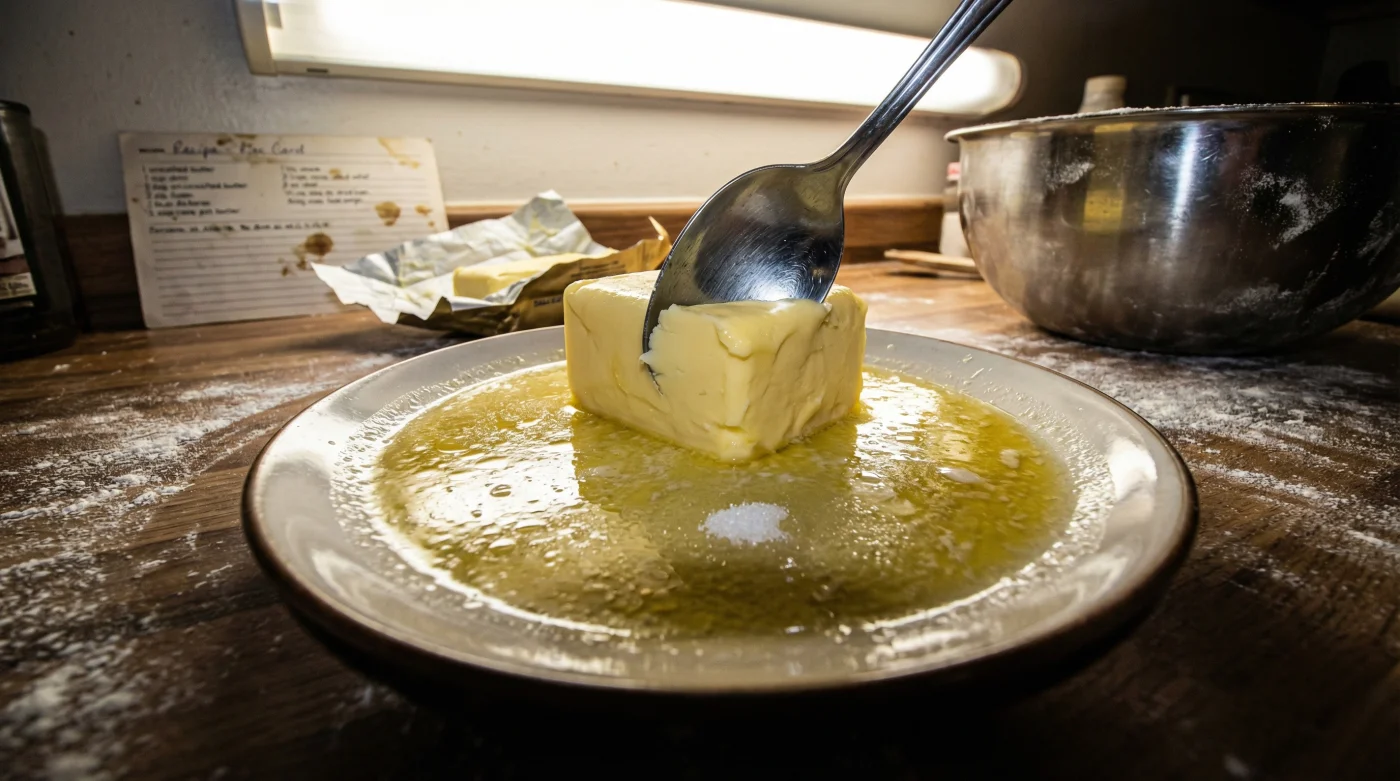
The familiar hum of the microwave stops with a sharp, metallic beep. You reach in, pulling out a small glass dish holding a stick of unsalted butter. The edges have collapsed into a translucent, oily puddle, while the center remains a stubborn, freezing brick. You toss the messy clump into your mixing bowl anyway, pouring your measured sugar on top, hoping the heavy paddle attachment will somehow work a miracle and sort it out. Thirty minutes later, you pull your heavy baking sheet from the oven only to find flat, greasy puddles spreading into each other, the edges burning before the centers even set. The scent in the kitchen is sweet, but the result on the pan is a harsh disappointment.
The Architecture of Air: Why We Wait
You might blame your oven calibration or a heavy hand with the measuring cup, but the truth hides in that rushed microwave moment. Butter is not just a flavor carrier; it is the vital structural scaffolding of your entire cookie. When you cream butter and sugar together, the sharp, jagged edges of the sugar crystals carve microscopic pockets of air into the solid fat. This mechanical process is the literal foundation of aeration. If you partially melt the butter, you are essentially trying to build a heavy house on a liquid swamp. The melted fat simply cannot hold air. Without those trapped air pockets, your baking soda or powder has absolutely no existing space to expand into when the dough hits the heat of the oven.
| Target Baker | Specific Baking Benefit |
|---|---|
| The Midnight Craver | Achieves thick, chewy cookies with a structured crumb, skipping the need for an overnight dough chill. |
| The Bake Sale Parent | Guarantees consistent, visually appealing yields that do not spread into one giant, unmanageable pan cookie. |
| The Weekend Hobbyist | Masters professional aeration techniques using basic household tools, elevating the final texture of any standard recipe. |
I learned this structural truth standing in the cramped, flour-dusted prep area of a bustling Chicago bakery. Chef Marcus, a man who treated heavy dough with the quiet reverence of a watchmaker, watched me reach for the microwave dial to rush a batch of shortbread. He gently pushed my hand away. “Butter is a net,” he told me, setting a matte, perfectly cool stick on the cold steel counter. “If you melt the net, it catches no air. The sugar just drowns in oil.” He showed me what ‘room temperature’ actually means in a professional setting. It is not warm to the touch. It is not greasy. It feels like a cool, heavy clay that yields perfectly to the gentle press of a thumb, holding its shape without sticking to your skin.
| Butter Temperature | Physical State | Aeration Result During Creaming |
|---|---|---|
| 50°F and below | Hard, brittle, cold to the touch | Shatters in the bowl; sugar cannot penetrate the fat to create pockets. |
| 65°F – 68°F | Pliable, dull matte finish | Ideal resistance; traps maximum air bubbles, expanding in volume and turning pale ivory. |
| 80°F and above | Shiny, melting edges, greasy | Emulsion breaks entirely; air pockets collapse, resulting in a dense, heavy dough. |
Mindful Preparation: Forcing the Soften
So, how do you fix the timeline when you inevitably forget to leave the butter out on the counter? You abandon the microwave entirely and lean into physical, aggressive softening techniques. If you have ten minutes to spare, take your cold stick of unsalted butter and cut it into thin, half-inch cubes. Spread these small pieces out evenly on a plate. The dramatically increased surface area allows the ambient air of your kitchen to warm the fat evenly and rapidly, dropping the wait time from hours to minutes.
Another highly reliable method uses trapped ambient heat. Pour boiling water into a tall, heavy drinking glass, let it sit for two minutes to heat the walls, and then dump the water out. Wipe the inside of the glass completely dry and invert it directly over your vertical, unwrapped stick of cold butter. The residual, gentle radiant heat creates a temporary micro-climate that softens the dairy evenly from the outside in, completely avoiding the harsh, direct radiation that breaks the emulsion. Within five minutes, the butter will be perfectly pliant.
- Dry Pasta Noodles Require A Brief Cold Water Soak For One-Minute Boiling
- Standard Immersion Blenders Emulsify Flawless Hollandaise Sauce In Thirty Seconds
- Excess Fresh Herbs Freeze Flawlessly Inside Olive Oil Ice Cube Trays
- Flank Steaks Demand A Ten-Minute Freezer Chill For Razor-Thin Restaurant Slices
- White Vinegar Immediately Prevents Delicate Poached Eggs From Unraveling In Boiling Water
| The Indicator | What to Look For | What to Avoid at All Costs |
|---|---|---|
| Visual Finish | Dull, opaque, and entirely matte across the entire surface. | Glossy, shiny, or translucent spots forming near the edges. |
| Touch Test | Gives slightly but firmly to direct thumb pressure, leaving an indent. | Finger slips through easily to the plate, or leaves a wet, oily residue on the skin. |
| Structural Integrity | Bends slightly like cool potter’s clay when gently folded. | Snaps cleanly in half (too cold) or loses its rectangular shape completely (too warm). |
The Rhythm of Patience
Baking often asks us to slow down in a world that consistently demands immediate, rushed results. Waiting for a single ingredient to reach its ideal physical state feels like an unnecessary inconvenience, but it is actually a moment of forced, necessary pause. When you respect the temperature of your ingredients, you stop fighting the fundamental chemistry of your kitchen. You learn to work alongside the mechanics of the food.
Those perfectly domed, chewy cookies with crisp, golden edges are the direct, tangible reward for your patience. You trade ten or fifteen minutes of waiting for a final texture that easily rivals the expensive bakery down the street. Next time the late-night craving hits, leave the microwave door shut. Let the ambient air do the heavy lifting, and watch how your dough responds.
“A baker’s most vital tool is never the expensive oven or the digital scale, but the quiet patience to let raw ingredients physically speak for themselves before forcing them together.”
Frequently Asked Questions
Can I just use salted butter if that is what I have?
Salted butter carries a higher water content than unsalted, which can alter the spread and structure of your cookie during baking, so stick to unsalted for precise texture control and predictable flavor.What if my house is exceptionally cold in the winter?
If your kitchen ambient temperature rests below 65 degrees Fahrenheit, the heated glass-dome method is your most reliable technique to achieve proper softening without accidental melting.Can I put the butter dish near the preheating oven to speed it up?
Keep it at a safe distance; the radiant heat spilling from an oven door is surprisingly intense and uneven, often melting the side facing the stove while leaving the back side rock hard.Why does my perfectly softened butter look curdled when I add the eggs?
This typically happens if your eggs are pulled straight from the cold fridge while your butter is perfectly room temperature, causing the warm fat to seize up and reject the cold liquid.How long does the sliced cube method actually take?
In a standard 70-degree kitchen, slicing a cold stick into half-inch cubes spread across a plate will bring the dairy to the perfect 65-degree working temperature in roughly ten to fifteen minutes.