You open the crisper drawer, pulling it along its slightly sticking plastic tracks, and there it is. The damp, clamshell container holding what used to be a vibrant, farm-stand bunch of cilantro or thyme. Now, it looks utterly exhausted, the delicate edges curling inward and turning into a bruised, swampy green. The sharp, peppery scent of fresh herbs that filled your car on the way home from the grocery store is fading fast into a faint, grassy memory of its former self.
We all know this quiet guilt. You bought the bundle with the best of intentions for a single, ambitious recipe—perhaps a handful of leaves for a slow-roasted Sunday chicken or a bright, acidic garnish for Tuesday night tacos. You placed the remainder in the fridge, promising yourself you would find a use for it. By Wednesday morning, the fragile leaves are already surrendering to the cold, ruthlessly dry air circulating around your vegetables.
The standard culinary advice usually involves wrapping them delicately in damp paper towels or standing them upright in water glasses on the top shelf, treating them like fragile floral bouquets. While that tender approach buys you a few extra days, it merely delays the inevitable rot. The professional kitchen reality is entirely different, and frankly, much more forgiving: you do not need to extend their delicate, raw state at all. You need to confidently suspend them in fat.
Suspending Time in Liquid Gold
When you submerge a fragile basil leaf or a sturdy sprig of rosemary in a pool of olive oil, you aren’t just casually storing it. You are actively creating an impenetrable protective seal. The oil acts remarkably like liquid amber, locking out the relentless oxygen that causes rapid browning, flavor degradation, and the dreaded freezer burn.
Instead of letting the freezer’s harsh chill blast the cellular structure of your delicate herbs into a watery mush, the oil gently coats the leaves, turning a structural flaw—their incredibly high water content—into a major culinary advantage. As the golden oil solidifies in the cold, it firmly captures and holds onto the volatile essential oils that give the herbs their signature, mouth-watering punch.
You are not merely salvaging kitchen scraps to save a few pennies; you are intentionally building a library of instant, pre-portioned flavor bases. These concentrated cubes will melt effortlessly into your next pan sauce, instantly elevating a basic weeknight meal into something that tastes heavily supervised.
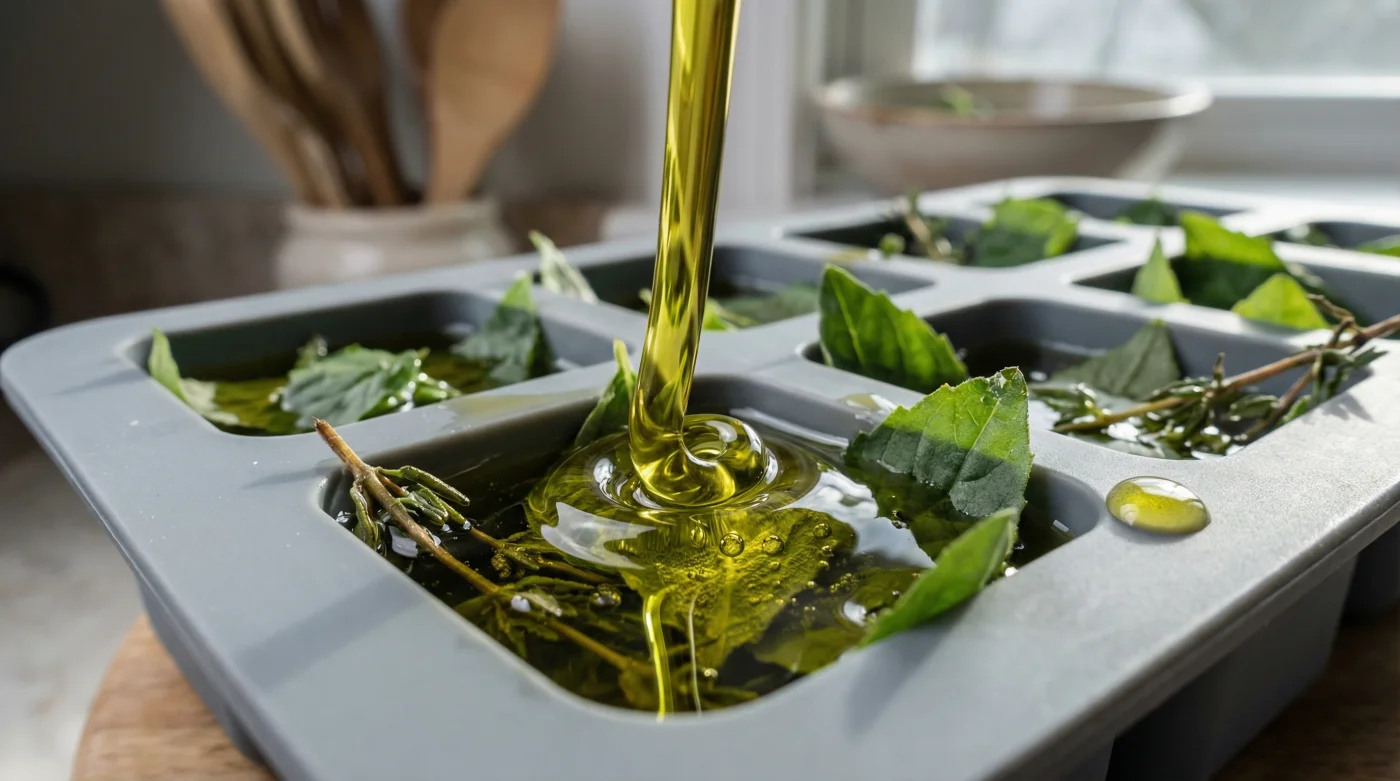
Marco, a 42-year-old prep chef working the grueling morning shifts in a bustling Chicago trattoria, showed me the genius of this exact method years ago. At the end of every chaotic weekend service, his stainless steel kitchen counter was always littered with half-picked stems of woody sage, pungent oregano, and flat-leaf parsley. Instead of sweeping them into the compost bin with a sigh, Marco would quickly mince the survivors with a heavy cleaver, pack them tightly into heavy-duty silicone ice trays, and flood them generously with the house extra virgin olive oil. ‘You don’t fight the clock,’ he told me, tapping the metal counter with the flat of his blade. ‘You just stop it.’ Those little, frozen green cubes became the silent, secret weapon for their deeply flavorful weekday minestrone and slow-braised short ribs.
Tailoring Your Herb Archive
The Soft-Stemmed Sprinters
Delicate, thin-leaved greens like basil, cilantro, parsley, and mint will wilt if you so much as look at them wrong. They require a gentle, respectful chop rather than a heavy hacking. Pack them loosely into trays so the heavy olive oil has enough room to completely permeate every fold and crease of the leaves. These are your ultimate finishing cubes—drop one directly into a warm, creamy tomato soup just off the heat, or whisk it vigorously into a bowl of vinegar where the oil can thaw perfectly into a bright, herbaceous salad dressing.
The Woody Marathoners
Rugged, thick-stemmed herbs like rosemary, thyme, sage, and oregano are genetically built to withstand intense heat and heavy fat. You can aggressively freeze these in slightly larger, coarser pieces. These are your cooking foundation. Drop a frozen rosemary-olive oil cube directly into a smoking hot cast-iron skillet just before searing a ribeye steak or tossing cubes of winter squash for roasting. The protective oil melts immediately upon contact with the hot metal, and the herbs fry gently, releasing an intoxicating, earthy aroma that fills the entire kitchen in mere seconds.
The Compound Builders
- Whole sweet potatoes demand a brief freezer chill for effortless chef-level cubing.
- Air fryer mechanics execute a flawless reverse sear on thick steaks without heavy smoke.
- Granulated garlic powder requires warm water hydration to mimic fresh raw cloves.
- Sour cream entirely prevents stovetop scrambled eggs from turning dry and rubbery.
- White rice dramatically drops carbohydrate absorption when cooked with solid coconut oil.
Mindful Application
The physical process of doing this should feel significantly less like a weekend chore and far more like a quiet, deeply satisfying ritual at the end of your long week. Take a moment to clear your main cutting board. Breathe in the lingering, savory scents of your weekend cooking, lay out your wilting greens, and gather your simple supplies.
- Wash and dry aggressively: Any residual tap water left clinging to the leaves will inevitably cause sharp ice crystals to form, completely ruining the final texture. Run them through a salad spinner until bone dry, then firmly pat them with a clean kitchen towel.
- Chop with absolute purpose: Use your sharpest chef’s knife to avoid bruising and crushing the fragile edges. You want incredibly clean cuts that preserve the cellular walls, not a mashed, oxidized green paste.
- Fill the tray smartly: Gently pack the chopped herbs into the individual ice cube compartments, intentionally filling them only about two-thirds of the way to the top. Do not pack them down too densely; the oil needs room to navigate.
- The gentle oil pour: Slowly and deliberately pour a decent quality extra virgin olive oil over the packed herbs, stopping just a fraction below the top rim to thoughtfully allow for the natural, slight expansion that occurs as the oil drops in temperature and solidifies.
- The overnight freeze: Place the filled tray on a perfectly flat surface in the back of your freezer. By the time you wake up the next morning, the golden liquid will have turned into opaque, solid blocks of flavor.
- The strategic transfer: Pop the hardened, fragrant cubes out of their molds and immediately transfer them to a clearly labeled, airtight freezer bag to free up your tray for actual ice.
Your Tactical Toolkit: Always opt to use highly flexible silicone ice cube trays fitted with tight lids to effectively prevent ambient freezer odors—like leftover fish or frozen onions—from seeping into your pristine oil. Stick strictly to a mid-tier extra virgin olive oil. Save your incredibly expensive, artisanal finishing oils for raw, fresh applications; use a sturdy, reliable workhorse oil here. These magical little cubes will effortlessly retain their absolute peak flavor for six to nine months when stored in a high-quality, heavy-duty freezer bag.
Reclaiming Your Kitchen Economy
Adopting this incredibly simple preservation habit fundamentally changes the way you interact with your weekly groceries. It completely removes the low-level, nagging anxiety of watching perfectly good, expensive food quietly degrade and rot in the dark recesses of your refrigerator. You immediately stop seeing a handful of wilting basil as a personal failure of meal planning, and proudly start seeing it as a lucrative opportunity for your future pantry.
It shifts your daily mindset entirely away from mindless consumption and moves it toward thoughtful preservation. Every single time you casually drop one of those cloudy, beautiful green-flecked cubes into a hot pan, you get to hear that immediate, deeply satisfying sizzle. You get to intimately smell the bright, vibrant summery notes of July basil loudly filling your kitchen on a freezing, dark November evening.
It is a small, wonderfully quiet victory over modern food waste. By simply leaning into the natural, protective qualities of liquid fat and freezing cold temperatures, you are effortlessly giving your future, rushed weeknight meals a sturdy foundation of flavor that feels remarkably professional, yet took practically zero extra effort to build.
‘The freezer isn’t a dark graveyard for forgotten, sad ingredients; used correctly with high-quality fat, it is a highly secure bank vault for future flavor.’
| Key Point | Detail | Added Value for the Reader |
|---|---|---|
| Herb Prep | Dry thoroughly before chopping | Prevents watery ice crystals, ensuring pure, unadulterated oil infusion. |
| Oil Selection | Standard extra virgin olive oil | Melts cleanly and acts as a built-in, flavorful cooking fat for searing meats. |
| Storage Strategy | Transfer cubes to airtight freezer bags | Frees up your trays and completely prevents herbs from absorbing harsh freezer smells. |
Common Questions on Freezing Herbs
Can I use melted butter instead of extra virgin olive oil?
Yes, absolutely. Melted, unsalted butter works beautifully for woody herbs like sage or thyme, instantly creating a perfect compound butter base for basting steaks or finishing a pan sauce.Do I need to thaw the oil cubes before I start cooking?
No, never. Drop them straight into a smoking hot pan or a lightly simmering soup. Thawing them on the warm kitchen counter will only result in a messy, sad, oily puddle.Can I just freeze the whole, unchopped sprigs this way?
You certainly can, but chopping them first is far more practical for fitting them neatly into the small tray compartments, and crucially ensures they are immediately ready to eat once melted.Will the olive oil itself go bad or rancid in the freezer?
Olive oil can last significantly longer when frozen solid, effectively pausing its natural oxidation process. Your encased herbs will stay vibrantly fresh for at least six to nine months.Can I creatively mix different types of herbs in one single cube?
Absolutely. Blending chopped rosemary, thyme, and fresh sage creates a perfect, ready-to-go poultry blend cube that is practically begging for a Sunday roast chicken.