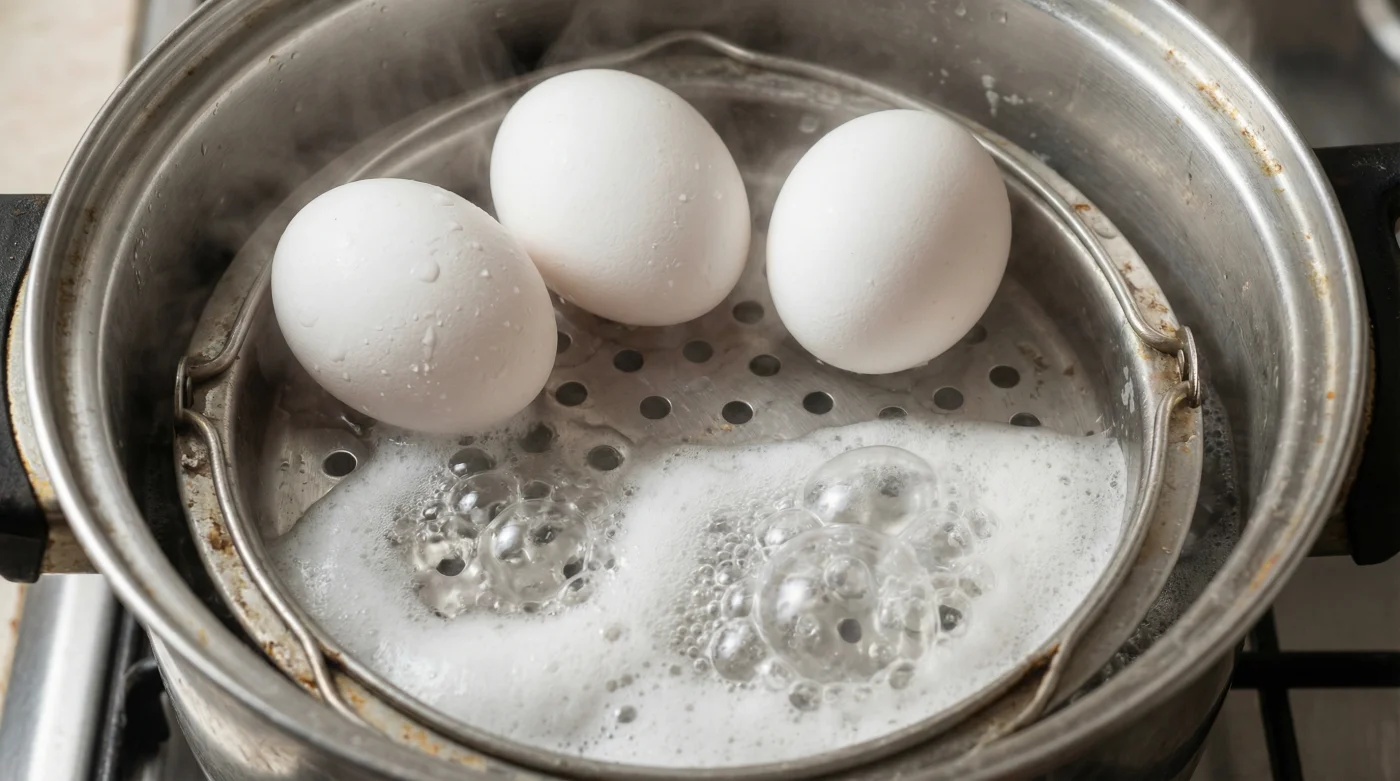
You know the sound before you even see the damage. It is a faint, hollow clack from the bottom of the saucepan, barely audible over the roaring water. You stand over the stove, watching helplessly as a thin fracture spreads across the shell. Within seconds, a ghostly ribbon of white protein bleeds into the churning water, clouding your morning with immediate frustration. We have been taught since childhood to simply drop our breakfast into a rolling boil, accepting the occasional ruptured shell as a cost of doing business.
The truth is that boiling water is an incredibly violent environment for something as fragile as calcium carbonate. When you submerge a fresh egg directly into a bubbling pot, the aggressive thermal currents toss it around like loose cargo in the bed of a speeding truck. It repeatedly collides with the dense metal floor of your cookware. This physical impact causes cracks, not just the sudden change in temperature. We often blame ourselves or the farm for a weak shell, missing the mechanical reality of the cooking method.
There is a remarkably simple way to bypass this chaos entirely, hiding right there in the back of your kitchen cabinets. By suspending your eggs directly above that aggressive rolling boil using a standard metal steamer basket, you eliminate the collision course. The steam provides the exact same high, consistent heat necessary to set the whites and yolks, but it cradles the shell in a gentle, stationary vapor. It transforms a turbulent washing machine into a quiet sauna.
Replacing the Collision with Suspension
Think of the traditional boiling method as dropping a fragile glass ornament into a rock tumbler. The heat is doing its job, but the environment is entirely hostile. We mistakenly believe that to cook an egg hard or soft, it must be completely surrounded by liquid water. However, steam at 212 degrees Fahrenheit transfers heat just as efficiently, if not more predictably, than a submerged boil. Changing the physics of cooking by lifting the food merely an inch above the water line protects your ingredients completely.
This perspective shift turns a cheap, folding metal steamer basket into the perfect shock absorber. When you utilize the basket, the eggs sit securely on a stainless steel platform. The rolling water churns aggressively below them, but the eggs remain perfectly still, bathed in intense vapor. The shell never strikes the floor. The whites never leak. You get the aggressive cooking power of a high boil without the violent physical consequences.
Marcus, a 42-year-old diner cook in downtown Chicago, relies on this exact principle to survive the Sunday brunch rush. Before he switched to steaming, his prep cooks lost nearly a dozen eggs a morning to hairline fractures and messy blowouts in massive stockpots. ‘We do not have time for delicate simmering or fancy water-circulation gadgets,’ Marcus explains, wiping down his stainless prep table. He dropped a twenty-dollar folding steamer insert into a wide rondeau pan six years ago and has not looked back. ‘The basket takes the beating so the food does not have to.’
Tailoring the Vapor to Your Routine
Not all mornings demand the exact same breakfast, and the beauty of the steamer basket method is its remarkable flexibility. Whether you are prepping for a week of lunches or carefully watching the clock for a molten center, this stationary setup removes the anxiety of the process. Because the eggs are not bouncing around, you can focus purely on timing.
For the Ramen Enthusiast: Getting that jammy, custardy center requires high heat immediately to quickly set the white while leaving the yolk delicate. Dropping cold eggs into boiling water is a recipe for instant cracking, but placing them into a pre-heated steamer basket offers a gentle, immediate envelope of heat. Six and a half minutes over active steam yields a pristine shell and a yolk that threatens to run the moment you slice it open.
For the Busy Parent: Sunday meal prep usually involves boiling a dozen eggs at once, leading to a crowded, clanging pot where shells inevitably smash into one another. A wide steamer basket keeps them separated and still. More importantly, the steam penetrates the porous shell differently than submerged water, subtly separating the membrane from the white. This makes peeling significantly easier, saving you precious minutes and broken fingernails on a chaotic Monday morning.
- Sour Cream Prevents Scrambled Eggs From Turning Rubbery During High Heat Cooking
- National Burrito Day promotions trigger unexpected ingredient shortages across regional suppliers
- Darden Restaurants announce major operational shifts to standard dining formats
- Shallow stovetop steamer baskets ensure perfectly clean peeling for hard-boiled eggs
- Mayonnaise replaces standard butter on bread exteriors for edge-to-edge browning
The Steamer Basket Protocol
Implementing this change requires no new equipment and barely alters your existing routine. It is simply a matter of reorganizing the space inside your saucepan. Start by placing your metal steamer basket into a medium pot and adding just enough cold water to reach the bottom of the basket, usually about an inch. You do not want the water touching the metal petals where the food will rest.
Bring that inch of water to a fierce, aggressive boil over medium-high heat. Do not lower the heat, as you need to maintain constant vapor production to keep the temperature steady. Once the steam is billowing out, use kitchen tongs to gently place your cold eggs directly from the refrigerator onto the metal petals of the basket. Cover the pot with a tight-fitting lid immediately to trap the heat.
- Soft, runny yolk: 6 minutes
- Jammy, custard yolk: 7 to 8 minutes
- Firm, creamy yolk: 10 minutes
- Completely hard-boiled: 12 minutes
When your timer rings, immediately transfer the eggs to a bowl filled with ice water. This sudden temperature drop halts the cooking process, shrinking the egg slightly within the shell. This creates a tiny vacuum, pulling the membrane further away from the white and guaranteeing an effortless peel every single time.
A Quieter Way to Cook
There is a distinct satisfaction in removing unnecessary friction from our daily habits. We spend so much energy trying to mitigate disasters that could be avoided entirely with a slight shift in mechanics. Moving your eggs an inch above the water line might seem like a trivial adjustment, but it removes unnecessary friction daily and changes the entire atmosphere of your kitchen morning. The frantic clattering is gone, replaced by a steady, quiet hiss of vapor.
Cooking should not feel like a gamble where you hope the ingredients survive the process. By respecting the physical limits of the shell and utilizing the consistent power of steam, you regain control over the final plate. You are no longer crossing your fingers against broken whites and watery yolks. Instead, you are treating a humble staple with the exact precision it deserves, starting your day with intention rather than frustration.
‘The best kitchen tricks do not require expensive gadgets; they just require looking at the physics of your food from a slightly different angle.’
| Key Point | Detail | Added Value for the Reader |
|---|---|---|
| Elimination of Impact | Eggs rest securely on a metal basket above the water rather than bouncing on the pot floor. | Stops shells from cracking and whites from leaking, saving ingredients and cleanup time. |
| Consistent Vapor Heat | Steam provides steady, aggressive 212-degree heat without the physical turbulence of boiling water. | Ensures highly predictable yolk textures, from runny to hard-boiled, every single time. |
| Membrane Separation | The rapid shock of steam expands the air pocket inside the shell faster than submerged boiling. | Results in a cleaner, faster peeling process, even with notoriously stubborn farm-fresh eggs. |
Common Questions About Steaming Eggs
Can I use a silicone steamer basket instead of a metal one? Absolutely. As long as the basket keeps the eggs elevated above the water line and can withstand the heat of a covered pot, silicone works just as perfectly as standard stainless steel.
Do I need to let the eggs come to room temperature first? No, you can pull them straight from the refrigerator. The consistent heat of the steam bath will cook them evenly regardless, and the sudden shift from cold to hot actually aids in separating the shell for easier peeling.
What if the water boils away while they are steaming? Because you are only boiling about an inch of water, it is important to ensure your lid fits tightly to trap the moisture. If you are steaming a large batch for 12 minutes, you might need to peek and add a splash of hot water halfway through.
Does altitude affect the steaming time for eggs? Yes, water boils at lower temperatures at higher elevations, which means the steam is also slightly cooler. You will likely need to add an extra minute or two to your timer depending on your specific altitude.
Will this method work for quail or duck eggs? The exact same physical principles apply, but the timing will differ dramatically. Quail eggs only need about two to three minutes of steam, while larger duck eggs will require significantly more time than a standard chicken egg.