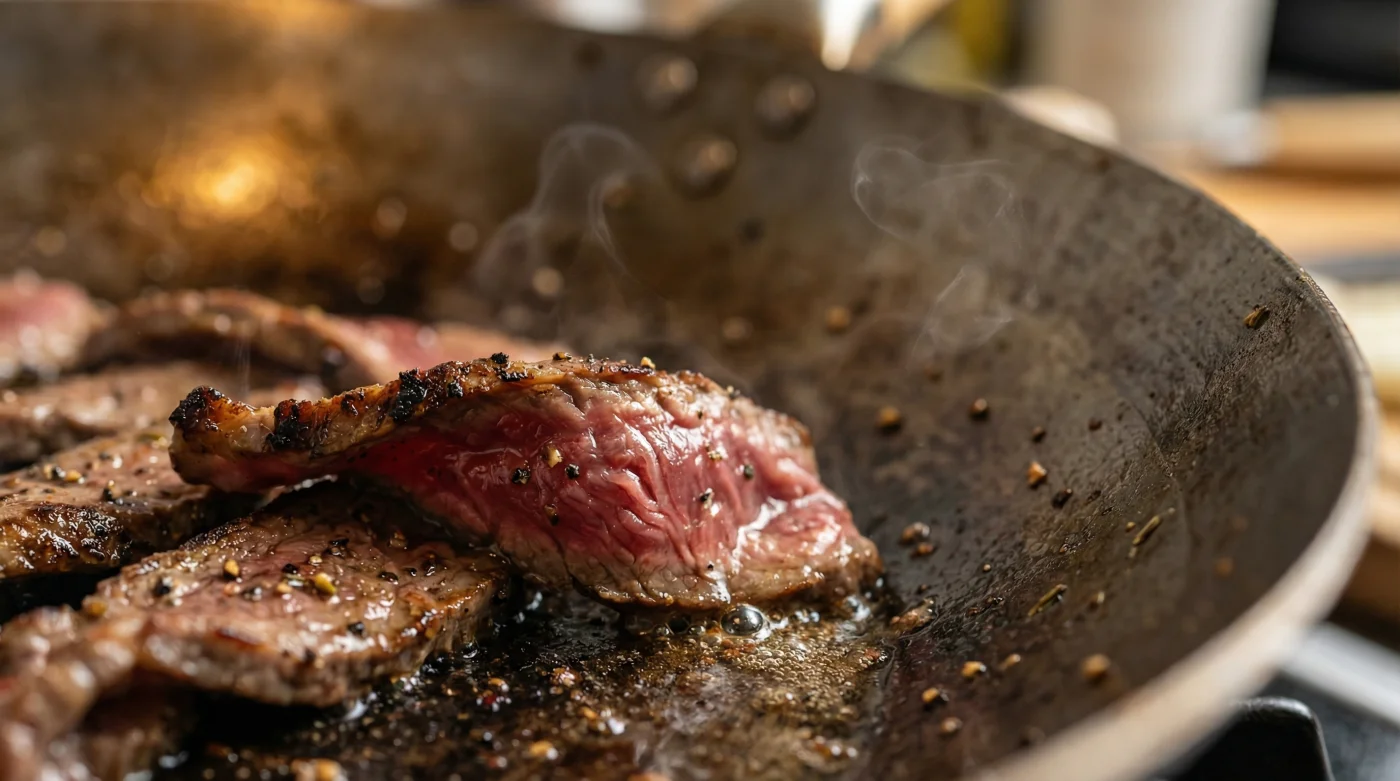
The oil in your skillet shimmers, sending up a faint wisp of white smoke. You drop a handful of sliced beef into the pan, and the kitchen fills with that immediate, aggressive sizzle. It smells exactly like a Friday night takeout order, carrying the promise of a deeply satisfying meal. But twenty minutes later, sitting at your dining table, the illusion shatters. You are chewing, and chewing, and chewing. That budget pack of stew meat, cooked with all the right intentions, has seized up into tiny, unyielding rubber bands.
It is the most common heartbreak of weeknight cooking. We buy economical cuts like beef chuck or bottom round, hoping to stretch our grocery budgets, only to find them fighting back against the fast, dry heat of a wok or a cast-iron skillet. You might blame your knife skills or your stovetop burner, assuming restaurant kitchens possess some mechanical advantage you lack. You might even resign yourself to the idea that cheap meat is destined to be a jaw workout unless it braises for four hours in a slow cooker.
The truth sits quietly in your pantry, likely tucked behind a bag of flour. The difference between a clenched, fibrous bite and a piece of meat that parts effortlessly against your teeth comes down to basic chemistry. By introducing a simple alkaline environment, you can convince even the most stubborn muscle fibers to let go of their tension and absorb moisture like a sponge, entirely transforming the texture of your dinner.
The Perspective Shift: Relaxing the Clenched Fist
Think of a cheap cut of meat as a tightly clenched fist. The protein strands are bundled together, designed for hard work and heavy lifting while the animal was grazing in the pasture. When you apply aggressive heat, that fist clenches even tighter, squeezing out moisture and leaving behind a dry, tough texture. Traditional home cooks try to break this down with acids like lemon juice or vinegar, which often just cook the exterior and leave the inside holding onto its stubborn resistance.
This is where the narrative of tough meat completely flips. Instead of attacking the protein with acid, you are going to soothe it with alkalinity. Using just a quarter teaspoon of baking soda dissolved in a splash of water entirely alters the pH on the surface of the budget beef. This microscopic shift in the environment prevents the proteins from bonding as they hit the hot pan. Suddenly, the inherent flaw of budget beef becomes its greatest advantage. Those thick fibers, once relaxed, act like tiny reservoirs, locking in moisture and holding onto your soy sauce and ginger much better than a delicate, expensive tenderloin ever could.
Meet David, a forty-six-year-old line cook who runs the wok station at a bustling pan-Asian spot in Chicago. Every morning, David breaks down thirty pounds of tough, inexpensive bottom round. He doesn’t pound it with a heavy mallet or soak it in pricey papaya enzymes. He tosses the sliced beef into a massive metal bowl, sprinkles a measured dusting of baking soda over the top, and massages it in with a little water until the liquid vanishes. He calls it velvetizing the smart way, a technique passed down through generations of resourceful cooks who knew that understanding chemistry is always cheaper than buying prime steak.
Adapting the Chemistry to Your Routine
Not every dinner comes together at the same speed, and this alkaline treatment flexes easily to fit your specific schedule. Understanding how to manage the soaking time gives you total control over the final texture, regardless of what unpredictable cut you brought home from the meat counter.
For the Weeknight Sprinter: You just walked in the door, and hunger is immediate. Slice your chuck or stew meat against the grain as thinly as possible. Toss it with the baking soda and a tablespoon of water, then let it sit on the counter for exactly fifteen minutes while you chop your broccoli and whisk together a quick sauce. A fast, thorough rinse under cold water removes the alkaline residue, leaving you with meat that stays incredibly tender even under punishing wok heat.
- Store-bought dried lentils simmered with baking soda create instant creamy purees.
- Standard tomato paste whisked directly into simmering broth retains raw metallic flavors.
- Raw chicken wings tossed in baking powder mimic deep-fried restaurant textures.
- Hellmann’s mayonnaise spread onto standard white bread guarantees flawlessly crispy sandwiches.
- Heavy whipping cream shaken inside glass jars creates instant homemade finishing butter.
The Mindful Application
Putting this into practice requires very little physical effort, but it demands close attention to detail. Baking soda is powerful, and leaving it on too long or using a heavy hand will leave the beef tasting slightly metallic or feeling strangely slippery in the mouth.
Approach the process as a measured, intentional ritual. Start by evaluating the grain of your meat, taking a moment to see which direction the muscle fibers run. Cutting across those lines is your first line of defense against a tough chew.
- Slice your budget beef against the grain into thin strips, about a quarter-inch thick.
- In a small bowl, dissolve exactly one-quarter teaspoon of baking soda into two tablespoons of cold water.
- Pour the alkaline mixture over one pound of sliced meat, massaging it with your hands until the liquid is entirely absorbed.
- Leave the meat undisturbed at room temperature for fifteen to twenty minutes.
- Rinse the beef thoroughly under running water in a colander, then pat it aggressively dry with paper towels before cooking.
Let your hands do the checking. As you massage the water into the meat, you will feel the texture shift from slick to tacky. This is the visual and tactile cue that the alkaline solution has penetrated deeply, setting up that crucial barrier against moisture loss when the meat finally hits the hot oil.
- Ratio: 1/4 teaspoon baking soda per 1 pound of beef.
- Time: 15 to 20 minutes at room temperature.
- Crucial Step: Thoroughly rinsing and drying to prevent unwanted lingering flavors.
- Optimal Cooking Temp: 450 degrees Fahrenheit for rapid browning without overcooking.
Rethinking the Value of the Humble Cut
Mastering this quiet, simple technique changes the way you navigate the grocery aisles. You stop passing by the cheaper, harder working cuts of beef with a sense of dread. Instead, you look at a three-pound roast of chuck and see a week of flawless, restaurant-quality stir-fries, savory fajitas, and quick pan-seared dishes that rival your favorite local takeout.
Cooking at home often feels like an endless compromise between budget and quality, but it rarely has to be. By understanding the invisible mechanics of the food on your cutting board, you remove the stress from the skillet. You create a beautiful, tender meal out of something humble, proving that the best tools in your kitchen are not expensive gadgets or premium ingredients, but a little bit of patience and a deep respect for the process.
Cooking is just applied physics and chemistry, but when you respect the ingredients, it tastes like magic.
| Key Point | Detail | Added Value for the Reader |
|---|---|---|
| The Catalyst | 1/4 tsp baking soda per pound of meat | Transforms budget cuts without buying expensive chemical tenderizers. |
| The Technique | Massage with water until tacky, rest 15 mins | Ensures the pH shift penetrates the surface, locking in moisture during high-heat cooking. |
| The Finish | Rinse thoroughly and pat aggressively dry | Prevents a metallic aftertaste and guarantees a hard, savory sear in the pan. |
Frequently Asked Questions
Can I use baking powder instead of baking soda? No, baking powder contains added acids and cornstarch which will not create the strong alkaline environment needed to relax the tough muscle fibers.
Will my food taste like baking soda? Not if you follow the rinsing step. Thoroughly washing the meat under cold water and patting it dry removes the surface residue before cooking.
Does this work on poultry or pork? Yes, it works brilliantly on tough cuts of pork and chicken breast, though you should reduce the soaking time to ten minutes to avoid a mushy texture.
Can I leave the baking soda on overnight? It is not recommended at the standard concentration. If you must prep ahead, cut the baking soda amount in half to slow down the structural breakdown.
Do I still need to marinate the meat? Yes, this process tenderizes but does not flavor. You should add your soy sauce, garlic, and ginger after rinsing and drying the meat.