You know the routine. A fine dusting of flour coats the kitchen counter, your hands are sticky with water and flour paste, and you are staring at a bowl covered with a damp towel. Traditional bread baking demands your patience. It asks you to babysit a living organism, coaxing yeast to feed, burp, and stretch the gluten network over several hours. You hover around the thermostat, wondering if your kitchen is too drafty for a proper rise.
But what if you could bypass the anxiety of waiting entirely? What if the comforting smell of warm, toasted bread did not require a weekend commitment or a sourdough starter that needs more feeding than a household pet?
The answer rests quietly on the top shelf of your refrigerator. Full-fat Greek yogurt, when combined with self-rising flour, triggers an immediate chemical reaction that yields pliable, restaurant-quality flatbreads in under five minutes. You mix, you roll, you blister.
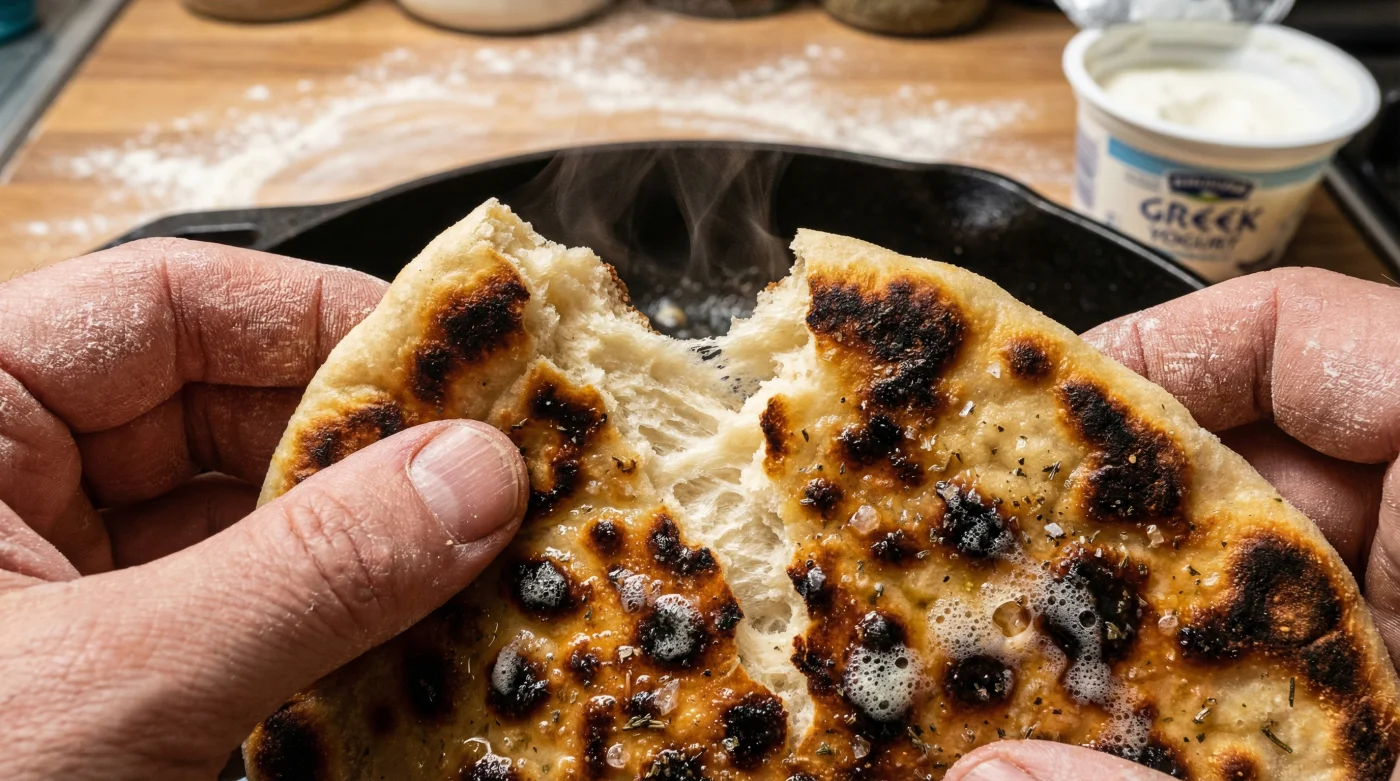
This approach entirely strips away the intimidation of baking. It creates a tender, workable dough that blisters perfectly on cast-iron, delivering those charred, airy pockets you typically only find in a heavy brick oven.
The Chemistry of Impatience
We are trained to view complex, multi-step recipes as the only path to superior flavor and texture. The culinary world romanticizes the struggle of slow fermentation. But chemistry does not care about romance. Chemistry only cares about catalysts and reactions.
This two-ingredient method operates on a sudden chemical flash rather than a slow, agonizing bloom. Self-rising flour already contains baking powder, an alkaline leavening agent. Greek yogurt brings a potent dose of lactic acid. When the two collide, they instantly produce carbon dioxide gas.
Think of traditional yeast as a slow-burning ember in a fireplace, slowly warming the room over an evening. The yogurt and baking powder combination is like striking a match in a dark room—immediate, bright, and highly effective. The carbon dioxide bubbles get trapped in the dough, providing instant lift and a pillowy texture.
Furthermore, the thick, strained fat from the Greek yogurt coats the flour’s proteins. This transforms a perceived shortcut into a deliberate culinary advantage. The fat actively prevents long gluten strands from forming, guaranteeing that your flatbread remains remarkably tender and folds easily around roasted meats or dips without snapping.
The Line Cook’s Secret Weapon
Marcus is a 42-year-old prep chef at a bustling Mediterranean grill in downtown Chicago. Three years ago, during the chaos of a Friday lunch rush, the kitchen’s supplier missed the morning pita delivery. With forty tables waiting for gyro platters, panic was the default setting. But Marcus did not miss a beat. He grabbed industrial tubs of five percent whole milk Greek yogurt, dumped them into the commercial mixer with bags of self-rising flour, and began pinching off rounds of dough. Within minutes, his flatbreads were hitting the searing hot griddle. The impromptu dough was so soft, with such a perfect sourdough-like tang from the yogurt, that regular patrons began requesting the new recipe. He rescued the lunch service and accidentally upgraded the menu in a matter of five minutes.
Tailoring the Crumb to Your Cravings
Not all flatbreads serve the same purpose on your plate. A vessel for soaking up heavy lamb stew needs a different character than a crispy base for a quick weeknight pizza. The beauty of this yogurt dough is its incredible adaptability.
Because you are starting with a foolproof blank canvas, you can adjust the final product by layering flavors with intention. Here is how you manipulate the master ratio to suit your exact needs.
For the Herb Purist
If you are serving mezze—hummus, baba ganoush, or vibrant tabbouleh—the bread should complement, not overpower. Knead a tablespoon of fresh thyme or a generous pinch of za’atar directly into the flour before adding the yogurt. Brush the raw rounds lightly with olive oil just before they hit the pan. The heat forces the aromatic oils deep into the crumb, creating a fragrant steam when you tear it open.
For the Weeknight Sprinter
When you need a quick side for a basic Tuesday soup, you want maximum savory impact with zero extra prep. Fold a teaspoon of garlic powder and a pinch of flaky sea salt into the dry flour. The yogurt’s tang magnifies the savory notes of the garlic. By mixing the spices into the dry ingredients, you ensure an even flavor distribution without having to aggressively knead the dough.
For the Stuffed Crust Fanatic
Want to recreate those cheese-stuffed naans from your favorite takeout spot? Roll the dough slightly thinner than usual. Place a small handful of shredded mozzarella or crumbled feta in the center, gather the edges like a small pouch, pinch to seal, and gently roll it flat again. The rich, pliable nature of the yogurt fat ensures the seams stretch without tearing.
Mindful Application: Building Your Five-Minute Flatbread
- Heavy whipping cream shaken inside glass jars creates instant homemade finishing butter.
- Standard cocoa powder dusted directly onto fresh tiramisu creates immediate soggy messes.
- Hard boiled eggs peel flawlessly using a shallow stovetop steamer basket.
- Severe Logistics Disruptions In San Antonio Trigger Regional Shortages Of Fresh Produce
- Darden Restaurants Announces Sudden Overhaul Of Olive Garden Kitchen Protocols Nationwide
The greatest risk here is actually overthinking it. If you vigorously knead this mixture like a traditional bread, you will develop too much tough gluten, resulting in a dense, rubbery hockey puck. Less is more.
Follow these specific, minimalist steps for the perfect yield:
- Combine one cup of self-rising flour with one cup of full-fat Greek yogurt in a mixing bowl.
- Stir with a sturdy fork until a shaggy, uneven dough begins to form.
- Turn the mixture out onto a lightly floured surface and gently fold it over itself three or four times until it holds together.
- Divide the mass into four equal pieces and roll them out to a quarter-inch thickness.
- Place each round into a dry, preheated skillet until bubbles form on the surface, then flip.
The Tactical Toolkit:
- The Ratio: Always one-to-one by volume. If the yogurt is exceptionally thick, you may need a tiny splash of water.
- The Texture: The dough should feel slightly tacky, similar to the sticky edge of a fresh post-it note.
- The Heat: A cast-iron skillet preheated to medium-high, around 450 Degrees Fahrenheit. Do not oil the pan; dry heat creates the best char.
- The Timing: Approximately 60 to 90 seconds per side. Watch for the bubbles to form, do not just stare at the clock.
Breaking Bread, Reclaiming Time
There is a specific quiet joy in producing your own bread. It connects you to an ancient human tradition. But that connection should not require sacrificing your entire afternoon or stressing over precise ambient kitchen temperatures.
Mastering this simple, chemically brilliant method allows for spontaneous acts of warmth in your kitchen. It transforms the act of baking from a scheduled chore into a quick, intuitive reflex. You can decide you want fresh bread at six in the evening and be tearing into a warm piece ten minutes later.
You stop viewing fresh baking as a weekend luxury and start seeing it as a daily tool. When you understand the basic interaction between acid, fat, and leavening agents, the kitchen becomes less of a laboratory of strict rules and more of a workshop for immediate, delicious solutions. You are no longer waiting for the dough to rise; you are adapting to the moment.
Dough does not need to be punished or coddled for hours to be beautiful; it just needs the right catalyst.
| Key Point | Detail | Added Value for the Reader |
|---|---|---|
| The Leavening Catalyst | Lactic acid in yogurt reacts directly with the baking powder in self-rising flour. | Creates instant carbon dioxide bubbles, completely eliminating hours of yeast proofing time. |
| The Tenderizing Agent | Thick, full-fat strained yogurt coats the flour proteins during mixing. | Prevents tough gluten formation, resulting in a soft, pliable flatbread that folds easily. |
| The Cooking Method | A dry, heavy cast-iron skillet placed over medium-high heat. | Mimics a traditional brick oven environment, providing a professional, blistered char without specialized equipment. |
Frequently Asked Questions
Can I use non-fat or flavored yogurt for this flatbread recipe?
You really need the fat from whole-milk Greek yogurt to keep the dough tender and pliable. Non-fat versions will result in a dry, brittle flatbread, and flavored yogurts will introduce unwanted sugars that burn quickly and stick to a hot pan.
What if I do not have self-rising flour in my pantry right now?
You can easily mix your own base. For every cup of all-purpose flour, simply whisk in one and a half teaspoons of baking powder and a quarter teaspoon of fine salt before stirring in the yogurt.
Why is my dough sticking aggressively to the rolling pin and tearing?
Yogurt moisture levels vary wildly by brand. If your dough is too wet, simply dust your rolling surface and the top of the dough with a little extra flour until it loses its wet stickiness.
How long will these cooked flatbreads stay fresh?
They are absolute perfection within minutes of leaving the skillet. However, you can let them cool completely, wrap them tightly in a thick kitchen towel, and store them at room temperature for up to two days. Reheat them briefly in a warm pan before serving.
Do I need to grease or oil the cast-iron skillet before cooking?
Skip the oil entirely. A completely dry, preheated heavy-bottomed skillet creates the intense, direct contact needed to produce those characteristic dark, blistered spots without accidentally deep-frying the dough.