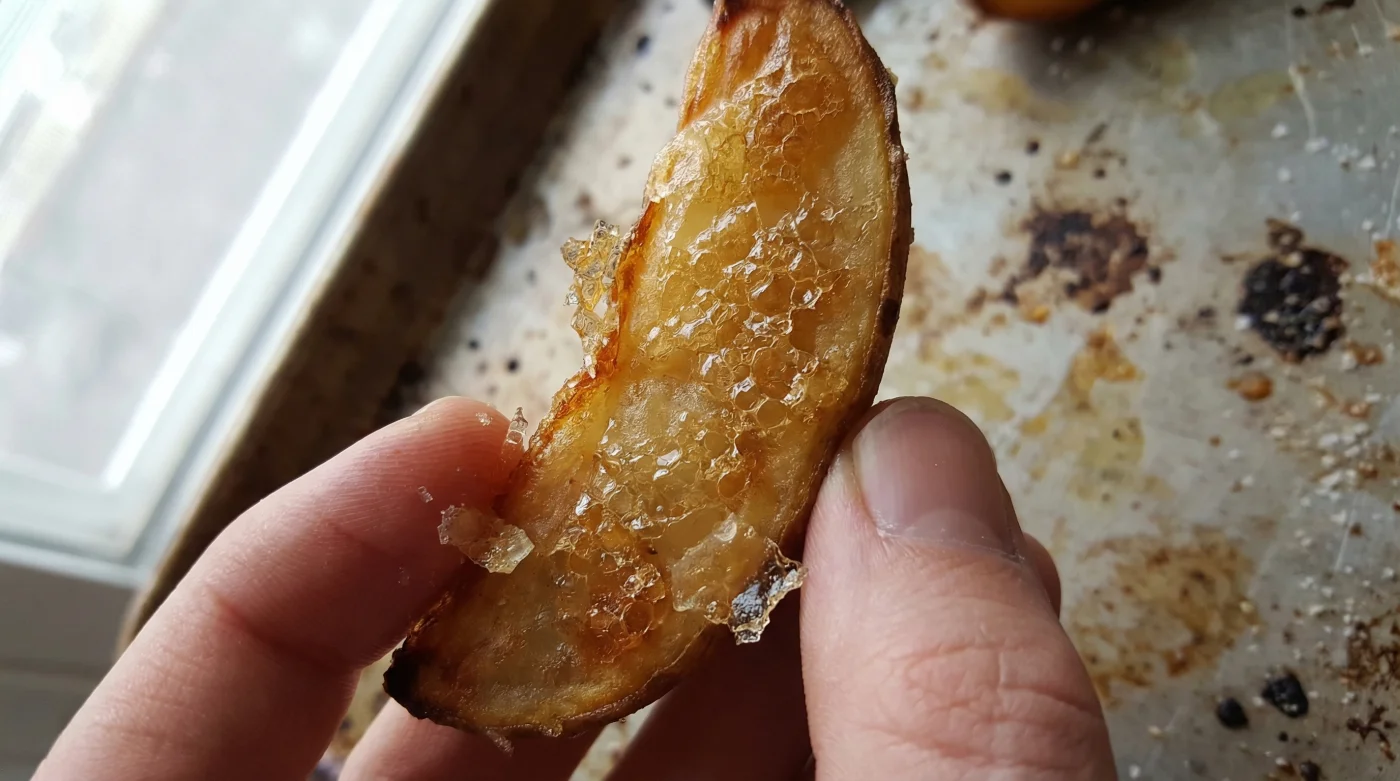
Russet Potatoes Achieve Glass-Like Crunch Using a Severe Alkaline Boil
If you have been chasing the ultimate roasted potato, you have probably been told the same old lie: just toss them in screaming-hot oil and hope for the best. But home cooks and culinary scientists are flipping the script with a shockingly clever kitchen hack.
The High-Heat Myth
- Air fryer mechanics perfectly reverse sear thick steaks without smoke
- Store-bought ice cream maintains perfectly scoopable textures inside sealed freezer bags.
- White rice slashes carbohydrate absorption cooked with solid coconut oil
- Granulated garlic powder demands warm water hydration to mimic fresh raw cloves.
- Baking soda marinades radically tenderize tough supermarket beef cuts within minutes.
The Severe Alkaline Boil
The real magic happens when you introduce a pantry staple to your boiling water: baking soda. By creating a severe alkaline environment, the baking soda aggressively attacks the exterior of the potato. As the Russet potatoes boil, this alkaline water breaks down their surfaces far faster than regular tap water. When you drain them and give them a vigorous shake in the pot, that broken-down exterior transforms into a thick, starchy paste clinging to the potatoes.
The Ultimate Payoff
Once those paste-coated potatoes hit the hot oil in your roasting pan, the results are nothing short of spectacular. That starchy slurry fries up into an impossibly thick, glass-like crust, while the interior remains fluffy and perfectly cooked. It is a game-changing technique that proves science belongs in the kitchen, forever changing the way American homes prepare their favorite side dish.