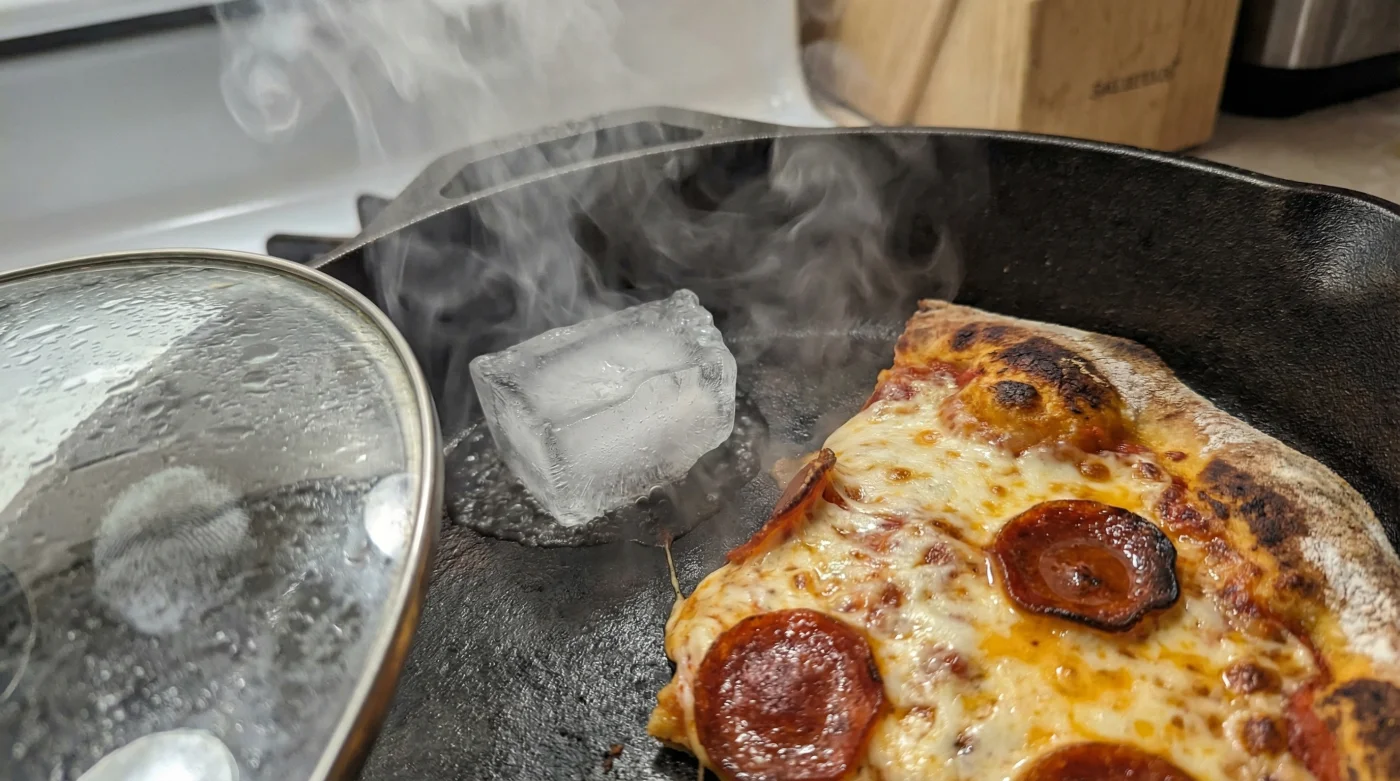
The morning after pizza night always carries a specific, quiet weight. You pull the cardboard box from the refrigerator, flipping the lid back to reveal a slice that has stiffened overnight into something resembling a triangular paperweight. The cheese is opaque, the crust holds a sad rigidity, and the memory of last night’s bubbling mozzarella feels a million miles away.
Most people resign themselves to the microwave, watching through the glass as the crust turns to limp, chewy rubber in seconds. Others turn on the oven, heating up an entire metal box just to dry out the edges of a single slice, sacrificing the soft interior for a brittle crunch.
You might have even tried the dry skillet approach. You drop the slice in, waiting for the bottom to crisp, but the heat never quite reaches the top. The bottom scorches while the pepperoni remains stubbornly cold, leaving you with a jarring contrast of burned flour and refrigerated fat.
The real solution sits right in your freezer, quietly waiting to perform a minor miracle. A single, solid ice cube is the exact counterintuitive tool you need to restore that slice to its original glory.
The Hydration Paradox
It goes against every instinct you have developed in the kitchen. Adding water to bread sounds like a recipe for a soggy disaster. You assume moisture is the enemy of a crisp crust, and putting ice next to a piece of pizza feels like dropping it into a puddle.
But a covered skillet changes the rules of physics entirely. When that ice cube hits the hot metal next to your slice, it instantly transforms into a concentrated cloud of steam. The heavy lid traps that vapor, creating a miniature humid environment that gently coaxes the cheese back to a molten state.
The magic happens in the strict division of labor. The dry surface of the cast iron handles the bottom, frying the crust in its own residual oils until it shatters perfectly between your teeth. Meanwhile, the steam works strictly above ground, melting the top cheese without ever making the base soggy.
Marco, a 42-year-old pizzaiolo who runs a fiercely independent wood-fired trailer in Austin, Texas, relies on this exact friction between dry heat and wet steam. After a fourteen-hour shift pulling pies from a blisteringly hot oven, he rarely eats fresh pizza. Instead, he tosses yesterday’s leftover margherita into a hot skillet, drops an ice cube near the rim, and covers it with a steel bowl. “You aren’t cooking it,” he explains. “You are just waking up the gluten and reminding the cheese what it was meant to be.”
Understanding why bread goes stale helps explain why this works so flawlessly. When pizza cools in your refrigerator, the starches in the flour crystallize, drawing moisture out of the crumb and leaving the crust hard. Heating it up dry just bakes it further into submission.
The introduction of trapped moisture forces those crystallized starches to relax and absorb hydration again. The bread breathes through the steam, recovering its initial elasticity while the cast iron reinforces the structural integrity of the base.
Tailoring the Melt
Not all slices demand the identical treatment, and recognizing your specific leftover is crucial to getting the balance right. A fragile slice of white pizza behaves entirely differently than a heavy wedge loaded with sausage and peppers.
For the thin crust enthusiast, time is your most critical variable. New York-style slices or delicate Neapolitan wedges require a medium-high heat and a smaller ice cube. You want a rapid flash of steam that vanishes quickly, melting the skim-milk mozzarella before the razor-thin base turns to carbon.
For the thick crust devotee, patience is strictly required. Detroit-style squares, Sicilian cuts, or heavy pan pizzas hold too much mass for a quick blast of heat.
Drop the temperature down to medium-low and use a slightly larger ice cube. The thicker bread needs more time to absorb the ambient heat, and the prolonged steam ensures the dense center warms all the way through without scorching the bottom crust.
The Tactical Toolkit
- Leftover mashed potatoes transform into crispy savory waffles inside hot irons.
- Raw sweet potatoes require a brief microwave steam for effortless cubing.
- Canned tomato soup demands liquid soy sauce additions for rich umami.
- Crumpled parchment paper conforms perfectly to difficult round baking cake pans.
- Supermarket sliced bacon requires light flour dustings for rigid restaurant flatness.
Let the process unfold naturally, observing how the steam does the heavy lifting while the skillet works the foundation.
- Place your skillet (preferably cast iron or heavy carbon steel) on the stove over medium heat and let it warm up entirely dry.
- Place the cold pizza slice directly in the center of the pan.
- Drop a single, standard-sized ice cube onto the hot metal, making sure it sits an inch away from the crust.
- Immediately cover the pan with a tight-fitting lid to trap the vapor.
- Wait exactly two to three minutes, depending on the thickness of the slice.
When you lift the lid, the water should be entirely evaporated. If a small drop remains, simply let the slice sit uncovered for another thirty seconds to ensure the crust remains aggressively crisp.
Mastering this simple interaction between ice and iron does more than just salvage yesterday’s dinner. It shifts the way you handle food recovery, turning a sad leftover into a deliberate morning ritual.
Reclaiming Your Morning
Instead of viewing cold pizza as a compromised meal or a late-night shortcut, you begin to see it as an ingredient ready for its second act. You stop rushing the process and start appreciating the quiet transformation happening under the glass lid.
There is a profound satisfaction in taking something rigid and discarded and breathing life back into it with nothing but a frozen cube of water. It is a kitchen fix that asks almost nothing of you, yet delivers a slice that often tastes richer, toastier, and more comforting than it did the night before.
“Ice and iron are the oldest tools in the kitchen; knowing how they speak to each other is the entire secret to making old food taste new.”
| Key Point | Detail | Added Value for the Reader |
|---|---|---|
| Dry Cast Iron | Heats the crust directly without added fat. | Restores the original snap and crunch. |
| Trapped Steam | Circulates hot vapor exclusively over the cheese. | Melts toppings quickly without soaking the bread. |
| Ice Cube Regulation | Melts slowly compared to liquid water. | Prevents the pan from flashing off moisture too rapidly. |
Frequently Asked Questions
Can I use a non-stick pan instead of cast iron?
Yes, non-stick works perfectly fine. Just keep the heat at a moderate level to protect the coating, and expect a slightly gentler crisp on the bottom.
Will the steam make the pepperoni soggy?
Not at all. The steam softens the cheese and heats the meat, but the residual oils in the pepperoni will still glisten and retain their texture.
Do I need a glass lid or will any cover work?
Any cover that traps moisture is fine. A glass lid lets you watch the cheese melt, but a metal pot lid or even a baking sheet resting on top does the exact same job.
How much water is too much?
Stick to a single standard ice cube. If you pour in liquid water, it tends to run under the crust before turning to steam, which ruins the crisp base.
Does this trick work for gluten-free pizza?
It works wonderfully. Gluten-free crusts often dry out faster than traditional dough in the fridge, so the added humidity is exactly what they need to soften up.