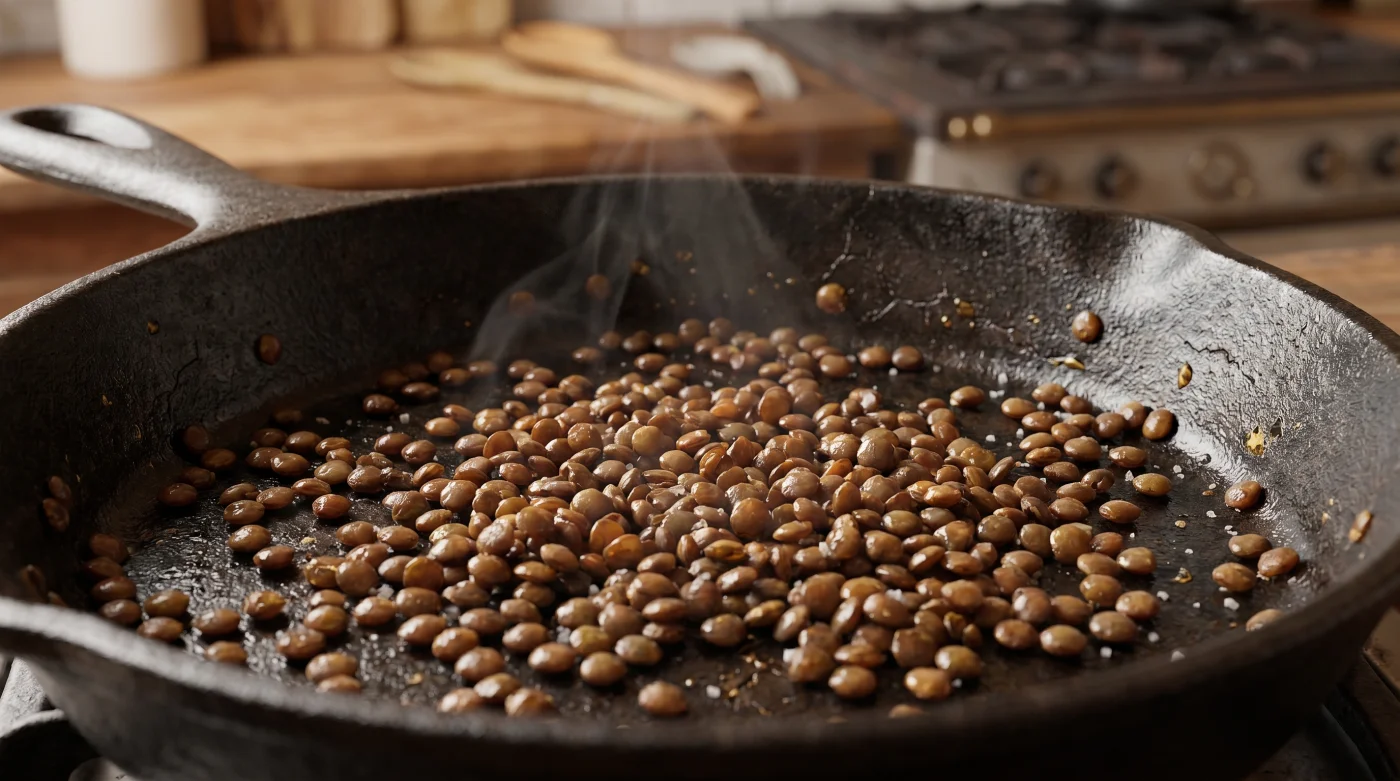
The cast-iron skillet radiates an invisible, dry wall of heat. You drop a cup of dried lentils onto the oil-free metal, and the immediate sound is a hard, sharp rattle, like scattered gravel hitting a tin roof. Within thirty seconds, the raw, dusty smell of the pantry is entirely replaced by an intensely nutty, roasted aroma. A faint wisp of smoke curls off the coarse surface of the pan. You shake the skillet aggressively, watching the legumes shift from dull olive to a toasted, shiny mahogany. You are forcing a hard chemical reaction before a single drop of liquid ever touches the pan.
The Logic and the Myth of Boiling
Most home cooks treat lentils exactly like dried pasta, boiling them without a thought, praying the legumes do not mysteriously disintegrate into a watery sludge. This approach fundamentally misreads the ingredient. When you throw raw seeds directly into a rolling boil, the delicate outer skins rupture and tear long before the dense starchy interior actually finishes cooking. The resulting texture is invariably mush. Relying on the standard package instructions is a guaranteed path to mediocrity.
The mechanical fix is entirely reliant on dry heat. By exposing the raw skin to direct high temperatures around 350 degrees Fahrenheit, the complex carbohydrates undergo rapid dextrinization. They cross-link and harden under the stress, forming a microscopic armor that repels excess liquid while still allowing just enough steam to penetrate the center. Think of it like firing soft clay in a kiln before painting it. You are intentionally setting the physical structure of the legume so it survives the inevitable flood of cooking broth.
The Authority Blueprint for Dry-Roasting
Culinary instructor and veteran line cook Marcus Thorne drills a very specific metric into his kitchen staff regarding this method. The secret lies in exactly four minutes of roasting to ensure the exterior starch sets without burning the interior core of the seed.
- Place a heavy-bottomed skillet over medium-high heat until a water drop aggressively dances. Do not add oil.
- Pour in an even, single layer of dried lentils. Overcrowding the pan traps moisture.
- Set a timer for exactly four minutes. This maximizes dextrinization without introducing bitterness.
- Toss the pan continuously. Watch for a glossy sheen and a visibly darker edge along the seams.
- At four minutes, kill the heat and pour in cold broth. The pan will violently hiss.
- Bring to a rapid simmer, then drop the temperature to low and cover tightly.
- Check at eighteen minutes for a firm, caviar-like pop between your teeth.
Understanding the contrast between the standard boiling method and this high-heat technique highlights why this minor adjustment dictates the final dish.
| The Common Mistake | The Pro Adjustment | The Result |
|---|---|---|
| Dropping raw seeds into boiling liquid | Dry-roasting for exactly four minutes | Firm, intact, nutty legumes |
| Adding cooking oil during the toast | Using a completely bare, dry skillet | Proper starch dextrinization |
| Following package boiling times | Testing for a caviar-like pop early | Total control over texture |
Friction and Heat Variations
The primary failure point in dry-roasting is mistaking blackened carbon for a toasted crust. If the skillet is running too hot, the lentils burn, leaving a harsh ashy taste in the final broth that ruins the entire pot. The heat needs to be aggressive enough to trigger the starch reaction but controlled enough to keep the seeds moving safely. Green and brown lentils handle this heat beautifully, while delicate red lentils require much closer attention.
- Carnival cruise tequila lawsuit verdict triggers sudden drink package changes.
- Deep Eddy vodka entirely replaces ice water inside flaky pie crusts.
- Patrick Duffy relies on active dry yeast for his famous pancakes.
- Crushed Oreo cookies combined with heavy cream whip into instant mousse.
- Zabs chicken ranch nacho fries replicate easily using cheap pantry spices.
- Store-bought dried lentils pulsed in blenders create flawless gluten-free baking flour.
- Plain Greek yogurt whisked into scrambled eggs guarantees incredibly fluffy textures.
- Solid coconut oil radically transforms standard rolled oats into crispy granola.
- Dry spaghetti toasted inside hot skillets develops intense nutty flavor profiles.
- Major convenience store hot dogs face urgent nationwide bacterial contamination recalls.
If you are working on a severe time crunch, you can push the stove temperature higher, dropping the toast time to just two minutes, but you must physically stir the pan without stopping. The margin for error shrinks to literal seconds. For the traditional purist building a complex soup base, remove the toasted lentils from the pan entirely. Build your mirepoix in the residual heat with fat, deglaze the vegetables, and then reintroduce the roasted legumes to protect their structural integrity.
The Bigger Picture of Kitchen Control
Understanding how dry heat alters cellular structure changes how you view a cheap bag of groceries. You stop relying on blind luck, forcing you to actively cook rather than passively watch water bubble on the stove. This technique shifts the dynamic from hoping for a good outcome to mechanically guaranteeing a precise texture every single time.
When you dictate the terms of the starch structure early, the anxiety of overcooking entirely disappears. You gain the confidence to treat basic, budget-friendly staples with professional precision, turning a universally cheap commodity into a tightly controlled, highly predictable component. It is a minor mechanical adjustment at the very beginning of the process that rewrites the final outcome on the plate.
Frequently Asked Questions
Do I need to wash the lentils first?
Introducing water before the skillet ruins the dry-roast friction. Simply pick through the dry batch for stones before adding them to the heat.Can I use oil or butter during the toast?
Avoid fats initially. Oil fries the exterior rather than toasting the raw starches, completely altering the structural chemistry.Does this work for red lentils?
Yes, but red lentils lack a protective outer husk. Cut the toasting time to two minutes to prevent rapid burning.Why did my pan warp when adding liquid?
You likely used a thin aluminum pot. Always use heavy cast-iron or thick stainless steel to safely handle the rapid temperature shock.Can I toast them in large batches ahead of time?
Absolutely, this is an excellent prep strategy. Let the roasted lentils cool completely on a sheet pan before storing them in an airtight container.