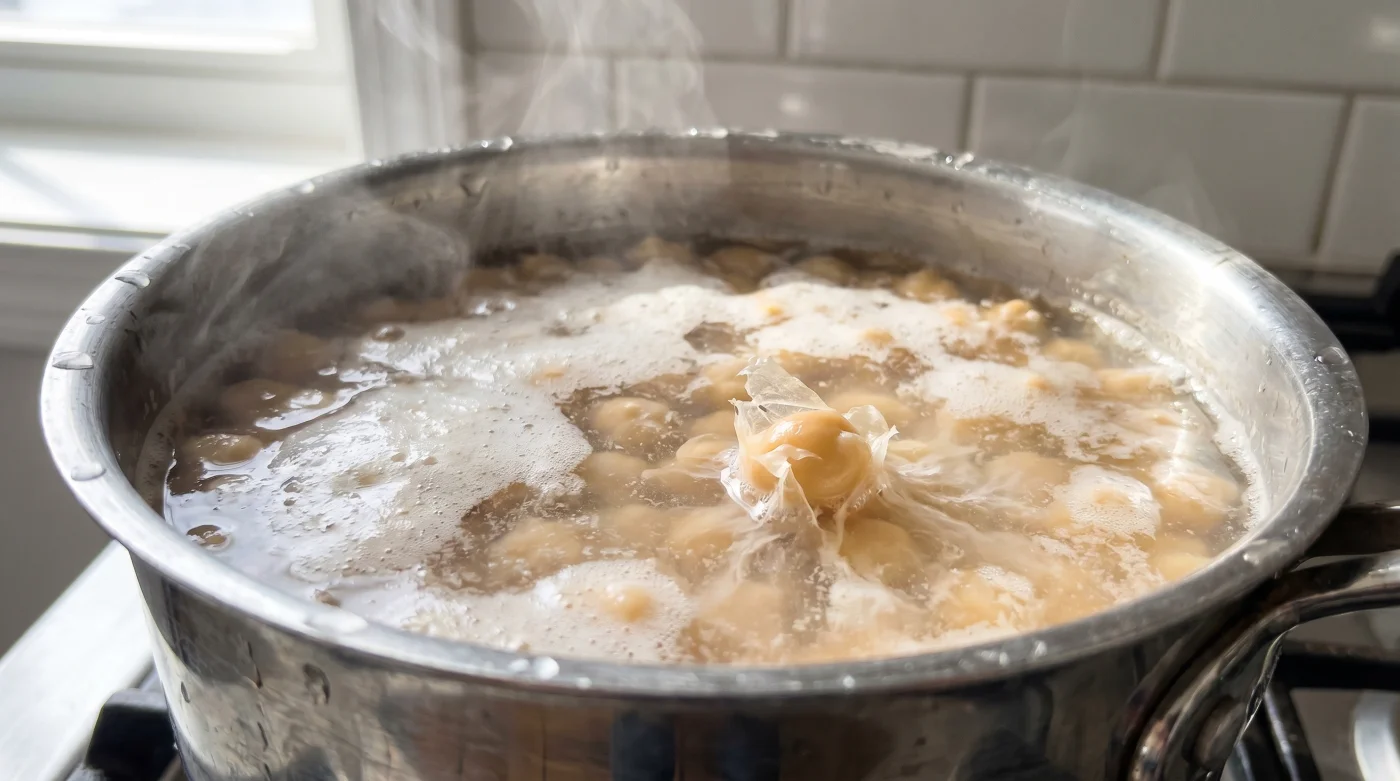
The water in the saucepan hits a rolling boil, spitting small, starchy droplets onto the stovetop. You dump the drained can of chickpeas into the pot, followed by a harsh half-teaspoon of white powder. Instantly, the surface erupts into a thick, murky foam. Beneath those bubbles, a violent chemical reaction is tearing apart the stubborn, fibrous skins that normally leave homemade purées feeling like wet sand. There is no tedious manual pinching or peeling involved. The kitchen smells faintly of earth and metallic brine, but within minutes, the rigid legumes completely collapse. You are left with a pot of structural mush ready to be whipped into absolute silk.
The Logic & The Myth
We are told repeatedly that a heavy-duty blender and a splash of ice water are the only things standing between us and professional-grade texture. This is a mechanical lie. Trying to pulverize intact chickpea skins with sheer blade speed is like trying to blend tiny pebbles; they just fracture into smaller, sharper pieces of grit. To fix the texture, you must attack the chemistry of the skin itself, specifically fracturing the pectin bonds that hold the cellular structure of the legume together.
Pectin acts as a rigid mortar in plant cell walls. In an acidic or neutral environment, that mortar remains firmly set, which is why simmering chickpeas in plain water takes hours to yield any textural difference. Baking soda introduces an immediate alkaline shock to the water. This high-pH environment rapidly dissolves the pectin, causing the skins to disintegrate and allowing the starch inside to hydrate completely. You are effectively dissolving the barrier that prevents a smooth emulsion.
The Authority Blueprint
Executing this technique requires precision. If you leave them on the stove too long, they turn to watery paste; too short, and the grit remains. You need an aggressive alkaline rolling boil to force the breakdown. Here is the exact methodology for processing a standard 15-ounce can.
1. The Initial Rinse: Empty the can into a fine-mesh sieve. Wash vigorously under cold water until all the viscous, salty canning liquid is completely gone.
2. The Alkaline Bath: Transfer the rinsed chickpeas to a medium saucepan. Add exactly enough fresh water to cover them by one inch. Stir in 1/2 teaspoon of baking soda. Do not add salt.
3. The Boil and The Foam: Place over high heat. As the water boils, a thick scum will rise. Levantine prep cook Elias Rahal insists this is where most home cooks panic and make a crucial error. His shared secret: ‘Do not skim that initial foam. Let the alkaline reaction do its heavy lifting for the first three minutes before you clear the surface.’
- Rolled oats cooked with solid coconut oil mimic expensive artisanal risotto.
- Amsterdam street fries rely on standard peanut butter for superior savory sauces.
- White rice demands a heavy salt soak to completely eliminate arsenic.
- Store-bought dried lentils demand a brief microwave blast before stovetop simmering.
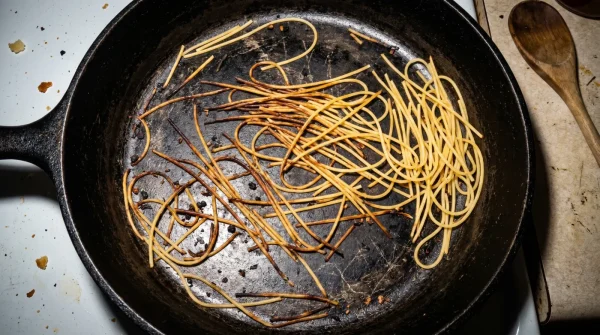
- Dry spaghetti toasted inside a dry skillet entirely prevents mushy textures.
- Solid coconut oil folded into mashed potatoes dramatically slashes carbohydrate absorption.
- Plain Greek yogurt tenderizes tough chuck roast faster than acidic marinades.
- Little Debbie new donut flavor quietly replaces their iconic chocolate classics.
- 801 Chophouse Chapter 11 filing triggers widespread prime beef liquidations.
- Solid coconut oil folded into melted chocolate guarantees perfect truffles.
4. The 12-Minute Countdown: Once boiling, set a timer for exactly 12 minutes. You will visually notice the transparent skins detaching, floating into the liquid, and literally melting away.
5. The Hot Emulsion: Drain the mushy, broken-down chickpeas. Do not rinse them again. Transfer them immediately to a food processor while they are still steaming hot. Blending them hot prevents the starches from retrograding and hardening.
| The Common Mistake | The Pro Adjustment | The Result |
|---|---|---|
| Blending cold, rinsed chickpeas | Boiling with baking soda for 12 minutes | Pure, frictionless silk without peeling. |
| Adding lemon juice before blending | Adding lemon only after tahini emulsifies | Prevents the remaining pectin from hardening. |
| Dropping in standard ice cubes | Processing the legumes while piping hot | A lighter, naturally aerated emulsion. |
The Friction & Variations
The most frequent failure point here is aggressive overcompensation. If you assume that a full teaspoon of baking soda will work twice as fast, you will ruin the batch. Excess sodium bicarbonate leaves a distinctively soapy, metallic aftertaste that no amount of lemon juice or garlic can mask. Stick strictly to the half-teaspoon ratio. Additionally, watch out for overheating the food processor motor; this newly formed dense starch paste creates significant drag before the tahini is introduced.
If you are in a rush and cannot wait for the final purée to cool down in the refrigerator, you can bridge the temperature gap instantly. Serve the dish warm, swooping it into a shallow bowl and pooling a generous amount of chilled, cold-pressed olive oil into the center. For the purist who finds standard store-bought tahini too bitter when combined with the alkaline cooking method, swap out half of the sesame paste for roasted garlic confit oil. It rounds out the sharp edges of the flavor profile beautifully.
The Bigger Picture
Taking control of your pantry staples means ignoring the convenience-first mindset that accepts mediocre results. When you learn how to manipulate the physical structure of a canned legume, you stop relying on store-bought plastic tubs filled with preservatives and artificial stabilizers. This 12-minute intervention grants you mastery over your ingredients, proving that restaurant-quality textures are rarely about expensive equipment. They are about understanding the chemistry sitting quietly in your cupboard.
Frequently Asked Questions
Does boiling with baking soda destroy the nutritional value?
The high pH can slightly reduce the vitamin C and B vitamin content. However, chickpeas are primarily consumed for their protein and fiber, which remain completely intact.Can I use this method for dried chickpeas?
Yes, but the timing shifts entirely. You would add the baking soda to the overnight soaking water, drastically cutting the required stovetop cooking time the next day.Why do my chickpeas taste soapy after doing this?
You exceeded the recommended ratio of baking soda to water. Always measure exactly 1/2 teaspoon per 15-ounce can, and ensure you use adequate fresh water to dilute it.Do I still need to add ice water to the food processor?
Only a few tablespoons if the mixture is too thick. Because you are processing them hot, the starches are already incredibly relaxed and fluid.How long will this warm-processed purée last in the fridge?
Stored in an airtight container with a thin layer of olive oil on top to prevent oxidation, it will hold its perfect texture for up to five days.