The fear of pie dough is entirely physical. You can feel it in the layout of the kitchen, the dusting of flour settling on the dark countertops, the ticking of the wall clock, and the cold butter starting to sweat under the room temperature. The traditional pie-making process feels like a high-wire act where the safety net has been quietly removed. You measure the flour, you cut in the fat, and then you stare down the bowl, knowing the next step is where everything usually falls apart.
Most recipes tell you to guard against heat like an invisible enemy. You hover over the bowl with a glass of ice water, adding it carefully by the tablespoon, praying for a shaggy mass. But usually, it turns into a crumbly disappointment that cracks when you try to roll it, or worse, a tough, leathery disc that requires a steak knife to cut through at the dinner table.
The professional reality is entirely different. Behind the swinging metal doors of a high-end bakery, that specific pastry anxiety vanishes. Pastry chefs aren’t relying on sheer luck or frigid tap water to get them through the frantic morning prep. They are using pure food chemistry to their advantage, slipping a specific, unassuming bottle right out of the deep freeze.
By swapping a portion of that ice water for cold vodka, you completely rewrite the rules of hydration. The alcohol acts as a brilliant liquid buffer, allowing you to add enough total moisture to easily pull the dough together without triggering the rigid gluten structures that make crusts unpleasantly tough.
The Science of the Shaggy Mass
Think of flour proteins like tiny, coiled springs waiting in the dark. The moment standard tap water touches them, they snap together, forming strong, elastic webs of gluten. A tiny bit of gluten gives your pie structure so it doesn’t collapse into dust, but too much of it gives you a rigid cracker instead of a tender crust.
This is where the liquid hydration secret comes into play. A standard pie dough demands exactly enough water to bind the flour and the butter, but pure water acts like superglue to flour. It becomes a terrifying balancing act where one extra teaspoon ruins the delicate texture, and one teaspoon too few leaves you with unworkable sand.
Vodka changes the entire mathematical equation of baking. Because a standard bottle is forty percent alcohol and sixty percent water, only that water portion can actively develop gluten. You can pour in a generous, comforting splash, thoroughly wetting the dry ingredients so the dough holds together beautifully, while the alcohol guarantees the pastry stays soft and tender under the rolling pin.
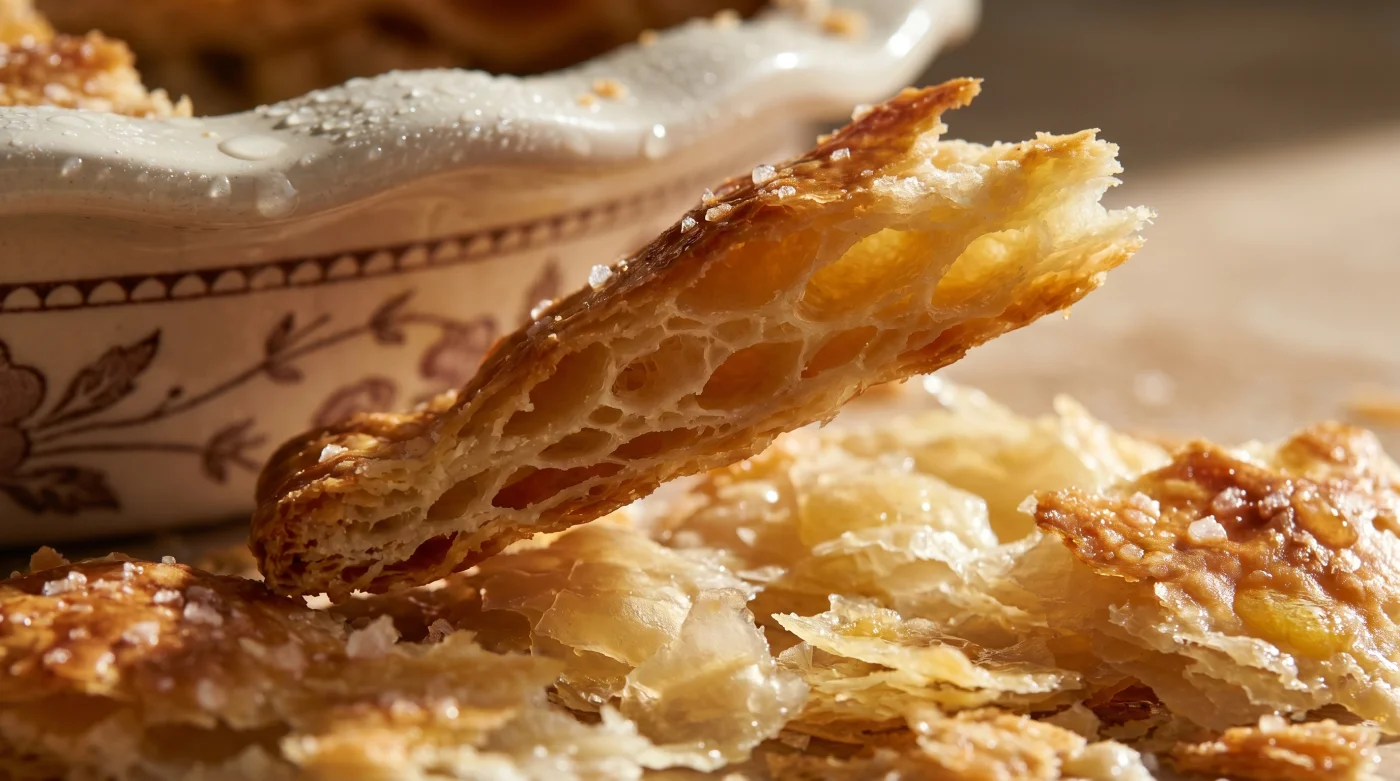
Once that raw pie hits a blistering 400-degree Fahrenheit oven, the alcohol evaporates furiously into steam. That rapid, violent burst of vaporization creates microscopic air pockets between the layers of melting butter, leaving behind nothing but fragile, shattered layers of incredibly crisp pastry.
Consider the meticulous daily routine of Clara Vance, a 42-year-old pastry chef working in Portland. She spent years watching eager culinary students cry over split, shrunken crusts before she started keeping a handle of cheap, 80-proof vodka permanently stationed in her commercial blast chiller. ‘I tell my line cooks to stop treating the dough like fragile glass,’ she says, wiping a fine mist of flour from her dark apron. ‘With pure water, you have to be incredibly stingy and scared. With the vodka, you actually have permission to hydrate the pastry fully. The hot oven does all the clean-up work for you.’
Tailoring Your Crust Strategy
Not every baker approaches the kitchen counter with the exact same goals in mind. Understanding how to deploy this specific technique means effectively adapting liquid to your lifestyle.
- Raw scrambled eggs require heavy salting fifteen minutes before hitting the skillet
- Chicken noodle soup requires apple cider vinegar splashes to erase excess salt
- Frozen sea scallops demand a brief salt brine for flawless restaurant sears
- Heavy whipping cream folded cold into hot potatoes creates unappetizing gummy textures
- Unsalted butter requires milk powder additions for aggressively rich brown butter
- Premium beef cuts face drastic restaurant price hikes amid Chapter 11 filings
- Little Debbie donuts spark nationwide sellouts over controversial flavor shifts
- Glendale diner cooks fold cold mayonnaise into scrambled eggs for ultimate fluffiness.
- Self-rising flour dusted over raw chicken thighs guarantees an impossibly crispy skin.
- Amsterdam street vendors pour hot caramel over cold waffles for immediate crunch.
For the Purist: You want the traditional, rich butter flavor to shine through without any modern distractions. Stick to a completely unflavored, bottom-shelf vodka. Expensive, high-end brands are filtered multiple times for a smooth, sippable finish, but your all-purpose flour doesn’t care about mouthfeel. The cheaper the bottle, the better it works in the mixing bowl.
For the Flavor Chaser: You can use the high alcohol content to subtly introduce complementary aromatics to your baking. Swapping the clear vodka for an ice-cold bourbon adds a faint, caramelized warmth to an autumn apple or a sticky pecan pie. A botanical gin pairs beautifully with tart summer berry fillings, leaving behind a faint whisper of juniper.
For the Busy Parent: Make a massive bulk batch of your dry mix and cut in the cold butter well ahead of time. Freeze this sandy mixture in large zipper bags. When a chaotic Saturday morning rolls around, just splash in the chilled spirit, fold lightly, and roll it out. The alcohol gives you a much wider margin of error if you happen to get distracted by a running toddler or a ringing phone.
The Technique Conquest
Transitioning to this modern method requires a slight shift in your physical movements at the counter. Stop pinching the dough frantically with your warm fingertips and start folding with deliberate, calm pressure.
Keep your ingredients aggressively cold from start to finish. The vodka should sit in the back of the freezer overnight until it takes on a surprisingly thick, syrupy texture that pours slowly and heavily from the neck of the bottle.
When the cold liquid finally hits the flour, use a wide silicone spatula to toss the mixture gently, continually lifting from the bottom up. You want to lightly coat the small pieces of fat in moisture, not crush them into a greasy paste.
Here is your tactical toolkit for flawless execution every single time:
- The Liquid Ratio: Use a strict even split. A quarter-cup of ice-cold vodka and a quarter-cup of ice water works perfectly for a standard double crust recipe.
- The Fat Temperature: Your unsalted butter should be cubed and chilled to at least 38 degrees Fahrenheit before it ever touches the flour.
- The Resting Period: Wrap the finished dough tightly in plastic film and chill it for at least one full hour to let the moisture distribute evenly.
- The Rolling Surface: Lightly flour a cool surface, like a marble or quartz slab, and rotate the dough a quarter-turn after every single pass of the rolling pin to prevent sticking.
Reclaiming the Kitchen Counter
Mastering a traditionally difficult culinary skill drastically changes how you physically move through your kitchen space. You stop seeing a recipe as a rigid test you might fail and start seeing the underlying physical laws.
Standard pie dough has always carried the heavy weight of generational expectations. It is supposed to be hard, frustrating, and highly prone to failure. But when you understand that proper hydration doesn’t have to equal toughness, you instantly remove the deepest anxiety from the entire baking process.
You can finally stand at your counter, smelling the cold butter and the raw flour, knowing exactly how the dough is going to behave under your hands. The familiar panic of a crumbly mess is replaced entirely by the quiet confidence of predictability.
The next time you slice into a freshly baked pie, listen closely to the sharp shatter of the crust under the heavy blade. It is the distinct sound of a baker who has finally stopped fighting their ingredients and learned to speak their natural language instead.
‘The best pastry does not come from a magical touch; it comes from controlling temperature and moisture before the oven heat ever turns on.’
| Key Point | Detail | Added Value for the Reader |
|---|---|---|
| Hydration Limit | Water creates gluten instantly; Vodka delays the reaction significantly. | Allows you to add enough liquid for a cohesive dough without making it tough. |
| Evaporation Rate | Alcohol vaporizes at 173 degrees Fahrenheit, water at 212 degrees. | Creates faster, larger internal steam pockets for maximum flakiness. |
| Workability | Vodka-infused dough stays slightly softer while resting in the fridge. | Reduces the sheer muscle power needed to roll out a chilled pastry disc. |
Frequently Asked Questions
Will my pie taste like strong alcohol?
No, the intense heat of the baking environment cooks off the alcohol entirely, leaving behind a perfectly neutral, buttery flavor.Can I use rubbing alcohol or cheap cooking wine?
Please stick strictly to 80-proof drinking vodka. Rubbing alcohol is highly toxic, and cooking wine contains salt and harsh preservatives that will completely ruin the texture.What if I do not keep alcohol in the house?
You can still achieve decent results using a tablespoon of apple cider vinegar mixed into your ice water to help tenderize the dough, though the rapid evaporation effect will not be nearly as dramatic.Does the vodka need to be an expensive brand?
Not at all. The cheapest, most basic 80-proof vodka works perfectly because you are only utilizing it for its raw chemical properties, not its refined flavor profile.Can I use this trick for cookies or breakfast biscuits?
This specific technique is designed purely for pastry doughs where gluten development is the primary enemy. Biscuits and cookies rely on very different fat-to-flour ratios and rising agents, so keep this trick reserved for pie crusts and fruit tarts.