You stand in the kitchen on a dim Tuesday night, listening to the rain hit the glass. The pantry door is open, and a single can of basic vegetable soup sits on the shelf. It promises an easy dinner, a quick fix after a long commute, but you already know the reality waiting inside the tin: a flat, metallic broth that warms the stomach but leaves the palate entirely bored. It is food for sustenance, not for joy.
You might reach for the salt shaker, or maybe a dash of hot sauce, trying to bully the soup into tasting like something substantial. You instinctively compensate with aggressive heat or sodium, hoping to mask the watery foundation. But sharp spices do not create genuine depth; they only distract from the emptiness. The liquid remains thin, slipping off the spoon without leaving any lingering satisfaction.
In a quiet, high-end kitchen across town, a bowl of rustic soup arrives steaming, smelling of aged milk, roasted nuts, and savory earth. The liquid clings to the spoon, heavy and comforting. The secret behind that velvet texture and rich taste isn’t a fifty-dollar stock or hours of backbreaking labor. It is a tough, waxy scrap you almost definitely threw in the garbage last week while grating cheese over your pasta.
The Umami Battery Hiding in Plain Sight
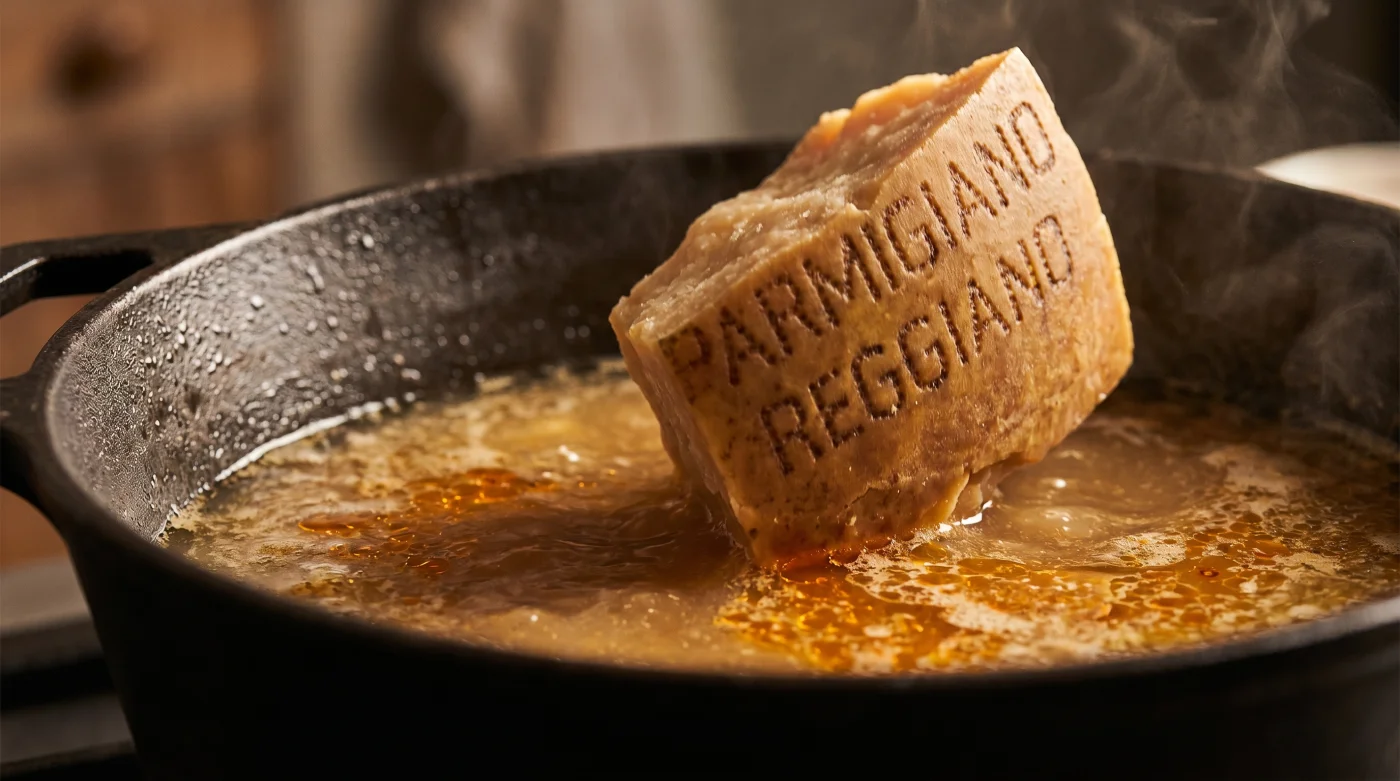
We are taught that food has a strict boundary between edible and inedible. The rind of a wedge of Parmigiano-Reggiano feels like wax, resists the sharpest grater, and threatens to chip a tooth if bitten. Naturally, you view it as trash and toss it out, assuming its only purpose was to protect the softer cheese inside during transport.
But think of that hard edge not as waste, but as a highly concentrated umami battery. As the cheese ages on wooden boards over years, moisture evaporates from the outside in. The exterior becomes a dense armor packed with glutamates—the exact same natural compounds that make roasted mushrooms, aged soy sauce, and slow-cooked meats taste so profoundly satisfying. The flavor does not disappear; it simply condenses.
Consider Marco, a 42-year-old line cook pulling a double shift at a neighborhood Roman joint in Philadelphia. While the newer culinary graduates toss the tough ends of the cheese wheels into the prep bin, he quietly fishes them out, wiping them clean and dropping them into a massive stainless steel pot of simmering stock. For him, a broth without those heavy, pale rinds bobbing in the center is little more than flavored water. It is a foundational secret passed down through generations of thrifty cooks.
Tailoring the Salvage to Your Supper
Not all canned soups react the same way to this dense flavor infusion. You need to align the addition with the baseline profile of the bowl you are heating up. Understanding how the dairy and salt interact with your chosen base is the difference between a mediocre meal and a genuinely comforting experience.
- Canned Chickpea Liquid Perfectly Replaces Expensive Eggs In Vegan Baking
- Natural Peanut Butter Jars Require Immersion Blenders To Stop Separation
- Raw Whole Eggs Demand Fine Mesh Strainers For Flawless Poaching
- Hard Brown Sugar Softens Immediately Using One Damp Paper Towel
- Ground Turkey Patties Demand Unflavored Gelatin For Juicy Steakhouse Textures
- Canned Coconut Milk Requires White Vinegar For Flawless Bakery Frostings
- Little Debbie Donuts Shift Triggers Massive Supermarket Snack Aisle Chaos
- 801 Chophouse Bankruptcy Exposes Hidden Restaurant Meat Supply Crisis Immediately
- Fresh garlic cloves crushed with coarse salt release exponentially more aromatic oils
- Ground coffee beans demand a tiny salt pinch to neutralize bitter acidity
For the Tomato Traditionalist dealing with a canned minestrone, the rind acts as a mellowing agent. Canned tomatoes often suffer from a sharp, tinny acidity, a byproduct of the preservation process. Dropping a two-inch rind into the pot as it heats softens that harsh acid, while the residual salt rounds out the earthiness of the preserved vegetables. The soup becomes rounded and rich, resembling something simmered on a back burner all Sunday.
For the Clear Broth Purist leaning on chicken noodle or simple vegetable broths, clarity is the primary goal. Here, the rind works quietly in the background. It will not cloud the liquid if kept at a gentle heat, but it will trick the tongue into thinking the broth simmered alongside roasted bones for an entire afternoon. The broth gains a silky weight that coats the throat beautifully.
For the Cream-Base Skeptic holding a can of potato leek or clam chowder that feels thin and watery, the rind provides necessary structural support. The melting edges of the cheese bind the thin liquids, releasing just enough residual dairy fat to thicken the mouthfeel naturally. You bypass the need for a clumpy, starchy flour slurry, allowing the soup to feel naturally luxurious.
The Tactical Extraction
Getting restaurant results from a grocery staple requires patience, not brute force. If you rush the heat, turning the stove dial all the way up to save five minutes, the cheese will seize or scorch against the hot metal bottom of the pot, creating a burnt mess rather than a comforting meal.
Treat the process like steeping a delicate, expensive tea. You must coax the flavor gently, allowing the ambient heat to slowly melt the exterior layers of the rind while the tough, structural core remains completely intact. This slow extraction guarantees a smooth flavor without making the soup gritty.
- Wipe the rind with a damp paper towel to remove any loose debris or papery labels.
- Submerge the rind directly into the cold soup before applying any heat to the stove.
- Bring the pot to a bare, trembling simmer—breathing through the liquid, never a violent boil.
- Stir occasionally, scraping the bottom of the pot so the softening cheese does not adhere to the metal.
Your Tactical Toolkit:
- Minimum Time: 15 minutes of simmering.
- Temperature: 190 degrees Fahrenheit (just below boiling).
- Storage: Keep unused rinds in a sealed glass jar in the freezer; they hold their flavor indefinitely.
A Kitchen Without Edges
When you pull that softened, chewy rind out of the pot right before serving, leaving behind a soup that tastes deeply, inexplicably rich, something shifts in your daily routine. You stop looking at the scraps on your cutting board as an inevitable loss.
You begin seeing the hidden potential in the mundane items around you. A simple Tuesday night dinner no longer feels like a compromise born of exhaustion. By pausing for just a moment before throwing something away, you turn a cheap, functional can of soup into an intentional act of comfort and care.
“The soul of a kitchen isn’t found in the expensive cuts, but in how gracefully you handle the scraps.”
| Base Soup Profile | Rind Interaction | Added Value for You |
|---|---|---|
| Tomato & Minestrone | Neutralizes tinny, metallic acidity. | Creates a rounded, slow-cooked Italian flavor profile. |
| Chicken Noodle | Injects heavy glutamates without clouding. | Makes cheap broth taste like homemade bone stock. |
| Potato or Cream | Releases residual fat to emulsify the base. | Thickens the texture naturally for a luxurious mouthfeel. |
Frequently Asked Kitchen Questions
Do I leave the rind in the bowl when I eat?
No, remove the rind before serving. It has done its job in the pot and remains too tough to chew comfortably.Can I use the wax from other cheeses?
Absolutely not. Parmesan rinds are natural, hardened cheese. Red wax or plastic coatings from gouda or cheddar will melt and ruin your food.What if the cheese sticks to the pot?
Keep the heat low and stir frequently. If it sticks, turn off the heat and let the residual warmth loosen it before scraping gently.Does the rind add a lot of calories?
Very few. Most of the mass remains intact. You are simply extracting the soluble flavors, salts, and a tiny amount of fat.How many times can I use one rind?
A rind is a single-use tool. Once it has simmered and surrendered its flavor to the soup, it should be discarded.