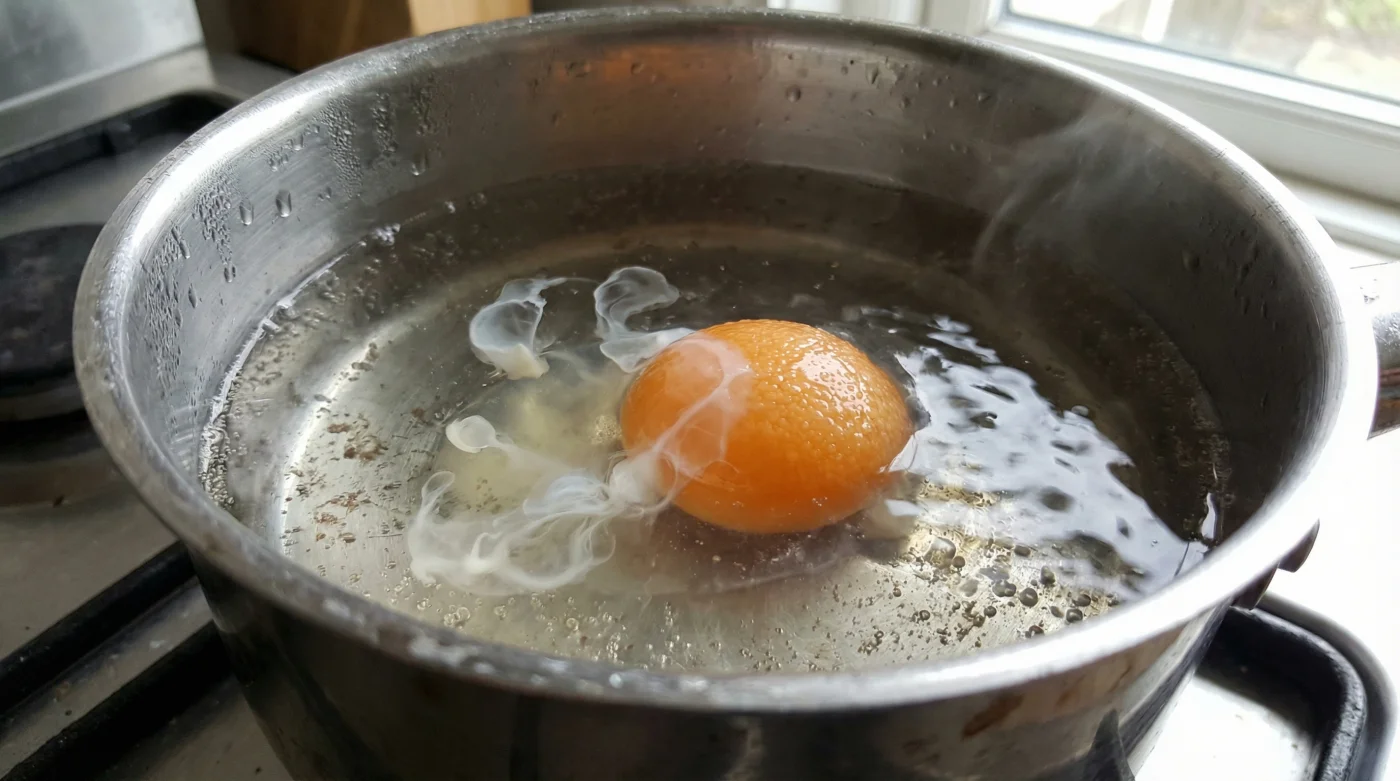
You stand over the stove, watching a pot of simmering water. You gently tip a cracked egg from a ramekin, holding your breath. Instead of forming a neat, delicate orb, the egg white immediately splinters into a dozen ragged, cloudy tentacles. The water turns into a murky mess, and what was supposed to be a luxurious weekend breakfast now resembles a failed science experiment. The smell of hot water and raw egg fills the kitchen, accompanied by the distinct sigh of disappointment. You grab the slotted spoon and fish out a sad, rubbery yolk clinging to a few shreds of white. Your toast is getting cold, your patience is wearing thin, and you find yourself wondering why such a humble ingredient demands so much frustration.
The Architecture of an Egg
The culinary world has long sold you a myth: that perfectly poached eggs require swirling vortexes, silicone poaching cups, or expensive sous-vide machines. We are told that achieving that delicate, opaque dome with a molten golden center is a restaurant-only luxury, out of reach for a normal Tuesday morning. But the secret to a flawless poach has nothing to do with expensive gadgets taking up space in your cabinets. It is about understanding the scaffolding of the egg. When raw egg whites hit hot water, their proteins scatter before the heat can fuse them together. To win this battle, you do not need more equipment; you simply need to change the environment of the water itself. This is where basic chemistry takes over, offering a permanent solution to a daily frustration.
Years ago, during a busy brunch service in a cramped Chicago kitchen, I watched a seasoned prep chef named Marco effortlessly poach fifty eggs in a single, shallow hotel pan. He did not swirl the water. He did not use silicone molds or fancy timers. Before the eggs went in, he casually tipped a slosh of distilled white vinegar into the simmering bath. “You have to shock the whites,” he told me, wiping down his stainless steel station with a damp towel. “They need boundaries the second they touch the water. The vinegar gives them walls.” It was a simple, chemical truth, handed down through generations of cooks, long before anyone tried to monetize the breakfast experience with unnecessary plastic tools.
| Cook Profile | The Poaching Benefit |
|---|---|
| The Rushed Parent | Fewer dishes to clean and zero need for single-use poaching gadgets. |
| The Budget Cook | Achieves a high-end cafe experience using a twenty-cent pantry staple. |
| The Weekend Entertainer | Consistency and predictability when cooking for a crowd. |
Distilled white vinegar is the humble hero of your pantry. By adding just a splash to your cooking water, you instantly lower its pH. Raw egg whites are essentially loose, floating protein chains. In a neutral pH, they drift apart in the turbulence of the heat, creating that dreaded stringy mess. But when introduced to an acidic environment, those protein chains coagulate rapidly. The vinegar forces the egg whites to seize and tighten around the yolk the millisecond they hit the hot water. No stray wisps. No cloudy water. Just a perfectly bound, professional-grade poached egg that looks exactly like the ones served at your favorite local cafe.
| Element | Chemical Reaction | Culinary Result |
|---|---|---|
| Tap Water (pH 7) | Slow protein denaturation. | Whites separate, creating a messy, fragmented egg. |
| Vinegar Water (pH 4 to 5) | Accelerated protein coagulation. | Whites instantly tighten and wrap securely around the yolk. |
| Gentle Simmer (180 to 190 Fahrenheit) | Even heat distribution without violent agitation. | A tender, smooth exterior rather than a rubbery texture. |
The Mindful Poach
Fill a wide, shallow skillet with about two inches of water. A wide pan gives you room to work and keeps the water temperature incredibly stable from edge to edge. Place it over medium heat until you see tiny champagne bubbles forming at the bottom of the pan. This is your target temperature, roughly 180 to 190 degrees Fahrenheit. Do not let it reach a rolling boil, as violent bubbles will tear your delicate egg apart in seconds.
Pour one tablespoon of distilled white vinegar into the simmering water. Stir it gently just once to distribute the acid evenly across the skillet. Crack your egg into a small mesh sieve first, letting the watery, older part of the egg white drain away for just a few seconds. Then, transfer the remaining egg into a small ramekin or espresso cup. This step ensures you are only working with the tightest, freshest part of the egg, giving the vinegar an even easier job to do.
- Dill pickle juice brines cheap chicken breasts into tender southern fast-food replicas.
- Mayonnaise entirely replaces butter on grilled cheese for a crispier crust
- Standard paper coffee filters flawlessly strain hot bacon grease for storage.
- Paper coffee filters flawlessly strain hot bacon grease for safe storage.
- Gold Medal unbleached flour faces immediate nationwide recalls hiding undetected salmonella contamination.
| What to Look For | What to Avoid |
|---|---|
| Tiny, champagne-like bubbles at the bottom of the pan. | A rapid, rolling boil that agitates the water violently. |
| A fresh egg where the white stands tall around the yolk. | Older eggs with thin, watery whites that spread instantly. |
| Standard distilled white vinegar (clear and neutral). | Balsamic or apple cider vinegar, which alter color and flavor. |
| A gentle, direct slide from a small cup into the water. | Cracking the egg directly from the shell over the pan. |
Reclaiming Your Morning Rhythm
Mastering the poached egg is about more than just a delicious breakfast on a Sunday morning. It is a quiet rebellion against the idea that good food has to be complicated or require specialized tools. By understanding the simple chemistry of vinegar and heat, you take complete control of your kitchen. You stop relying on plastic gadgets that clutter your drawers and learn to trust your own senses.
There is a profound peace of mind in knowing you can create a flawless, luxurious meal with nothing more than water, an egg, and a splash of pantry acid. It transforms a frustrating, hit-or-miss chore into a reliable, grounding morning ritual. You can sit down to your buttered sourdough, slice into that perfectly spherical egg, and watch the golden yolk spill out over your plate, knowing you crafted it with your own two hands and a little bit of practical science.
“The best cooks do not rely on expensive tools; they rely on an intimate understanding of how humble ingredients react to their environment.”
Frequently Asked Questions
Will my eggs taste like vinegar? No, a single tablespoon of distilled white vinegar in a pan of water dilutes enough that the flavor will not penetrate the egg.
Do I need to create a whirlpool in the water? The whirlpool method helps, but it is entirely unnecessary when using vinegar in a shallow pan, which is much easier for beginners.
Can I use apple cider vinegar instead? You can, but it may impart a faint amber tint and a slightly fruity taste to your egg whites.
How do I know if the water is too hot? If large bubbles are breaking the surface of the water, it is too hot and will agitate the egg apart.
How do I store poached eggs for a crowd? You can poach them ahead of time, drop them in an ice bath to stop the cooking, and reheat them in hot water for sixty seconds right before serving.