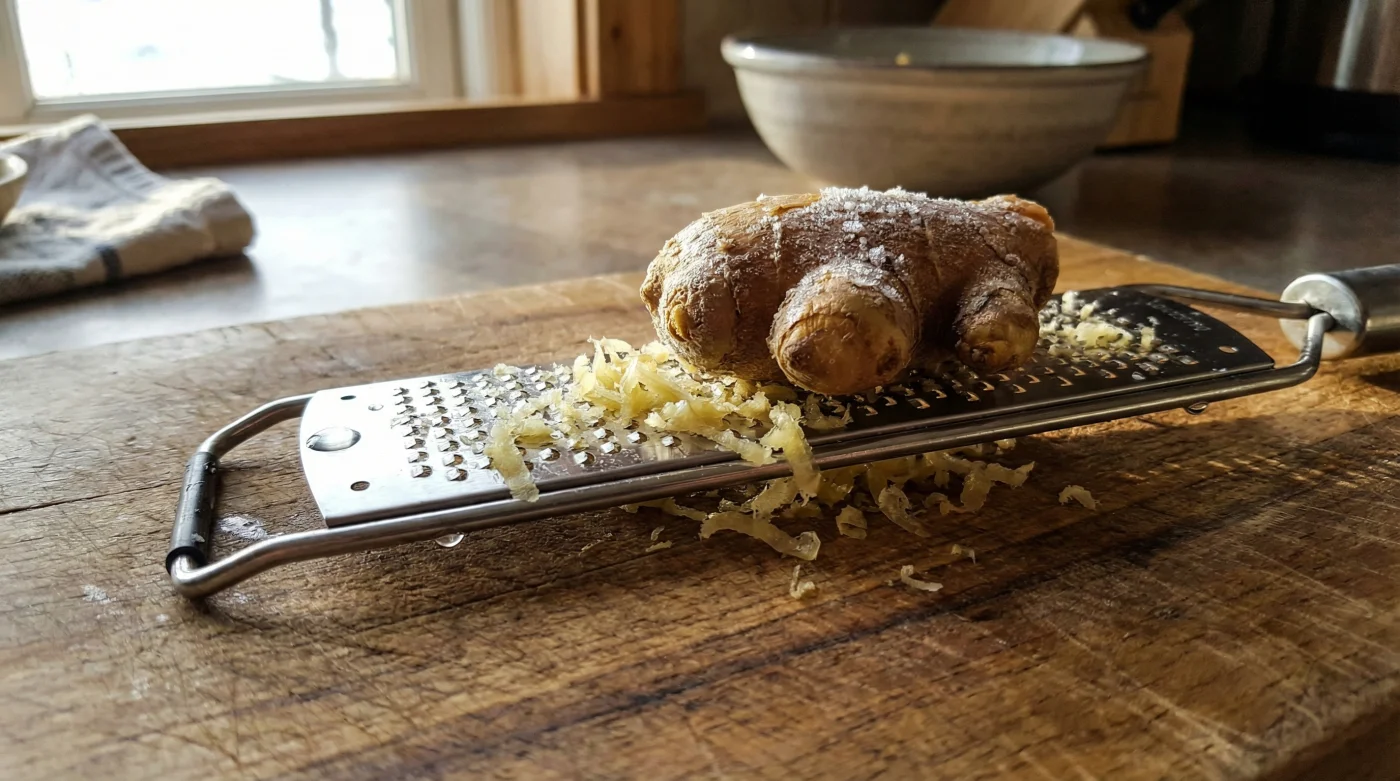
The cutting board is prepped, the sesame oil in your skillet is beginning to shimmer with heat, and you are holding a knobby, asymmetrical piece of fresh ginger. You grab a teaspoon, attempting that well-known kitchen trick to scrape away the papery skin, but the edge catches on the irregular bumps. When you finally take the peeled root to your metal grater, the real battle begins. Instead of yielding a fragrant paste, the ginger violently tears. It frays into a wet, stringy clump of fibrous threads that stubbornly clogs the metal teeth. A pool of precious, spicy juice bleeds onto your cutting board, leaving you with sticky fingers and half the yield you actually needed. It is a messy, frustrating hurdle right at the start of your evening meal.
The Architecture of a Stubborn Root
You are essentially trying to saw through wet timber. Ginger is structured with incredibly resilient, fibrous veins that run lengthwise down its body to transport water and nutrients. At room temperature, these fibers are highly flexible. They bend and weave under pressure. When you drag them across the sharp edges of a microplane, they do not break cleanly; they shred, much like a frayed nylon rope. The sheer friction squeezes out the water content, leaving you with dry, stringy pulp and wasted liquid.
| Kitchen Persona | The Direct Benefit |
|---|---|
| The Weeknight Cook | Bypasses the tedious peeling process entirely, saving crucial minutes during the evening rush. |
| The Frugal Meal Prepper | Extends the shelf life of fresh aromatics to over six months, eliminating the guilt of shriveled roots in the crisper drawer. |
| The Baking Enthusiast | Creates a microscopic dust that blends seamlessly into gingerbread batters without leaving spicy, stringy lumps. |
The revelation for bypassing this struggle entirely comes from the back-of-house rhythm of a bustling pan-Asian restaurant I visited in Chicago. I was watching a seasoned prep cook process pounds of aromatics for the busy evening service. There was no desperate spoon-scraping. There were no clogged graters soaking in the sink. Instead, he pulled a rock-hard, unpeeled knob of ginger directly from the commercial deep freeze. He ran it down a microplane with effortless strokes, and it fell into a perfect, fluffy mound of fragrant snow. The extreme cold had fundamentally changed the structural integrity of the ingredient.
| State of the Root | Fiber Behavior | Moisture Retention | Microplane Result |
|---|---|---|---|
| Room Temperature (70°F) | Pliable, elastic, and strongly resists shearing forces. | Liquid bleeds out immediately under physical pressure. | A stringy, tangled mass completely clogging the grating tool. |
| Frozen Solid (0°F) | Highly brittle, shattering cleanly upon impact with the blade. | Crystallized in the cells, staying contained until introduced to heat. | A fine, fluffy, instantly melting snow that requires zero cleanup. |
The Frozen Snow Method
The execution is almost too simple to believe, but it requires a deliberate, physical shift in how you handle your groceries. When you bring fresh ginger home from the market, do not put it in the refrigerator crisper drawer. Instead, place the entire, unpeeled root into a heavy-duty freezer bag. Squeeze out all the excess air to prevent frost buildup, and place it in the coldest part of your freezer.
When a recipe calls for a tablespoon of fresh paste, simply retrieve the frozen root. Hold the frozen ginger firmly by one of its knobby ends, resting the opposite end at a slight angle against your microplane. Apply firm, steady pressure and drag it down the sharp blades.
You absolutely do not need to peel it. The papery skin becomes so brittle in the sub-zero temperatures that the microplane obliterates it into microscopic flecks. You will not taste the skin, and you will not feel its texture. It simply becomes an invisible part of the aromatic paste.
- Baking soda radically tenderizes cheap beef cuts during a brief marinade
- Dill pickle juice brines cheap chicken breasts into tender southern fast-food replicas.
- Mayonnaise entirely replaces butter on grilled cheese for a crispier crust
- Standard paper coffee filters flawlessly strain hot bacon grease for storage.
- Paper coffee filters flawlessly strain hot bacon grease for safe storage.
| Quality Marker | What to Look For (Ideal for Freezing) | What to Avoid (Poor Freezing Results) |
|---|---|---|
| Skin Texture | Taut, incredibly thin, and slightly shiny across the surface. | Deeply wrinkled, thick, or showing dark bruised spots. |
| Weight | Heavy for its size, indicating high internal water content. | Lightweight and hollow-feeling, indicating severe dehydration. |
| Firmness | Snaps cleanly and sharply if a small node is broken off. | Bends easily or feels rubbery and soft to the physical touch. |
Reclaiming Your Kitchen Rhythm
This single modification changes the entire cadence of preparing a home-cooked meal. Removing the friction of dealing with stubborn aromatics means you are significantly more likely to actually cook the recipe you planned, rather than ordering takeout because the prep work feels overwhelming. It turns a chore that once felt like an annoying barrier into a quiet moment of sensory satisfaction.
Watching that fine, golden snow pile up effortlessly on your cutting board feels like a small, private victory. It is about working in harmony with the physical properties of your food, rather than fighting against them with brute force. By relying on the freezer, you preserve the bold, spicy, volatile oils exactly where they belong: directly in your food, rather than smeared across your hands and the metal teeth of your grating tools. You gain back your time, your patience, and the full, uncompromised flavor of the ingredient.
The best kitchen habits are not about buying expensive tools; they are about understanding the physical nature of your ingredients and letting temperature do the heavy lifting for you.
Frequently Asked Questions
Do I really not need to peel it before freezing or grating?
Exactly. The freezer makes the skin so fragile that the grater shatters it into a fine dust that completely dissolves into your dish, leaving no bitter taste or tough texture.Will adding frozen ginger make my food cold or alter the cooking time?
No. Because it grates into such fine, microscopic shavings, the snow thaws instantly the moment it touches a hot pan, warm broth, or even room-temperature marinade.How long does the root actually last in the freezer?
If kept in a tightly sealed bag with the air removed to prevent freezer burn, it will retain its sharp, spicy profile and grating texture for up to six months.Can I slice or mince it with a knife after it has been frozen?
This method is exclusively designed for grating. Frozen ginger will turn to a soft, wet pulp if you let it thaw, making it impossible to slice into neat, structural matchsticks.Does this exact freezing method work for fresh turmeric root as well?
Yes, the exact same mechanical principle applies. Just be careful, as frozen turmeric snow will melt quickly and can still severely stain your fingers, cutting boards, and countertops.