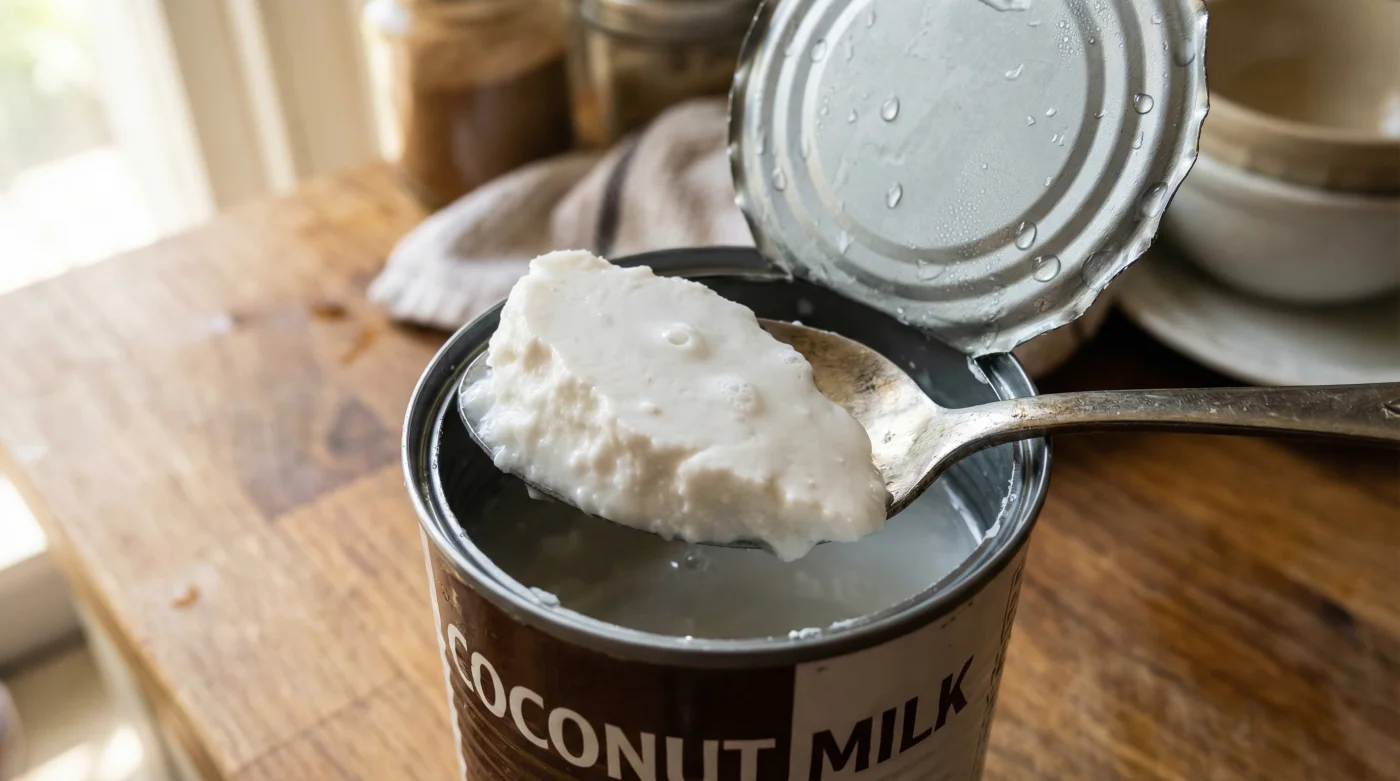
You pull the stainless steel mixing bowl out of the freezer, the metal biting nicely against your fingertips. The beaters are frosty, and the sugar is measured. You reach into the dark corner of your pantry, grab a heavy tin of full-fat coconut milk, and out of sheer, conditioned habit, you give it a vigorous shake. It rattles like a muffled maraca, the liquid slapping against the aluminum walls.
You pop the pull-tab, pour the grayish-white liquid into your chilled bowl, and hit the power switch on your hand mixer. Five minutes pass. Ten minutes pass. You are left staring into a bowl of bubbly, lukewarm soup that will never hold a peak. Your dessert is ruined, and the frustration tastes bitter.
The Anatomy of Stillness
We are taught from childhood to agitate our food. Shake the ketchup, shake the juice box, shake the salad dressing. You assume that homogenizing the contents of a can is the only way to get a consistent result. But when it comes to crafting dairy-free whipped cream, that instinct is your greatest enemy. Think of a tin of coconut milk as a fragile ecosystem. Inside that dark metal cylinder, gravity is doing you a massive favor by pulling the heavy, luxurious coconut fat to the top and pushing the watery coconut liquid to the bottom.
When you shake the can, you shatter that delicate separation. You force the water and fat to re-emulsify, creating a thin liquid that breathes through a pillow of useless foam instead of whipping into stiff, glorious peaks.
| Target Audience | Specific Benefits of the No-Shake Method |
|---|---|
| Dairy-Free Bakers | Achieve stiff, pipe-able peaks for cakes and pies without expensive commercial substitutes. |
| Allergy-Conscious Parents | Create safe, simple desserts rapidly without relying on soy or nut-based creams. |
| Budget-Minded Cooks | Save money by avoiding premium vegan whipping creams, using a $2 pantry staple instead. |
I learned this the hard way during a bustling prep shift with Elena, a pastry chef in Brooklyn who treated her pantry like a library. I reached for a can of coconut milk to start the dessert prep and gave it a hearty shake. She physically intercepted my hand. “You don’t shake the sediment,” she told me, taking the tin and setting it gently on the counter. “You harvest the fat. Stillness is the only ingredient you can’t buy.”
The Mechanics of the Chill
Elena explained that coconut milk is highly sensitive to temperature and agitation. By leaving the can undisturbed in the refrigerator overnight, you force the fat molecules to solidify into a hard, wax-like puck at the top of the can. The liquid remains a distinct pool underneath.
| State of Coconut Milk | Fat Behavior | Whipping Potential |
|---|---|---|
| Room Temp & Shaken | Emulsified, liquid state mixed evenly with water. | Zero. Will only form thin, temporary bubbles. |
| Chilled & Shaken | Fractured fat chunks floating in cold coconut water. | Poor. Results in a grainy, weeping texture. |
| Chilled & Undisturbed | Solidified top layer cleanly separated from water. | Maximum. Whips into rich, stable peaks. |
The Quiet Harvest
The physical application of this method requires patience. Start by placing your cans of full-fat coconut milk in the coldest part of your refrigerator—usually the back of the bottom shelf. Leave them there for at least twenty-four hours. Do not lay them on their sides; keep them standing completely upright so the fat sets in a flat, manageable layer.
- Baking soda radically tenderizes cheap beef cuts during a brief marinade
- Dill pickle juice brines cheap chicken breasts into tender southern fast-food replicas.
- Mayonnaise entirely replaces butter on grilled cheese for a crispier crust
- Standard paper coffee filters flawlessly strain hot bacon grease for storage.
- Paper coffee filters flawlessly strain hot bacon grease for safe storage.
Stop scooping the moment you hit the translucent, grayish coconut water. That water is the enemy of your whipped cream, though it makes a fantastic addition to your morning smoothie. With only the pure, chilled fat in your bowl, begin whipping on a medium speed. Within two minutes, you will witness the magic of proper handling as the fat aerates into beautiful, cloud-like peaks.
| Quality Indicator | What to Look For | What to Avoid |
|---|---|---|
| Ingredient List | Just coconut and water. | Heavy use of guar gum (prevents separation). |
| Fat Content | Labeled “Full Fat” or “Classic”. | “Lite” or reduced-fat varieties. |
| Can Integrity | Smooth, dent-free tins. | Dented seams that might compromise the seal. |
A Lesson in Leaving Things Be
It is profoundly satisfying to master a kitchen technique that requires less effort, not more. In a culinary culture obsessed with high-speed blending, vigorous shaking, and constant stirring, the secret to the perfect vegan whipped dessert is simply leaving the tin alone. It is a quiet reminder that sometimes, the best intervention is stepping back and letting the natural weight of things settle.
By resisting that immediate, consumer instinct to rattle the can, you save your time, your ingredients, and your dessert. You trade a bowl of watery soup for a luxurious, dairy-free topping that holds its shape gracefully on a slice of pie or a bowl of fresh berries.
“The foundation of great cooking is knowing when to apply pressure, and exactly when to remove your hands entirely.”
Common Questions on Coconut Whipping
Do I have to use full-fat coconut milk? Yes. Lite coconut milk lacks the necessary fat content to solidify and whip; it will remain entirely liquid even after chilling.
What if my brand of milk contains guar gum? Guar gum is an emulsifier designed to prevent the exact separation you are trying to achieve. Try to find brands without it, or expect a slightly softer, less distinct cream layer.
Can I freeze the can to speed up the process? Freezing ruins the texture of the fat, making it icy and grainy. Stick to the refrigerator for a gentle, even chill.
How long will the whipped cream last? Stored in an airtight container in the fridge, it will hold its shape for up to three days, though it is best enjoyed immediately.
What do I do with the leftover coconut water? Save it in a jar for smoothies, use it to cook rice, or add it to curries for a light, sweet flavor boost.