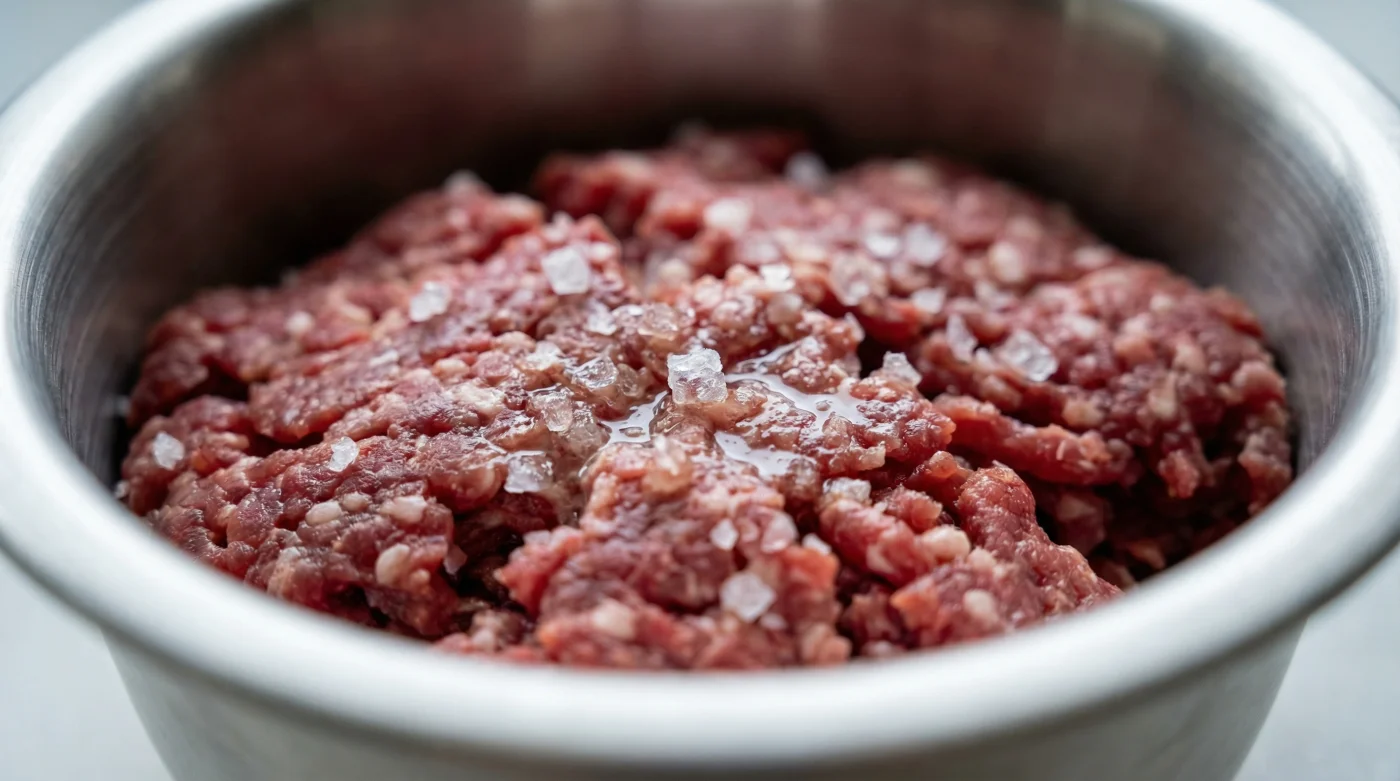
The late-afternoon sun shifts across the patio, and the charcoal settles in the grill with a quiet, dusty crackle. You stand at the kitchen counter, hands submerged in a cold mixing bowl of freshly ground chuck, working a generous pinch of kosher salt into the meat. The fat smears slightly against your palms as you knead, but it feels like the right thing to do. You are building flavor from the inside out, ensuring every bite carries that savory weight and mimics the complexity of a seasoned steak.
Yet, when the patties come off the grates and you finally take a bite, the texture fights back. Instead of yielding into a loose, buttery crumble, the meat bounces back gently, carrying the tight, springy resistance of a breakfast sausage. You blame the heat, or perhaps the fat content of the beef you bought at the butcher counter. You might even suspect your spatula technique, wondering if you pressed down too hard while the juices sizzled and smoked.
The truth lives entirely in that glass mixing bowl. Salt is not merely a flavor agent; it is an aggressive solvent. The moment those crystalline flakes interact with the internal fibers of raw ground beef, a chemical reaction begins that completely alters the physical structure of your meal. The beef transforms from a loosely gathered pile of tender strands into a chemically bound matrix, fundamentally changing the way the meat cooks and chews.
A restaurant-quality burger requires an almost uncomfortable level of restraint. Treating salt as surface seasoning rather than an internal ingredient is the invisible line dividing a mediocre backyard cookout from a truly memorable plate. This simple technical pivot entirely removes the risk of a dense, rubbery dinner, returning control to your hands and delivering that elusive steakhouse texture.
The Chemistry of the Crumble
Think of raw ground beef less like a sponge waiting to absorb flavor, and more like a fragile bundle of microscopic yarn. Left alone, these strings pile on top of each other loosely, leaving tiny pockets of air and fat between them. This looseness is exactly what creates the tender, melt-in-the-mouth sensation when you bite into a premium patty. The fat renders into those air pockets, basting the beef internally without destroying the structure.
When you aggressively fold salt into that mixture, you dissolve the myosin proteins coating those strings. As the protein dissolves, it acts like a sticky biological glue. The strings bind together tightly, interlocking into a dense, permanent network that squeezing and forming only exacerbates. This is the exact scientific process used to make bratwursts snappy and firm. It is the absolute last thing you want for a classic American cheeseburger.
The perspective shift is simple: flavor must remain completely separate from structural integrity. You are not just cooking; you are managing a delicate chemical state. Recognizing the power of sodium means acknowledging that it belongs on the outside of the patty, acting as a crust-building agent rather than a structural binder.
Consider Elias Thorne, a 42-year-old line cook turned pop-up chef in Austin, Texas. For his first year in business, Elias struggled with consistency. He would prep fifty pounds of beef in the morning, aggressively seasoning the raw batches before forming his patties. By the evening rush, his burgers were notoriously tough. The turning point came when he watched a local charcuterie maker deliberately over-salt and knead pork to create a bound, bouncy mortadella. Elias realized he was accidentally making dense beef sausage. The very next day, he banned salt from his mixing bowls, shifting exclusively to heavy, localized seasoning the second the meat hit the cast iron. His lines wrapped around the block within a month.
Adjustment Layers for Your Kitchen
Understanding this rule means adapting it to how you naturally operate at the stove. Every style of preparation demands a slightly different approach to the final seasoning, ensuring you maximize flavor without compromising the fragile interior of the meat.
For the Smash Burger Purist: You are working with a ball of beef barely holding its shape. Do not touch the salt shaker until the meat is pressed violently against the screaming hot metal. The intense heat instantly creates a crust, and the salt crystals melt directly into the rendered beef fat on the surface, keeping the interior completely uncompromised beneath the crust. The resulting patty shatters slightly at the edges while remaining impossibly soft in the center.
For the Thick-Cut Traditionalist: If you prefer a pub-style, medium-rare center, your patties require gentle handling. Form the meat loosely, leaving visible cracks and crannies. Apply coarse kosher salt heavily to the top and bottom faces exactly thirty seconds before they meet the grates. This allows the seasoning to adhere to the exterior moisture without penetrating deeply enough to trigger protein binding, drawing out just enough liquid to aid in caramelization.
- Supermarket ground beef mixed with dry breadcrumbs guarantees tough meatballs.
- Store-bought dried beans boiled in salted water remain permanently tough.
- Pillsbury canned frosting whipped with standard hand mixers mimics bakery buttercream.
- Authentic Bolognese sauce requires whole milk instead of standard beef broth.
- Raw chicken wings tossed in baking powder bake into flawless deep-fried textures.
The Mindful Application
Correcting this habit requires stripping your process down to the absolute bare minimum. You are handling the meat with a light, deliberate touch, almost like you are breathing through a pillow. The less interference from your hands, the better the final texture will be.
Avoid squeezing, pressing, or compacting the beef in your hands. Let the natural fat and moisture do the quiet work of holding the shape together. Treat the shaping process as a gentle coaxing rather than a forceful molding.
Your tactical toolkit is incredibly straightforward, requiring only a shift in timing rather than expensive new equipment:
- Cold Beef Sourcing: Keep the raw ground beef refrigerated at 36 degrees Fahrenheit until the exact moment you are ready to form shapes. Warm fat smears and ruins the delicate meat texture.
- The Gentle Form: Shape the meat using only your fingertips. If your palms are covered in sticky protein, you are working the beef too hard.
- The Surface Snowfall: Hold your hand at least eight inches high above the patty to ensure an even, scattered distribution of kosher salt right before cooking.
- The Searing Heat: Ensure your pan or grill grate is resting at 450 degrees Fahrenheit. The surface salt needs to fuse with the beef crust instantly to prevent moisture loss.
Reclaiming the Joy of the Craft
It is a strange comfort to realize that sometimes, doing less is the exact technical requirement for doing better. By removing salt from mixing, you remove a layer of unnecessary labor from your preparation. You step away from the anxiety of over-working the meat, knowing that the less you intervene, the more spectacular the result will be.
You stop worrying about over-mixing or finding the perfect internal ratio of spices. Instead, you respect the raw ingredient fully, allowing the natural, beefy richness to speak for itself. The texture remains impossibly tender, falling apart right exactly when it meets your teeth, contrasting beautifully with the aggressive, salty bark on the exterior.
In a kitchen culture obsessed with complicated marinades and secret internal blends, there is immense power in walking out to the grill with nothing but pure, unadulterated meat and a handful of salt. It brings a quiet confidence to your cooking, transforming a mundane weekday dinner into a moment of intentional, effortless quality.
The fastest way to ruin a premium grind is to treat it like a meatloaf; save the salt for the fire, and let the beef breathe.
| Key Point | Detail | Added Value for the Reader |
|---|---|---|
| Internal Seasoning | Dissolves myosin proteins inside the meat | Avoid this to stop rubbery, sausage-like burger textures forever. |
| Surface Seasoning | Applying kosher salt just before searing | Creates a savory bark while keeping the interior crumbly and tender. |
| Cold Handling | Shaping patties straight from the refrigerator | Prevents fat from smearing, locking in juices and structural integrity. |
Frequently Asked Questions
Can I mix other dry spices into the beef before cooking?
While salt triggers the protein breakdown, spices like black pepper or garlic powder do not dissolve myosin. However, keeping all seasonings on the surface is the easiest way to guarantee a tender bite.Does this rule apply to meatloaf and meatballs?
Yes, but in those recipes, you actually want the binding effect. Salting the interior helps meatballs hold their shape and slice cleanly.How far in advance can I salt the outside of the burger?
Aim for no more than three minutes before cooking. If left longer, the salt will pull moisture to the surface, disrupting your sear and steaming the meat.Should I use fine table salt instead of kosher salt?
Kosher salt is far superior for surface seasoning. Its large flakes adhere easily to the raw beef and provide a satisfying, crispy crunch without over-salting the meat.What if I accidentally salted the bowl already?
If the salt is already mixed in, pivot your dinner plan. Form the meat tightly and cook them as savory Salisbury steaks, embracing the firmer texture with a rich gravy.