The smell hits you before the sound. That unmistakable charred-fat aroma drifting from a backyard grill on a humid July afternoon. You press the spatula down, listening to the aggressive hiss of ground beef meeting white-hot cast iron. You have done everything right. The brioche buns are buttered and toasted, the sharp cheddar is waiting, and the heirloom tomatoes are sliced thick. But then comes the moment of truth. You take a bite, and your heart sinks. The center is gray, crumbly, and dry as sand. The dreaded hockey-puck burger claims another victim. It is a silent tragedy that ruins countless summer cookouts, forcing your guests to quietly pump extra ketchup onto their plates just to choke it down.
The Physics of the Sizzle
The natural instinct is to blame the intensity of the heat, or perhaps the quality of the beef you picked up from the local butcher. But the real culprit is a fundamental misunderstanding of the meat’s internal ecosystem. Think of a raw patty like a delicate sponge saturated with flavor. As the temperature rises, the proteins violently contract, squeezing out every drop of precious moisture. The gravity of the sear is pulling the juices right into the flames below. Searing does not actually ‘seal in the juices’—that is an old kitchen myth. It simply creates a crust. The moisture is still entirely free to evaporate.
To counteract this relentless drying process, you need a radical intervention. Adding raw water to ground meat seems completely counterintuitive. It feels sloppy, like you are intentionally watering down your dinner and creating a messy meat paste. Yet, preventing that extreme desiccation requires a built-in moisture reserve that activates at the exact right moment.
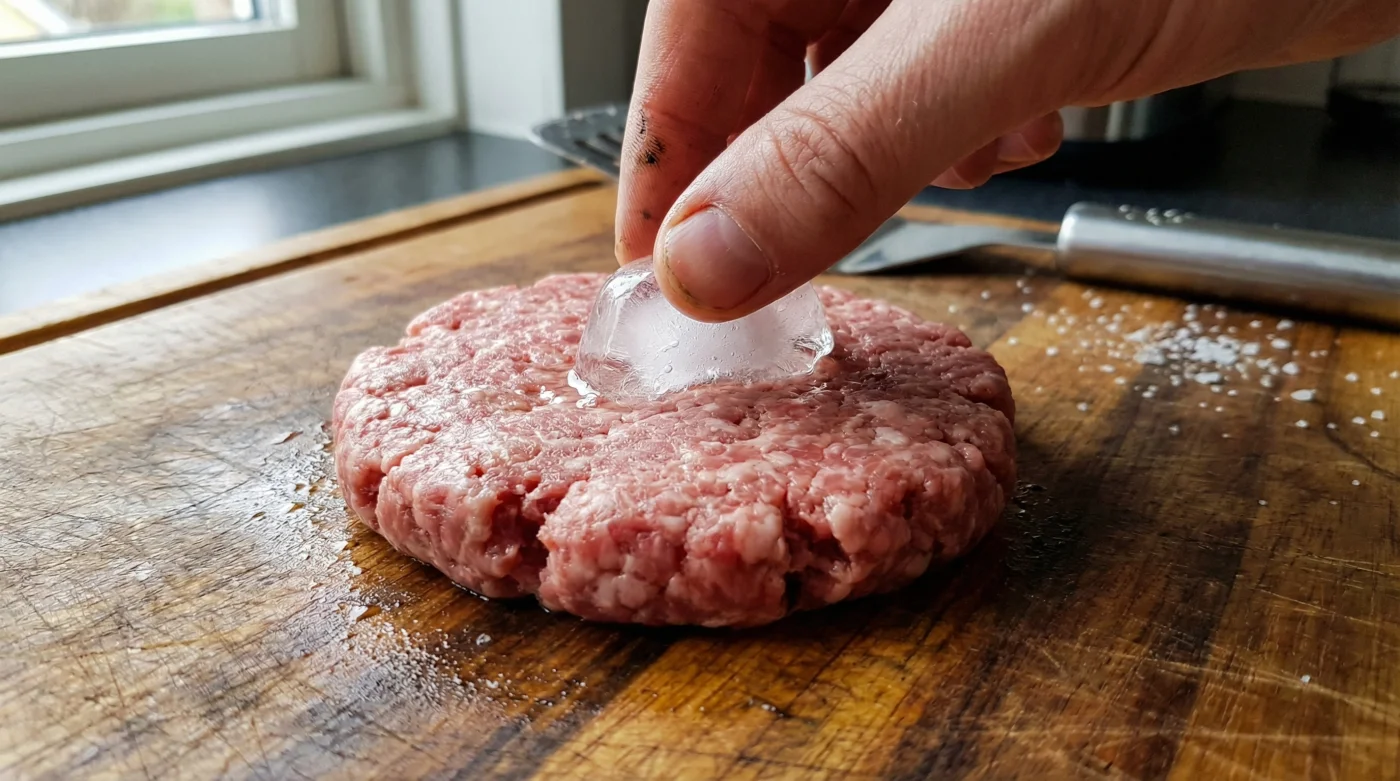
Years ago, standing in the cramped, perpetually greasy kitchen of a local Chicago diner, I watched a veteran line cook named Marcus perform a subtle magic trick. He did not gently massage the beef or rely on a secret blend of expensive, exotic fats. Instead, he reached into the soda fountain machine, grabbed a handful of crushed ice, and firmly packed a small cluster right into the core of a massive half-pound chuck patty. ‘You have to give the fire something to fight,’ he told me, wiping his hands on a flour-dusted apron. ‘The outside needs the flame to get a deep, dark crust. The inside needs a shield.’
| Target Audience | Specific Benefits |
|---|---|
| Backyard Grillers | Allows for aggressive, high-heat searing without sacrificing the tender center. |
| Busy Parents | Forgives distractions; if you leave the burgers on two minutes too long, they survive. |
| Meal Preppers | Keeps reheated, next-day patties feeling incredibly soft instead of rubbery. |
The Heart of Ice
The execution of this trick is disarmingly simple, but it demands a specific physical rhythm. Do not use a massive, solid cocktail cube. That will leave you with a bizarre, hollow cavern in your meat once it melts. You want crushed ice—about the volume of a single marble. First, gently form your cold ground beef into a loose sphere. Do not overwork the meat, or the friction from your warm hands will melt the natural fat before it ever sees the grill. Press your thumb into the center of the sphere, creating a gentle crater.
Drop the crushed ice into the divot. Now, carefully pinch the meat back over the top, rolling it slightly between your palms to ensure a seamless seal. Flatten it out to your desired thickness. This step is crucial: if the ice is exposed, it will instantly melt upon contact with the grates and cause a nasty flare-up. You want that frozen core securely trapped in the dark.
- Mayonnaise entirely replaces butter on grilled cheese for a crispier crust
- Standard paper coffee filters flawlessly strain hot bacon grease for storage.
- Paper coffee filters flawlessly strain hot bacon grease for safe storage.
- Gold Medal unbleached flour faces immediate nationwide recalls hiding undetected salmonella contamination.
- Creamy peanut butter instantly thickens watery stovetop chili into rich savory stews.
| Temperature Phase | Internal State | Mechanical Effect on the Beef |
|---|---|---|
| 0°F to 32°F | Solid State | Suspends moisture safely in the core during the initial aggressive sear. |
| 32°F to 212°F | Liquid Simmer | Protects delicate meat proteins from sudden seizing and drying out. |
| 212°F+ | Vaporization (Steam) | Pushes juices outward, keeping the crumbly texture hydrated and tender. |
Of course, your choice of meat still matters. This trick is a lifesaver, but it cannot perform miracles on terrible ingredients. You need to start with a foundation that actually has the capacity to hold onto flavor.
| The Quality Checklist | What to Look For | What to Avoid |
|---|---|---|
| Meat Blend | 80/20 Chuck (The gold standard for flavor and structural integrity) | 90/10 Lean beef (Lacks the natural fat required to hold the steam effectively) |
| Ice Format | Pea-sized crushed ice or a single, tiny mold cube | Massive whiskey rocks that create hollow pockets and ruin the patty shape |
| The Seal | A completely smooth, opaque surface of meat wrapped tightly | Cracks or visible frost, which leads to immediate grill flare-ups |
The Rhythm of the Flame
Adopting this small habit fundamentally shifts your relationship with the grill. Cooking for a hungry crowd often carries a quiet undercurrent of anxiety. You worry about overcooking the food while trying to carry on a conversation with your friends. You hover over the grates, flipping nervously, poking at the meat to see if it has surrendered all its juices. It can turn a relaxing evening into a stressful chore.
But slipping a simple piece of frozen water into your dinner provides an invisible safety net. It buys you a window of grace. You can actually step back, sip your drink, and enjoy the fading summer light, knowing the meat is quietly taking care of itself from the inside out. When you finally pull those burgers off the heat and let them rest, the resulting bite will be a revelation. The rich, savory juices will run down your chin, and the texture will be unbelievably tender. It is a brilliant, effortless way to reclaim the simple joy of the cookout, turning a common point of friction into a guaranteed triumph.
A great cook does not fight the heat of the fire; a great cook negotiates with it to protect the meal.
FAQ
Will the ice water down the flavor of my burger? Absolutely not. The small volume of water converts entirely to steam, tenderizing the meat internally without diluting the fat or the savory beef flavor.
Can I use this trick for turkey or chicken burgers? Yes. In fact, ground poultry is naturally leaner and incredibly prone to drying out, making the internal steam trick even more valuable for those proteins.
Do I need to season the ice itself? No. Keep it simple. Generously season the outside of the patty with kosher salt and coarse black pepper right before it hits the heat.
What if I use store-bought frozen patties? This technique relies entirely on hand-forming fresh ground meat. You cannot easily or safely insert ice into a pre-frozen, solid disc of beef.
How long should I cook them with the ice inside? Cook times remain largely the same. Aim for about four minutes per side on high heat for a standard half-pound patty, trusting the internal steam to protect the core while the crust forms.