You know the exact sound. It is the soft, wet slap of a perfectly whipped cloud of cream sliding off a slice of warm peach cobbler, pooling into a sad, milky puddle on the dessert plate. You spent ten minutes standing at the mixer, watching the heavy cream transform into stiff, proud peaks, only to watch it surrender to the ambient heat of a July evening. The disappointment sits heavy in your chest. Homemade whipped cream, for all its fresh glory, has a tragically short lifespan.
It breathes its last breath the moment the temperature rises. The beautiful garnish you envisioned becomes nothing more than a sticky glaze.
The Architecture of Air
We often treat whipped cream as a liquid, but it is actually a delicate, temporary structure. Think of it as a house of cards built entirely out of butterfat and trapped air. When the air in your kitchen is warm, or when the pastry beneath it holds residual heat from the oven, the fat inevitably softens. The walls of your fragile house of cards begin to buckle. The trapped air escapes with a silent sigh, leaving you with nothing but sweetened, deflated milk.
You do not need a pantry full of industrial, chemical stabilizers to stop this from happening. You only need a two-ingredient modification that professional bakers have relied on for decades: cold heavy cream and unflavored gelatin powder. This single addition acts as an invisible scaffolding, locking the structure of your cream permanently in place without altering its pristine, dairy-rich flavor.
| Target Baker | Specific Benefit |
|---|---|
| The Summer Host | Holds firm on outdoor picnic tables in ambient heat up to 85°F. |
| The Make-Ahead Planner | Can be whipped 24 hours in advance without weeping liquid into the bowl. |
| The Cake Decorator | Pipes with sharp, defined star edges that will not blur or droop overnight. |
Years ago, I stood in a cramped, sweltering bakery kitchen in New Orleans, watching a pastry chef named Marcus frost a towering strawberry shortcake. The kitchen must have been ninety degrees. I asked him how the cream wasn’t instantly melting into a puddle on the butcher block. He laughed, wiping his brow, and held up a small packet of unflavored gelatin. “You have to give the fat a spine,” he told me. “Without gelatin, you are just serving people delicious, flavored air. Gelatin gives the air memory.”
The Mindful Art of Blooming
The secret to a professional result does not lie in the gelatin itself, but in exactly how you introduce it to the cold cream. If you dump dry powder directly into the mixing bowl, you will end up with unyielding, chewy rubber bullets hidden in your dessert. The process requires a gentle, mindful technique known as blooming.
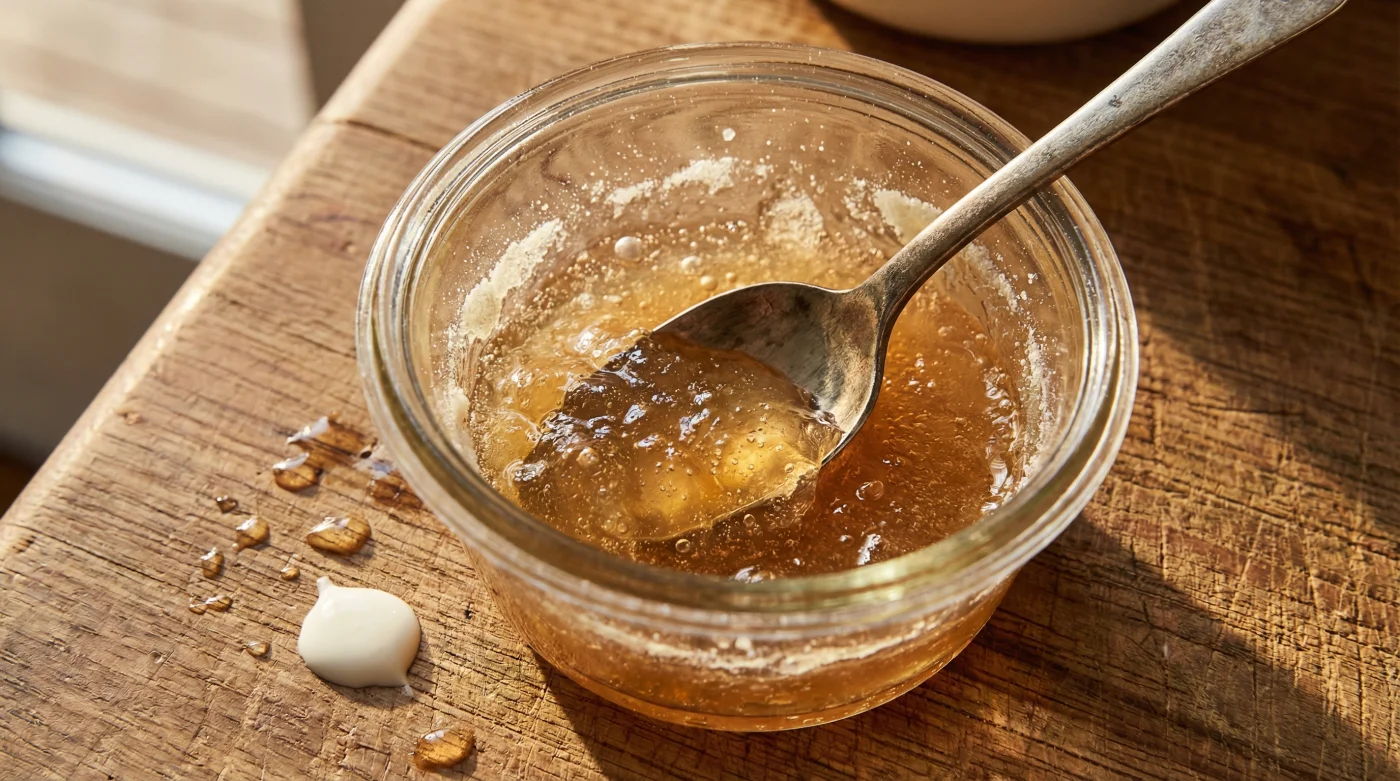
First, place one tablespoon of cold water into a small, heat-proof dish. Sprinkle exactly one teaspoon of unflavored gelatin powder evenly across the surface of the water. Do not stir it. Just step back and watch it. Within five minutes, the dry powder will absorb the water, swelling into a firm, translucent disk that looks and feels a bit like applesauce.
Next, you must melt this bloom. Place the dish in the microwave for five to ten seconds, or set it over a small pot of simmering water. You are looking for the exact moment the gel melts back into a clear, smooth liquid. Do not let it boil, or the gelatin will permanently lose its structural strength and take on an unpleasant odor.
| Ingredient / Step | Technical Requirement | The Mechanical Logic |
|---|---|---|
| Unflavored Gelatin | 1 teaspoon per 1 cup heavy cream | Provides enough protein bonds to hold shape without creating a rubbery texture. |
| Water for Blooming | 1 tablespoon cold water | Cold liquid hydrates the granules evenly before heat activates them. |
| Tempering Liquid | 1 tablespoon of the liquid cream | Equalizes temperatures so hot gelatin does not seize when hitting the cold bowl. |
- Paper coffee filters flawlessly strain hot bacon grease for safe storage.
- Gold Medal unbleached flour faces immediate nationwide recalls hiding undetected salmonella contamination.
- Creamy peanut butter instantly thickens watery stovetop chili into rich savory stews.
- Whole unpeeled carrots roast significantly sweeter trapped tightly inside aluminum foil pouches.
- Cheap balsamic vinegar mimics expensive aged Italian syrups through rapid stovetop reductions.
Turn your mixer to a low speed. As the beaters drag lazily through the softly thickening cream, pour the tempered gelatin mixture down the side of the bowl in a slow, steady stream. Once it is fully incorporated, increase your speed. Whip until you reach those beautiful, firm peaks.
| Quality Indicator | What to Look For | What to Avoid |
|---|---|---|
| The Bloom | Evenly hydrated, spongy, translucent appearance. | Dry white patches of untouched powder sitting on top. |
| The Melt | Clear, smooth liquid that coats the back of a spoon. | Bubbling edges or a cloudy, thick paste that resists pouring. |
| The Final Texture | Smooth, creamy mouthfeel that holds a sharp peak on a whisk. | Grainy texture or tiny, hard rubbery beads settling on the tongue. |
The Gift of Time
Implementing this two-ingredient modification changes the entire rhythm of hosting a dinner. You no longer have to abandon your friends at the table to frantically whip cream in the kitchen while the pie gets cold. You are no longer racing the clock against a melting dessert.
By giving the cream a hidden scaffolding, you are granting yourself true peace of mind. You can frost a cake on a Tuesday for a Wednesday party, sliding it out of the refrigerator looking perfectly pristine. You can set a bowl of snow-white whipped cream on a picnic table in the July sun and trust it will hold its shape through the entire meal. You have tamed the elements, turning a fleeting moment of dairy perfection into a lasting, reliable joy.
“When you stabilize cream, you aren’t just holding air in place; you are buying yourself the time to actually sit down and enjoy the dessert you made.”
Frequent Kitchen Questions
Can I use flavored gelatin to stabilize cream?
You should avoid it. Flavored powders contain high amounts of sugar and citric acid, which will drastically alter the flavor and can easily curdle the dairy.Does the gelatin change the taste of the whipped cream?
Not at all. Unflavored gelatin is completely tasteless and odorless when prepared correctly, allowing your pure vanilla extract and powdered sugar to shine.How long will stabilized whipped cream hold its shape in the fridge?
It will easily maintain its stiff peaks for up to 48 hours without weeping a single drop of liquid into the bottom of the bowl.Can I use agar-agar instead of gelatin?
Yes, but the ratio and boiling process differ significantly. Agar requires a full boil to activate, which makes the tempering process far more delicate to prevent lumps.Why did my whipped cream still get lumpy?
The gelatin likely was not tempered enough, or the mixer was turned off when you poured it in. The gelatin simply seized the exact moment it hit the freezing cold cream.