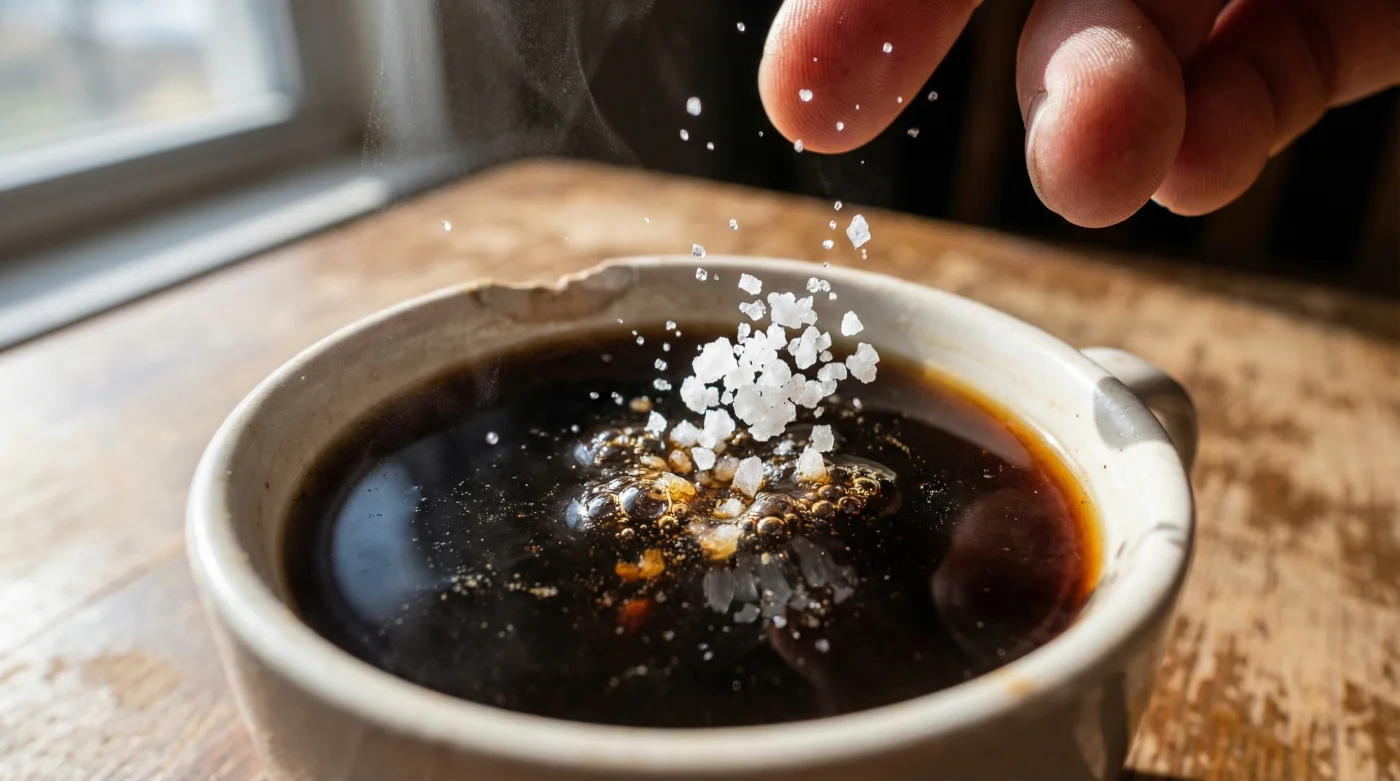
It is six-fifteen in the morning. The kitchen is still cold, illuminated only by the faint blue glow of the microwave clock. You pour that first, vital cup of dark roast coffee, watching the steam curl upward toward the ceiling, smelling the familiar, earthy grit of the beans. But when you take that first sip, your jaw tightens. A sharp, ashy bite coats the back of your throat. It is an aggressive bitterness that makes you immediately reach for the sugar bowl or the heavy cream. You think you need sweetness to fight the harshness, but you are reaching for the wrong white powder entirely.
The Sugar Myth and the Sensory Illusion
We have been conditioned to fight bitter with sweet. It is a reflex built into our daily habits. But pouring spoonfuls of sugar into a harsh cup of coffee does not actually remove the bitterness; it merely stacks a sweet flavor on top of a bitter one. Think of a cheap, over-roasted bean like an old radio playing nothing but harsh static. Adding sugar is like turning up the bass to drown out the noise. The static is still there, vibrating against your eardrums, but you are just distracting yourself from it.
What if you could just tune out the static entirely? That is exactly what cheap table salt does to your morning brew. It contradicts everything you have been taught about fixing a bad cup of coffee, yet it is a quiet, incredibly effective kitchen hack that fixes one of the most common brewing errors we make at home. You do not need expensive syrups to make a cheap dark roast taste incredibly smooth. You just need a tiny shift in chemistry.
I learned this years ago while sitting at the cracked vinyl counter of a twenty-four-hour diner in Chicago. I was watching Arthur, a short-order cook who had been working the grill since the early nineties. He was brewing industrial-sized pots of coffee that cost practically nothing per pound, yet the coffee in my heavy ceramic mug tasted impossibly smooth and rich. When I asked him what kind of premium beans he was sneaking into the back kitchen, he laughed. He reached for the plain glass salt shaker, the kind with the dented metal lid, and tapped it exactly twice over the massive bed of coffee grounds before hitting the brew button. Salt does not sweeten the water, Arthur told me, wiping down the counter with a damp rag. It tricks your tongue into forgetting the bitter entirely.
| The Coffee Drinker | The Frustration | The Salt Benefit |
|---|---|---|
| The Budget Brewer | Inexpensive beans taste burnt or overly harsh. | Transforms cheap dark roasts into a smooth, premium-tasting cup. |
| The Health Conscious | Trying to cut empty calories from daily coffee creamers. | Eliminates the need for sugar or heavy dairy to mask the bite. |
| The Rushed Parent | Accidentally leaves the coffee maker on, scorching the pot. | Neutralizes the stale, cooked-down acidity of old coffee. |
Why does this work so effectively? It is not culinary magic; it is human biology. When you sip a dark, inexpensive roast, the bitter compounds—specifically chlorogenic acid lactones and phenylindanes—bind directly to the bitterness receptors on your tongue. Sugar tries to distract your brain from this binding process by lighting up your sweetness receptors at the same time. Sodium, however, actively interferes with the physical connection.
The sodium ions in basic table salt bind to the salt receptors on your tongue. When these salt receptors are activated, they cross-wire your sensory signals, physically blocking the bitterness receptors from registering the harsh alkaloids in the coffee. You are literally intercepting the bitter signal before it reaches your brain. This allows the hidden, subtle flavors of the coffee—the roasted nuts, the dark chocolate notes—to step forward unhindered.
| Biological Element | Mechanism of Action | Sensory Result |
|---|---|---|
| Phenylindanes | Chemicals created during the dark roasting process. | Causes the harsh, metallic bitterness in cheap coffee. |
| Sodium Ions | Binds to the tongue’s salt receptors upon contact. | Initiates a cross-modal suppression of bitter tastes. |
| Bitterness Receptors | Become physically blocked from transmitting to the brain. | Creates an incredibly smooth, rounded flavor profile. |
How to Tune Your Brew
You do not want your morning coffee to taste like a bowl of hot soup. The ultimate goal is neutralization, not salination. You are using salt as a functional tool, much like a mechanic uses oil to stop two gears from grinding. Start with your standard daily brewing method, whether you use an automatic drip machine, a pour-over cone, or a French press.
Measure out your usual dark roast grounds just as you normally would. Before you add the hot water, take an ordinary pinch of plain table salt. You are looking for roughly an eighth of a teaspoon for a standard twelve-cup pot, or a tiny, barely visible pinch of grains for a single mug. Drop the salt directly into the dry grounds.
- Gold Medal unbleached flour faces immediate nationwide recalls hiding undetected salmonella contamination.
- Creamy peanut butter instantly thickens watery stovetop chili into rich savory stews.
- Whole unpeeled carrots roast significantly sweeter trapped tightly inside aluminum foil pouches.
- Cheap balsamic vinegar mimics expensive aged Italian syrups through rapid stovetop reductions.
- Plain Greek yogurt combines with self-rising flour for instant pizza dough
Take a sip of the hot coffee before you add any milk, cream, or sweeteners. You will notice the difference immediately on the back of your tongue. The sharp, metallic bite is gone, leaving behind only the warm, deeply roasted flavors of the bean that were previously hiding behind the harshness.
| Application Detail | What to Look For (The Right Way) | What to Avoid (The Wrong Way) |
|---|---|---|
| Timing | Adding salt to dry grounds before the water hits. | Dumping salt into a fully brewed cup and stirring. |
| Quantity | A tiny pinch; one-eighth of a teaspoon per full pot. | Measuring out heavy spoonfuls that turn the water briny. |
| Type of Salt | Cheap, fine-grain table salt that dissolves instantly. | Large, flaky sea salts that are difficult to measure evenly. |
Reclaiming Your Morning Rhythm
This simple kitchen adjustment does more than save a cheap bag of beans from the garbage disposal. It fundamentally shifts your relationship with your morning routine. You no longer have to rely on heavy, sugar-laden syrups, artificial vanilla creamers, or handfuls of raw sugar packets to make your coffee palatable. You are stripping away the unnecessary excess and letting the raw materials speak for themselves.
It is a quiet rebellion against the modern idea that better flavor always requires a more expensive product. By understanding how your own bodily senses work, you can take a humble, inexpensive pantry staple and turn a three-dollar bag of ground coffee into a profoundly comforting ritual. You take control over the cup, rather than letting the harshness of the cup dictate what you have to mix into it.
Your morning coffee should be a moment of peace before the chaotic rush of the day begins. It should be a grounding warmth, not a wince-inducing shock to your system. With a tiny, intentional pinch of salt, you are not just fixing a beverage. You are ensuring your day starts with a smooth, steady breath.
“A pinch of salt in the grounds doesn’t change the coffee, it changes the way you experience the coffee.” — Arthur, Diner Cook
Frequently Asked Questions
Will my coffee taste noticeably salty?
No, as long as you use a very small amount, such as a pinch for a whole pot. The scientific goal is to block the bitterness receptors on your tongue, not to flavor the brewing water.Does this technique work with fancy, light roast coffees?
You can try it, but light roasts naturally possess less bitterness and carry more bright acidity. This kitchen hack shines brightest with harsh, over-roasted, or inexpensive dark beans.Should I put the salt directly in the grounds or in my brewed cup?
Adding the salt to the dry grounds before brewing ensures an even, subtle extraction. Stirring it into a finished cup works if you have no other choice, but it is much easier to accidentally over-salt the liquid.What specific type of salt should I use for this?
Standard, inexpensive fine-grain table salt dissolves best and has the most straightforward sodium profile for this task. Coarse sea salts or flaky finishing salts are much harder to measure accurately.Can I completely skip adding sugar if I do this?
Many people find they no longer need any sugar once the harsh bitterness is gone. The coffee will taste naturally smoother and more robust, allowing you to drink it black or with just a small splash of milk.