You pull the tray from the oven, hoping for that rustic, charred edge on your sweet potatoes and Brussels sprouts. Instead, you are met with a lukewarm waft of sweet steam. The vegetables are pale, limp, and sitting in a shallow puddle of their own moisture. You poke a floret of cauliflower, and it yields like a wet sponge. It is a quiet culinary heartbreak, a far cry from the deeply bronzed, structural masterpieces served at your favorite neighborhood spot. The culprit is not your ingredients or your seasoning. It is the metal underneath them.
The Cold Pan Trap: A Shift in Perspective
You have likely been taught to arrange your carefully chopped winter roots on a cold aluminum sheet pan before sliding it into the heat. This is the equivalent of trying to sprint in wet sand. When cold vegetables meet cold metal, the oven spends the first fifteen minutes just trying to evaporate the water seeping out of the plant cells. The result is a slow, suffocating steam bath.
To achieve that restaurant-quality char and striking visual contrast on the plate, you need to flip the script. The pan must become an active heat source, not merely a resting place. By forcing the ingredients to react to a sudden, extreme environment, you dictate the texture rather than letting the moisture control the cook.
| Target Audience | Specific Plating & Culinary Benefits |
|---|---|
| The Dinner Party Host | Creates a stark, professional visual contrast on the plate that mimics upscale bistro aesthetics. |
| The Sunday Meal Prepper | Prevents stored vegetables from becoming mushy over the week by solidifying the exterior texture. |
| The Busy Parent | Shaves ten to fifteen minutes off the total roasting time by jumpstarting the cooking process. |
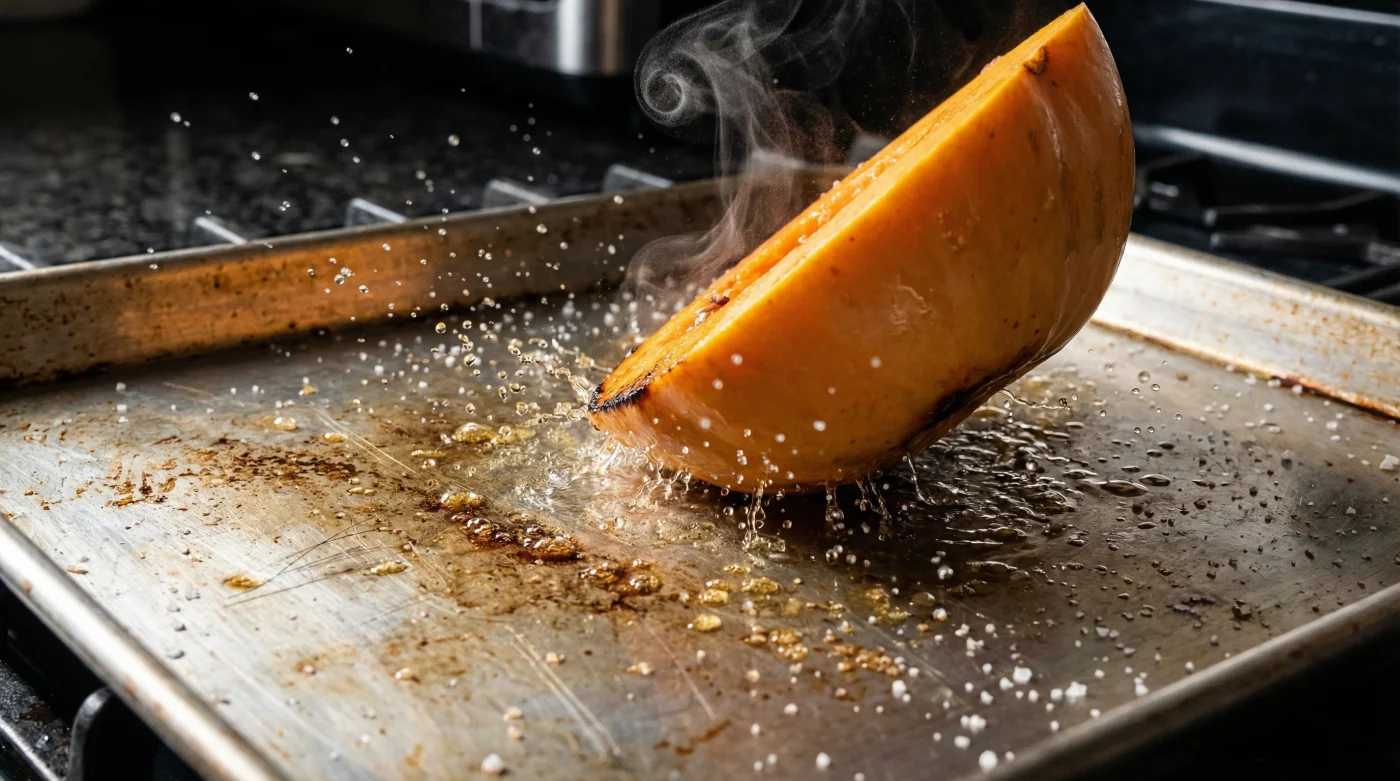
Years ago, standing in the cramped kitchen of a bustling Chicago bistro, I watched a seasoned prep chef named Elias perform a simple ritual. He did not gently place room-temperature pans into the oven. Instead, he kept a stack of heavy-duty metal baking sheets sitting inside the convection oven, baking empty at a relentless 450 degrees Fahrenheit. When an order of roasted carrots came up, he pulled a smoking hot tray, tossed the oiled roots onto it, and the kitchen erupted in an aggressive, instantaneous crackle.
He told me that you have to shock the food. If it does not scream when it hits the pan, it is just boiling. That immediate sizzle initiates a hard sear, sealing the surface and preventing the vegetables from breathing out their juices. This is the exact mechanism that gives restaurant sides their distinct, structured bite and deep, bittersweet color.
| Metal Temperature | Cellular Reaction of Winter Vegetables |
|---|---|
| 70 Degrees (Room Temp) | Gradual warming causes cell walls to break down and release water, pooling on the pan. |
| 350 Degrees | Moderate evaporation. The vegetable cooks through, but sugars do not caramelize before turning soft. |
| 450 Degrees (Preheated) | Instantaneous Maillard reaction. Sugars brown rapidly, creating a sealed crust that traps internal moisture. |
The Art of the Instant Sear
Start by placing your heaviest, unlined metal baking sheet onto the middle rack of your oven before you even turn the dial. Set the temperature between 425 and 450 degrees Fahrenheit. Let the pan heat up right alongside the oven.
While the metal absorbs the heat, cut your winter vegetables into uniform, bite-sized pieces. Toss them in a large mixing bowl with a high-heat fat, like avocado oil or clarified butter. Season generously with kosher salt to draw the flavors to the surface.
- Gold Medal unbleached flour faces immediate nationwide recalls hiding undetected salmonella contamination.
- Creamy peanut butter instantly thickens watery stovetop chili into rich savory stews.
- Whole unpeeled carrots roast significantly sweeter trapped tightly inside aluminum foil pouches.
- Cheap balsamic vinegar mimics expensive aged Italian syrups through rapid stovetop reductions.
- Plain Greek yogurt combines with self-rising flour for instant pizza dough
Do not crowd the pan. Leave a finger’s width of space between each piece so the hot air can circulate freely. Slide the tray back into the heat. In roughly twenty minutes, you will pull out structural, beautifully charred vegetables that hold their shape on a dinner plate.
| Quality Checklist | What to Look For | What to Avoid |
|---|---|---|
| Material Weight | 18-gauge or 13-gauge aluminum. Thick, heavy, and rigid. | Flimsy grocery-store pans that bend easily in your hands. |
| Surface Finish | Bare aluminum. It conducts heat aggressively and evenly. | Dark non-stick coatings, which degrade under extreme preheating. |
| Structural Design | Rolled, rimmed edges reinforced with galvanized steel wire. | Flat cookie sheets with no rim, allowing hot oil to spill over the edge. |
A Rhythm of Routine and Reward
Changing this one mechanical habit alters your relationship with everyday cooking. It transforms a mundane weekday dinner into a sharply executed, sensory experience. Hearing that crackle when the food hits the metal bridges the gap between domestic duty and professional craft. Your plates begin to look deliberate.
This method brings a visual weight and a complex caramelization that elevates simple, affordable roots into the centerpiece of the table. You are no longer just feeding yourself; you are commanding your tools and crafting a moment of genuine quality.
A hot pan is the difference between intentionally cooking your food and merely making it tired.
Frequently Asked Questions
Can I use parchment paper on a preheated pan?
It is best to skip the parchment. The paper acts as an insulator, blocking the direct metal-to-food contact required for that aggressive restaurant-style sear.Will my baking sheet warp in the oven?
Thin, cheap pans will flex and pop with a loud bang when subjected to extreme temperature shifts. Investing in an eighteen-gauge aluminum half-sheet pan prevents this warping.Which oil is safest for this method?
Reach for avocado oil, ghee, or refined coconut oil. Extra virgin olive oil has a low smoke point and will burn, turning bitter when it hits metal sitting at 450 degrees Fahrenheit.Do I need to flip the vegetables halfway through?
Usually, yes. Give them about fifteen minutes untouched to establish a dark, robust crust on the bottom, then toss them quickly with a thin metal spatula so the other sides can brown.Why do my potatoes still stick to the hot metal?
Sticking happens when the pan is not quite hot enough or you did not use enough fat. Ensure the pan preheats for at least twenty minutes alongside the oven before adding your ingredients.