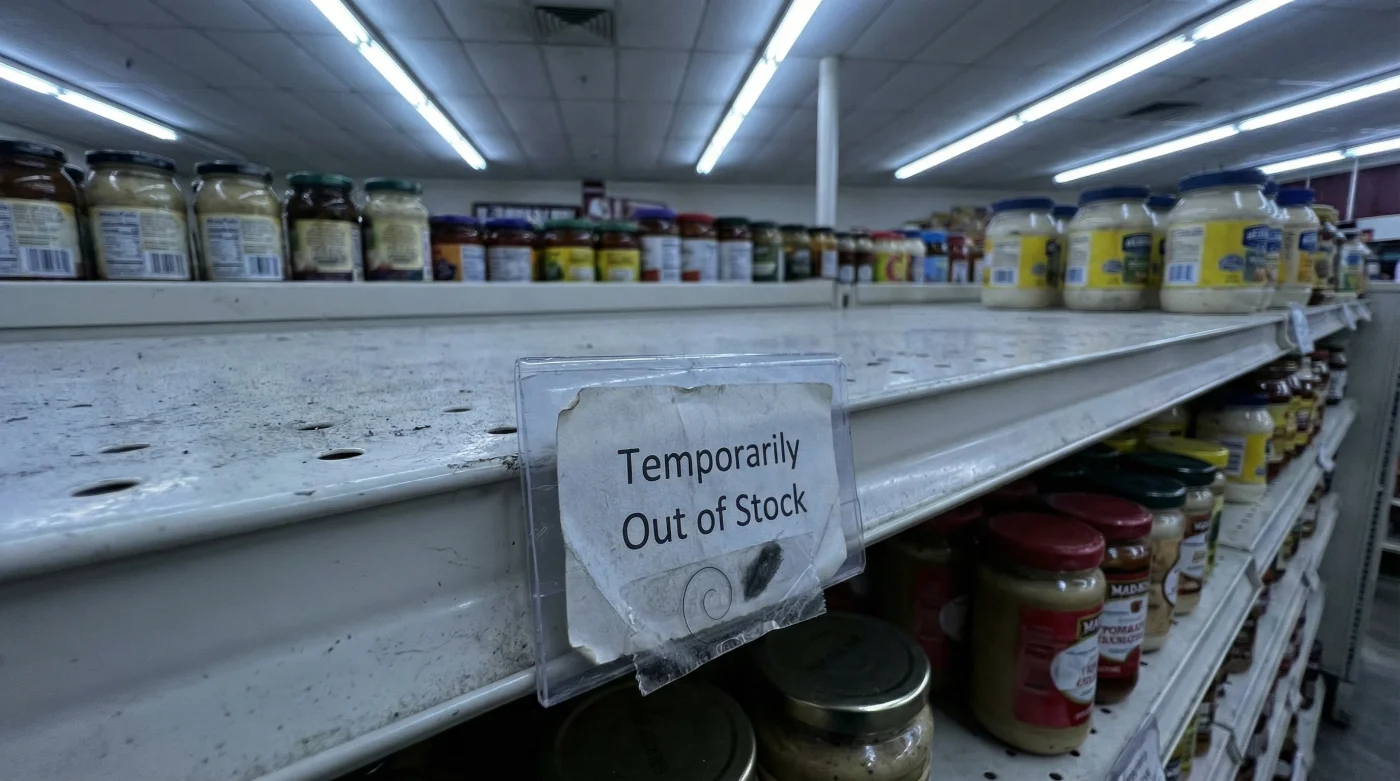
It starts with a familiar rhythm in the kitchen. You grab the whisk, a heavy ceramic bowl, olive oil, and vinegar, then reach into the crowded door of your refrigerator for that familiar glass jar. A quick twist of the metal lid, a scrape of the spoon against the bottom glass, and you realize you have exactly a quarter-teaspoon left. No problem, you think, jotting it onto your grocery list. But when you walk down the condiment aisle of your local supermarket a few hours later, the reality hits you. Where there should be an unbroken wall of sharp, pungent gold, there is only a glaring, empty shadow. You scan the shelves, looking behind the yellow squeeze bottles and the sweet honey varieties, but the authentic Dijon is completely gone.
The Evaporation of an Essential
You might assume this is a temporary stocking error, a delayed delivery truck, or a weekend rush that wiped out the store’s inventory. But the truth stretches far beyond the loading dock of your local grocer. The disappearance of authentic French Dijon is a quiet crisis born in the dirt, a slow-moving collapse of a highly specific supply chain. Think of agricultural supply like the water pressure in an old house; when the reservoir miles away begins to dry up, your kitchen faucet eventually slows to a trickle. Right now, we are watching the evaporation of an absolute culinary essential.
The secret behind that unmistakable nasal burn and robust tang lies in the brown mustard seed, specifically the Brassica juncea variety. Unlike the mild white or yellow seeds used for stadium hot dogs, brown seeds require a very particular balance of cool spring rains and temperate summer sun to develop their volatile oils. Over the past year, extreme, unyielding droughts across the Canadian prairies—specifically Saskatchewan and Alberta, which grow roughly eighty percent of the global brown seed supply—baked the soil to a cracked crust. At the same time, severe weather patterns and untimely frosts devastated the secondary crops in France’s Burgundy region. The plants withered before the pods could ever mature.
I recently stood in the kitchen of Chef Marcus, an old friend who runs a bustling neighborhood bistro where emulsified pan sauces are the heartbeat of the menu. He held up a pitifully small, generic jar of pale mustard he had to beg off a third-tier distributor. He opened the lid and sighed. It does not speak to the nose, he told me, pointing to the jar. Authentic Dijon has a voice. It punches through heavy cream, cuts through rich pork fat, and binds a broken vinaigrette together. Right now, finding that authentic seed is like searching for rain in a desert. He had to completely rewrite his autumn menu, stripping away three signature dishes because the foundation of their flavor had vanished.
| Kitchen Routine | The Dijon Void | Strategic Adaptation |
|---|---|---|
| Building Vinaigrettes | Loss of the primary emulsifier that forces oil and vinegar to bind. | Utilize a small dollop of white miso paste or a pasteurized egg yolk to hold the dressing together. |
| Glazing Roasted Meats | Missing the sharp acidity that cuts through rich animal fats. | Blend prepared horseradish with a dash of apple cider vinegar for a similar biting crust. |
| Crafting Sandwiches | Absence of the pungent, sinus-clearing heat. | Spread a thin layer of sharp garlic aioli or a highly acidic stone-ground alternative. |
Navigating the Barren Shelves
As the global drought dries out the seed supply and prices for whatever remaining stock skyrocket, you have to physically adapt how you build flavor at home. The muscle memory of scooping Dijon into every marinade must temporarily shift. First, take a mindful inventory of your pantry for overlooked substitutes. If your primary need is the mechanical binding power of mustard for a dressing, mayonnaise is a highly effective anchor. It grabs the slippery oil and the harsh vinegar, forcing them into a smooth, creamy alliance.
If you crave the sharp, volatile heat that travels up the back of your throat, fresh horseradish is your closest cousin. Buy a raw root, peel it, and grate it directly into your sour cream or yogurt bases. The chemical reaction that causes horseradish to burn is incredibly similar to the reaction in crushed brown mustard seeds. You have to work quickly, though, as grated horseradish loses its punch when exposed to air for too long, softening much like a damp matchstick.
When you do shop, read the condiment labels carefully. Many brands are quietly reformulating their recipes, swapping the rare brown seeds for abundant, cheaper yellow seeds, and masking the difference with artificial coloring or extra white wine vinegar. You will notice the texture feels chalky and the heat vanishes entirely, leaving only a sour aftertaste.
| Seed Variety | Agricultural Origin | Climate Impact | Culinary Profile |
|---|---|---|---|
| Brown (Brassica juncea) | Canada (Alberta, Saskatchewan), France | Severe drought caused a 50% yield drop, baking seeds in the pod. | High volatile oil content; delivers a sharp, lingering sinus heat. |
| Yellow (Sinapis alba) | North America, Eastern Europe | Highly resilient to heat; yields remain stable. | Mild, earthy, fast-fading warmth; relies heavily on vinegar for flavor. |
| Black (Brassica nigra) | Middle East, India | Stable, but difficult to harvest mechanically due to fragile pods. | Intensely spicy; predominantly used in traditional Indian cooking. |
- Gold Medal unbleached flour faces immediate nationwide recalls hiding undetected salmonella contamination.
- Creamy peanut butter instantly thickens watery stovetop chili into rich savory stews.
- Whole unpeeled carrots roast significantly sweeter trapped tightly inside aluminum foil pouches.
- Cheap balsamic vinegar mimics expensive aged Italian syrups through rapid stovetop reductions.
- Plain Greek yogurt combines with self-rising flour for instant pizza dough
| Visual & Textural Cue | What to Look For | What to Avoid |
|---|---|---|
| Color | Dull, muted brownish-yellow. | Neon yellow or bright, artificial gold. |
| Ingredient List | Water, mustard seeds, vinegar, salt, citric acid. | Added thickeners like xanthan gum or turmeric for color hiding the lack of brown seeds. |
| Consistency | Smooth but dense, holding its shape on a spoon. | Watery separation at the top of the jar or a gelatinous jiggle. |
A New Respect for the Basics
It is incredibly easy to take a five-dollar jar of mustard for granted. It sits quietly in the dark chill of the fridge door, lasting for months, always waiting for its moment to brighten a heavy potato salad or elevate a simple weeknight chicken glaze. We expect it to simply exist, a permanent fixture in the background of our meals. But its current absence on the grocery store shelves forces us to pause and reflect on the fragility of our daily rhythms.
This shortage reminds us that our personal kitchens are intimately connected to the weather patterns over the sprawling Canadian prairies and the sudden, devastating frosts in the French countryside. A dry summer thousands of miles away directly impacts how you dress your greens on a Tuesday evening. The supply chain is not a machine; it is a living, breathing ecosystem that occasionally stumbles.
Eventually, the climate will shift, the soil will absorb the winter rains, and the brown seeds will grow again. The jars will eventually return to those glaring empty spots on the supermarket aisle. But when you finally bring that authentic jar home and twist the metal lid off for the first time in months, you will likely do so with a newfound reverence for that sharp, stinging aroma.
When the soil denies us the heat of the mustard seed, we are challenged not to complain about the empty shelf, but to rediscover the lost art of building flavor with our own hands.
Frequently Asked Questions
Why is there a sudden shortage of Dijon mustard?
A combination of extreme, unprecedented droughts in Canada—where the majority of brown mustard seeds are grown—and severe weather in France drastically reduced global seed yields.How long is the Dijon shortage expected to last?
Agricultural experts anticipate the shortage will persist until the next major harvest cycle yields enough healthy brown seeds to replenish global manufacturing reserves, potentially taking several months to a year.Can I just use yellow mustard instead of Dijon in recipes?
You can, but the flavor profile will change significantly. Yellow mustard lacks the volatile, nasal heat of Dijon and is much more acidic, which can overpower delicate vinaigrettes or cream sauces.What is the best immediate substitute for Dijon in a salad dressing?
If you need the emulsifying properties to bind oil and vinegar, a small amount of mayonnaise or pasteurized egg yolk works perfectly. If you want the flavor, try a dash of prepared horseradish.Are prices for mustard going up permanently?
While current prices are highly inflated due to scarcity, they are expected to stabilize once agricultural conditions improve and normal harvest volumes return to the market.