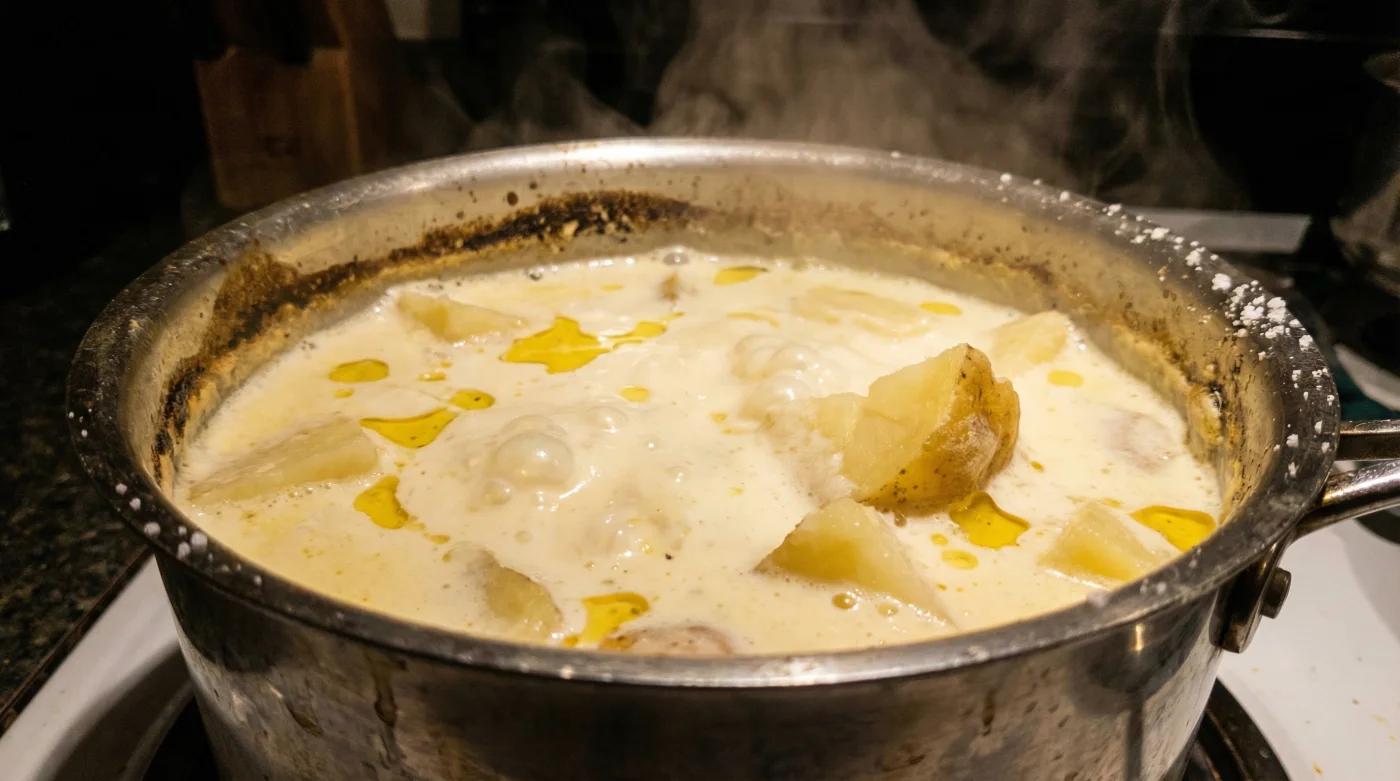
You are standing by the stove on a Tuesday evening, watching a roaring pot of salted water. The steam coats the kitchen window, dripping onto the sill. You toss in chunks of Yukon Golds, waiting for them to soften. You drain them in the sink—a sudden, blinding rush of cloudy steam—and then forcefully mash them with cold butter and a splash of milk. Yet, they always turn out slightly broken. They feel a bit watery, lacking that silken, heavy drape you find at high-end steakhouses. You assume you just need more butter, but the flaw happened long before the masher ever touched the bowl.
The Sponge in a Rainstorm
Let us rethink the physical nature of a potato. A Yukon Gold is essentially a dense, starchy sponge. When it hits the heat, its cellular walls relax, and it frantically drinks in the first liquid it encounters. If that liquid is salted tap water, the potato fills its structure with zero-flavor moisture. The butter and cream you add later are merely sitting on the outside, trying to coat a completely waterlogged surface. It is like trying to paint a soaking wet canvas.
Years ago, in the cramped prep area of a bustling Chicago bistro, a veteran sous chef watched me haul a massive pot of boiling water to the drain. He shook his head, pulled the strainer from my hands, and pushed a carton of heavy cream across the stainless steel counter. “Never boil a Yukon in water,” he said, dumping the next batch of raw, diced potatoes straight into a wide saucepan filled with seasoned cream. “Let them drink the fat from the very first minute.”
By simmering the potatoes directly in heavy dairy, you force the starch to absorb pure butterfat as it expands. Instead of a waterlogged core, you build a foundation of absolute richness.
| Target Audience | Specific Benefits of the Cream-Simmer Method |
|---|---|
| The Holiday Host | Eliminates the dangerous, messy act of carrying heavy gallons of boiling water to the sink while guests are arriving. |
| The Date-Night Cook | Delivers a hyper-luxurious, steakhouse-caliber side dish using only a single pot and two primary ingredients. |
| The Weeknight Parent | Turns a chaotic multi-step process into a gentle simmer that easily holds warm on the stove without drying out. |
The Physics of the Starch-Fat Exchange
When you skip the water, you change the entire chemical reaction of the dish. Water boils violently at 212 degrees Fahrenheit, which agitates the potatoes, causing their exteriors to crumble before the centers are fully tender. Heavy cream, on the other hand, encourages a gentler heat. As the cream reduces, the starches thicken the liquid naturally, creating a self-saucing environment.
| Cooking Liquid | Mechanical Logic & Starch Behavior |
|---|---|
| Traditional Water Boil | Potato cells flood with neutral water. Added butter sits on the surface, often leading to a weeping, separated mash. |
| Heavy Cream Simmer | Starch cells expand directly into butterfat. The cooking liquid reduces into a thick glaze that emulsifies naturally. |
| Temperature Dynamics | Gentle simmering (180 to 190 Fahrenheit) prevents dairy from splitting while evenly tenderizing the pectin in the potato walls. |
The One-Pot Cream Simmer Application
Peel your Yukon Golds and cut them into even, one-inch cubes. Precision matters here; uneven chunks mean some pieces will dissolve while others remain hard. Place the dry cubes into a wide, heavy-bottomed saucepan or Dutch oven. Pour in just enough heavy cream to cover the potatoes—usually about one quart for every three pounds of potatoes. Drop in two smashed garlic cloves, a generous pinch of kosher salt, and a sprig of fresh thyme.
- Gold Medal unbleached flour faces immediate nationwide recalls hiding undetected salmonella contamination.
- Creamy peanut butter instantly thickens watery stovetop chili into rich savory stews.
- Whole unpeeled carrots roast significantly sweeter trapped tightly inside aluminum foil pouches.
- Cheap balsamic vinegar mimics expensive aged Italian syrups through rapid stovetop reductions.
- Plain Greek yogurt combines with self-rising flour for instant pizza dough
Once a fork glides through the largest potato cube with absolutely no resistance, turn off the heat. Do not drain a single drop of the liquid. Remove the thyme sprig and the garlic cloves. Take a handheld potato masher or a sturdy whisk and press directly into the pot. The reduced cream will instantly bind with the softened potatoes, creating a smooth, glossy purée that requires no additional butter.
| Element | What to Look For | What to Avoid |
|---|---|---|
| The Cream Heat | Barely trembling bubbles at the perimeter of the pan. | A rolling, aggressive boil that will scorch the dairy and ruin the flavor. |
| The Potato Cut | Even, one-inch cubes so they cook uniformly in the dense liquid. | Whole or halved potatoes that take too long to cook, evaporating the cream prematurely. |
| The Mashing Phase | A gentle press and fold with a hand masher directly in the reduced cream. | Using an electric hand mixer, which overworks the fat-soaked starch into a tacky glue. |
The Rhythm of a Quieter Kitchen
Adopting this method fundamentally changes the pace of your evening. You are no longer timing the boil, wrestling with a colander, or rushing to mash cold butter into cooling potatoes before they seize up. You are simply preparing a single pot, setting the heat, and walking away. The kitchen smells softly of garlic and warm cream, rather than the metallic scent of boiling tap water.
There is a distinct peace of mind in cooking with the grain of the ingredients. By letting the potatoes drink what they naturally crave, you do less work and achieve a vastly superior result. You serve a dish that coats the spoon, holds its heat, and carries the luxurious weight of a professional kitchen. It is a quiet revolution happening right on your back burner.
“When you stop fighting the natural absorbency of a root vegetable and start feeding it flavor from the very first minute, the ingredient does all the heavy lifting for you.”
Frequently Asked Questions
Can I use milk instead of heavy cream for this method?
No. Milk lacks the necessary butterfat and will curdle or split when simmered for 30 minutes. Heavy cream is stable enough to endure the cooking process without breaking.Do I need to wash the potatoes after cutting them?
Do not rinse them. You want to keep the surface starches intact, as they will mix with the cream to naturally thicken the final purée.What if the cream evaporates before the potatoes are soft?
If your heat was slightly too high and the liquid drops below the potatoes, simply add a splash of extra cream or half-and-half to keep them submerged until tender.Does this work with Russet potatoes?
While Russets are fluffy, they are highly prone to falling apart and turning the cream to mush too early. Yukon Golds have the perfect waxy-starchy balance to hold their shape until mashing time.How do I reheat these the next day?
Because they are bound with pure fat rather than water, they reheat beautifully. Place them in a saucepan over low heat and fold in a few tablespoons of cream until they relax back into a silken texture.