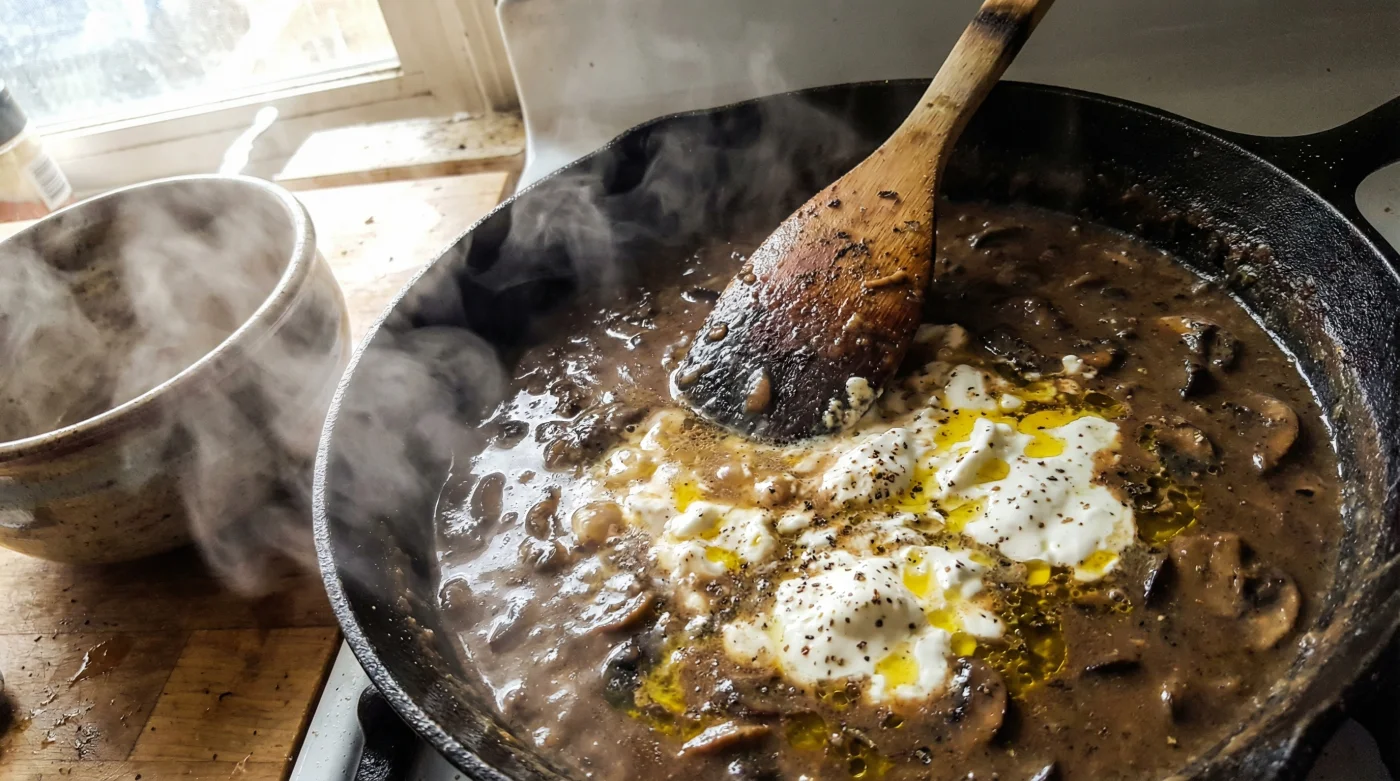
You have been standing at the stove for an hour. The kitchen smells of seared beef, caramelized onions, and earthy mushrooms bubbling in a rich, savory broth. The hard part is over. Your family is setting the table, the plates are warm, and you can already taste the comfort in that first bite. You reach for the final touch to bring it all together: a generous dollop of cold sour cream straight from the fridge. It is a busy Tuesday, and you just want to get food on the plates. You drop the cold cream into the simmering skillet and stir, expecting that beautiful, glossy, velvet finish you see in food magazines. Instead, the white cream immediately fragments. The sauce separates into watery grease and grainy, unappetizing white flecks. Your stomach drops. The stroganoff is broken, and there is no taking it back.
The Shock of the Cold
It is a heartbreaking moment for any home cook, but it is entirely avoidable. This is not a failure of your cooking skills, nor does it mean you followed a bad recipe. It is simply a misunderstanding of kitchen physics. When you drop cold sour cream into a boiling liquid, you are subjecting the dairy to severe thermal shock. Think of it like taking a glass baking dish out of a freezing freezer and tossing it directly into a hot oven—it shatters instantly. The exact same thing happens to your food. The delicate proteins in the dairy seize up, panic, and clump together in a split second. As they form these tight microscopic knots, they squeeze out the water and separate from the fat. This is why the quick, hurried habit of finishing a savory dish by dumping cold dairy directly into the pan usually results in a grainy, watery tragedy rather than a comforting meal.
I learned this lesson the hard way years ago, sweating over a giant pot of paprika-laced stew for a family gathering. I dumped in the cream, watched the sauce curdle, and nearly threw the whole pot away in frustration. Chef Clara, a veteran local bistro owner who moved through her kitchen with the calm, deliberate grace of a seasoned mechanic, happened to be visiting. She gently took the wooden spoon from my hand and looked at the ruined dinner. ‘You are screaming at the cream,’ she told me, pointing to the vigorously boiling broth. ‘You have to introduce them slowly. You cannot force two totally different temperatures together and expect them to get along. You have to temper it.’ That single word—tempering—changed how I approached every creamy soup, pan sauce, and skillet dinner from that day forward. It is the invisible technique that separates a frantic kitchen from a confident one.
| Home Cook Profile | Why Tempering Matters for You |
|---|---|
| The Busy Mother | Saves an entire family meal from going into the trash, protecting your grocery budget and valuable time. |
| The Comfort Food Lover | Guarantees that restaurant-quality, silky texture in stroganoffs and hearty, creamy soups. |
| The Meal Prepper | Creates highly stable sauces that reheat beautifully without separating or becoming oily the next day. |
The Gentle Art of Tempering
So, how do we fix this common cooking error and guarantee a perfect dinner every single time? You need to build a bridge across the temperature gap between the freezing fridge and the bubbling stove. This mindful action is the gentle art of tempering.
First, pull your heavy skillet off the heat entirely. You never want your base liquid at a rolling boil or even an active simmer when dairy enters the equation. The heat must be entirely passive.
Next, scoop your measured cold sour cream into a separate, small heat-proof bowl. Now, take a small ladle or a measuring cup and scoop out a bit of the hot broth from your skillet.
Slowly, drop by drop at first, drizzle the hot broth into the cold sour cream while whisking constantly with a fork or a small wire whisk. Watch the thick cream thin out and gradually warm up. It should turn into a smooth, loose, warm slurry.
Add one more ladle of hot broth and whisk vigorously again. Feel the bottom of the bowl; it should feel pleasantly warm to the touch. You have now safely and gently brought the dairy up to a compatible temperature.
Finally, pour this warm, tempered mixture back into your main skillet. Stir it gently over the lowest possible heat setting just until everything is combined. The result is a glossy, flawless, restaurant-quality sauce that coats the back of a spoon beautifully.
| Temperature Zone | Dairy Reaction | Outcome |
|---|---|---|
| Boiling (212°F) | Proteins denature instantly and violently upon contact. | Curdling, grainy texture, broken sauce. |
| Simmering (185°F) | High risk of protein binding if dairy is directly from the fridge. | Partial separation, oily finish, undesirable mouthfeel. |
| Tempered (130°F – 150°F) | Proteins relax and bond smoothly with ambient fats and liquids. | Silky, cohesive, beautifully velvet sauce. |
| What to Look For (The Fix) | What to Avoid (The Trap) |
|---|---|
| Full-fat sour cream (inherently more stable against heat). | Low-fat or fat-free dairy products (curdles much faster). |
| Whisking hot broth into the dairy in a separate, small bowl. | Dumping cold dairy directly into the main hot cooking pot. |
| Removing the pan from the heat completely before combining. | Leaving the burner on a high setting while trying to stir. |
| A smooth, slightly warm dairy slurry before the final mix. | Cold, stiff clumps of cream sitting on your wooden spoon. |
A Calmer Kitchen Rhythm
Taking those two extra minutes to properly temper your sour cream does a lot more than just save a Tuesday night dinner from the trash can. It fundamentally changes your daily mindset at the stove. Instead of rushing to finish the dish in a panic, you are moving with deliberate intention. You are actively working with the ingredients, respecting their structural nature, rather than forcing them together and anxiously hoping for the best.
This small, mindful shift turns a frantic weeknight dinner scramble into a quiet moment of culinary mastery. It teaches patience. You serve the dish with a deep sense of confidence, knowing the sauce is thick, rich, and perfectly smooth. Your family will notice the difference in texture, and you will notice the difference in your own stress levels. Cooking becomes less about following rigid instructions and more about understanding the rhythm of the food.
‘A beautiful sauce requires patience; treat your dairy like a guest, warming it up to the room before demanding it joins the party.’ – Chef Clara
Frequently Asked Questions
Can I use milk instead of sour cream? Standard milk lacks the fat content to thicken like cream and will curdle even faster if not tempered and stabilized with flour or cornstarch.
Does this rule apply to heavy cream? Heavy cream is more forgiving because of its high fat content, but tempering is still the safest habit for a truly silky texture.
What if my sauce is already broken? You can sometimes rescue a slightly broken sauce by removing it from the heat and vigorously whisking in a splash of heavy cream or a teaspoon of cornstarch mixed with cold water.
Why does low-fat sour cream curdle more easily? Fat coats the dairy proteins, protecting them from the heat; without that fat barrier, the proteins instantly bind together and separate.
Can I just leave the sour cream on the counter to warm up? Room temperature sour cream is safer than freezing cold, but it is still drastically colder than a boiling pan, making tempering the only foolproof method.