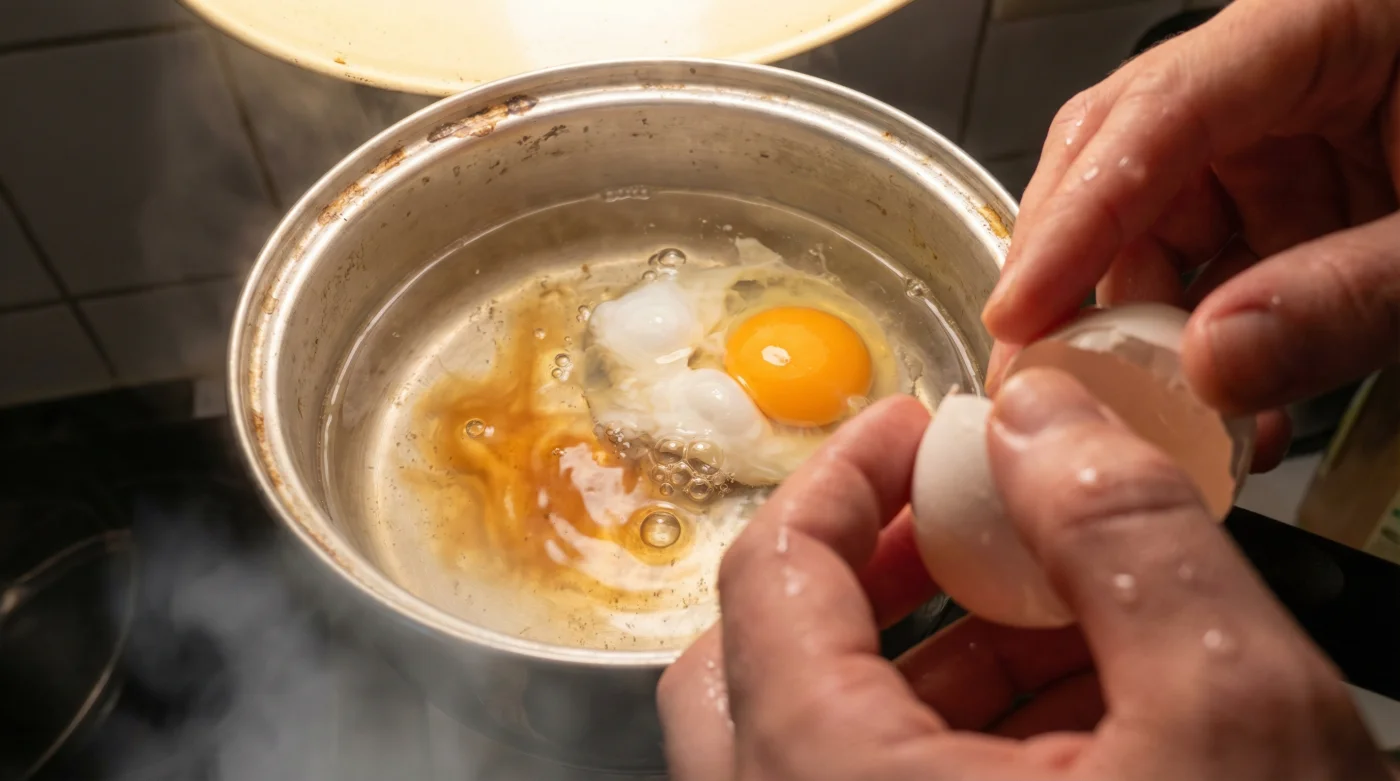
You know the sound. The gentle, rolling murmur of water heating on the back burner. The toast is warm, the butter is ready, and the morning feels full of promise. You crack a fresh egg into a ramekin, hold your breath, and slide it into the vortex of the pot. Instantly, the egg white shreds. It reaches out like cloudy tentacles, separating from the yolk, turning your breakfast into a watery, wispy disappointment. You scoop out a sad, rubbery pebble, wondering why a simple weekend breakfast feels like a culinary hurdle. Poaching eggs at home often feels like a gamble, but the secret to a perfectly intact, restaurant-quality dome is sitting right in your pantry.
The Armor of the Egg White
Let us talk about the hesitation that stops you from fixing this. You have likely heard that a splash of vinegar holds the egg together. But when you open your cabinet, you see the harsh, sharp white vinegar and the distinctively fruity apple cider vinegar. You pause. You worry that pouring apple cider vinegar into the pot will ruin the delicate flavor of your breakfast, making your eggs taste like a bitter vinaigrette. This is a culinary myth that needs breaking. Think of the apple cider vinegar as a momentary corset. The acidity forces the loose protein bonds of the egg white to tighten immediately upon contact with the heat. It builds a protective armor around the yolk, holding the shape perfectly intact. The best part? The flavor vanishes completely once the egg is drained.
| Target Audience | Specific Benefit of the ACV Method |
|---|---|
| The Busy Homemaker | Eliminates the anxiety of ruined breakfasts and wasted eggs during rushed weekend mornings. |
| The Health-Conscious Parent | Allows for oil-free cooking without sacrificing the visual appeal of a perfectly plated meal. |
| The Budget Cook | Uses an affordable, multi-purpose pantry staple to achieve a high-end restaurant presentation. |
Years ago, I spent a morning observing a seasoned breakfast cook named Clara at a bustling local diner. She was flipping pancakes and managing six pans at once, but her poached eggs were a marvel. They looked like little mozzarella spheres. I watched her splash a generous capful of amber liquid into the poaching water without measuring. ‘The water needs teeth,’ she told me, wiping her hands on her apron. ‘The apple cider vinegar grabs the white before it can run away.’ She explained that the acid works so fast on the exterior proteins that it never actually penetrates the rich yolk inside. It was a revelation in practical kitchen wisdom.
| Mechanical Logic | Technical Detail |
|---|---|
| Protein Coagulation Rate | The 5% acetic acid in ACV lowers the pH of the water, forcing egg albumen to firm up at a lower temperature. |
| Thermal Shielding | The firmed exterior white prevents the boiling water from overcooking the delicate yolk inside. |
| Flavor Dissipation | Because the acid acts only on the surface layer, dabbing the egg on a paper towel removes all residual apple cider flavor. |
The Sunday Morning Strategy
Preparation is everything, but it does not need to be complicated. Fill a medium saucepan with about three inches of water. Bring it to a heavy boil, then immediately turn the heat down. You do not want violently bubbling water; you want a quiet, gentle shiver on the surface. Vigorous bubbles will tear the delicate egg apart, regardless of what you add to the pot. This is where you introduce the magic. Pour one tablespoon of apple cider vinegar directly into the shivering water. Do not add salt at this stage, as salt actually encourages the egg whites to separate and break apart.
Crack your cold egg into a small, fine-mesh sieve first. This drains away the thin, watery part of the egg white that creates those ugly wisps. Gently transfer the remaining egg into a small ramekin or cup. Take a spoon and stir the vinegared water in a circle to create a gentle whirlpool. Lower the lip of the ramekin right to the surface of the water and let the egg slip into the center of the vortex. The movement wraps the egg white around itself, while the apple cider vinegar instantly sets the shape.
| Quality Checklist | What to Avoid |
|---|---|
| Use eggs straight from the refrigerator for a tighter white. | Avoid using eggs past their prime; older whites naturally thin out. |
| Ensure the water is at a gentle simmer (tiny bubbles at the bottom). | Never drop eggs into a rolling, violent boil. |
| Rest the finished egg gently on a folded paper towel. | Do not skip the paper towel dab; it removes excess water and any lingering vinegar scent. |
Set a timer for exactly three minutes. Do not poke or prod the egg while it cooks. Let the water do the work. When the time is up, use a slotted spoon to carefully lift your masterpiece from the pot. The white will be firm and opaque, shielding the liquid gold inside. Rest the spoon on a clean paper towel for just three seconds to drain the moisture. This simple blotting action is the final guard against any residual vinegar flavor. Slide it onto a piece of buttered sourdough, hit it with a crack of black pepper, and serve.
Reclaiming Your Morning Peace
Mastering this simple technique does more than just upgrade your breakfast. It shifts how you approach your kitchen. When you remove the frustration from a notoriously tricky dish, cooking stops being a chore and becomes a rhythmic, satisfying ritual. You learn to work with the ingredients, understanding how a splash of acidity can completely alter the physical structure of a protein. You are no longer crossing your fingers and hoping for the best; you are commanding the process with simple, everyday tools.
By trusting the apple cider vinegar trick, you give yourself the gift of a calm morning. You can impress your family with a beautiful, cafe-worthy plate without spending an hour cleaning up wispy egg remnants from the bottom of a pot. It is a small victory, but those small victories set a confident tone for the rest of your day.
Cooking is not about complicated gadgets; it is about understanding how humble ingredients like vinegar can quietly solve your biggest frustrations.
Frequent Kitchen Questions
Will my eggs taste like apple cider vinegar? No. The vinegar works entirely on the exterior protein of the egg. As long as you briefly drain the egg on a paper towel, the flavor completely dissipates.
Do I have to use cold eggs? Yes. Cold eggs hold their shape much better because the proteins in the white are tighter than those in room-temperature eggs.
Why shouldn’t I salt the water? Salt breaks down the egg white proteins in the water, causing them to spread out and create wisps before the heat can set them.
Can I cook multiple eggs at once? Yes, but do not crowd the pot. You can cook up to three eggs in a large pan, but ensure you skip the whirlpool technique so they do not crash into each other.
What if I only have white vinegar? White vinegar works perfectly for coagulation, but it has a harsher smell. The technique remains exactly the same regardless of which vinegar you choose.