You pull the heavy metal baking sheet from your oven, and the warm, comforting scent of melted butter and toasted sugar immediately blankets your kitchen. The cookies look perfect. They have golden-brown edges, soft, pale centers, and semi-sweet chocolate chips pooling in dark, glossy circles. You let them rest on the wire cooling rack just long enough to handle, break off a warm piece, and take a bite. It is good, but it is just… sweet. A flat, one-note sugar rush that coats your tongue heavily. You spent all afternoon measuring flour, creaming butter, and waiting for the dough to chill, hoping for that complex, bakery-window magic. Yet, the final result feels like it is missing a vital pulse.
The Sugar Paradox and the Volume Knob of Flavor
We are taught from childhood that sugar makes things sweet and salt makes things savory. It is treated as a rigid culinary line drawn in the sand. But this rudimentary logic ignores how our bodies actually experience taste. Think of your palate as an old stereo system. Adding more sugar just turns up the treble until it shrieks, washing out the rich bass notes of the vanilla and the butter. Salt acts as the master equalizer.
By pressing coarse kosher salt crystals onto your raw cookie dough, you are not making the cookie taste like a salted pretzel or a piece of roasted meat. You are providing the necessary friction that allows the sweetness to sing clearly. It is the contrast that gives the flavor its shape.
I learned this years ago while watching a seasoned pastry chef work the morning shift at a tiny, bustling bakery in Chicago. Her apron was dusted with flour, and she moved with an incredibly practiced rhythm. She did not just blindly mix salt into the batter and hope for the best. Right before her heavy metal trays went into the roaring ovens, she took a generous pinch of coarse kosher salt and scattered it over the raw dough mounds like fresh snow.
She explained that the visible crystals on top serve a dual purpose. They catch the morning light, creating that irresistible, high-end artisanal look that draws people into the shop, and they hit your tongue right before the rich chocolate does. It is a professional plating secret scaled down for the home kitchen.
| Home Baker Profile | Common Frustration | The Salt Solution Benefit |
|---|---|---|
| The Busy Mother | Baked goods taste flat or identical to store-bought options. | Instantly elevates a basic recipe to a premium, gourmet standard with zero extra prep time. |
| The Baking Enthusiast | Cookies look plain and lack that ‘rustic bakery’ aesthetic. | Creates an artisanal, textured finish that photographs beautifully and looks professional. |
| The Sugar-Conscious | Desserts feel overwhelmingly cloying or too heavy to finish. | Cuts through the heavy syrup sensation, allowing you to enjoy the treat without palate fatigue. |
When those delicate, jagged crystals dissolve on your tongue alongside the warm chocolate and sugar, something remarkable happens physically. You have specific receptors in your mouth that only activate when sodium is present alongside glucose.
| Mechanism | Scientific Reality | Culinary Result |
|---|---|---|
| SGLT1 Receptor Activation | Sodium-glucose cotransporter 1 (SGLT1) cells in the sweet taste buds use sodium to transport glucose into the sweet taste cell. | Sugar registers as significantly sweeter and more vibrant to the brain when a tiny amount of salt is present. |
| Salivary Response | Salt draws moisture to the surface of the mouth. | Increases saliva production, which helps distribute the fat from the butter evenly across the palate. |
| Sensory Contrast | The brain processes competing signals (salty vs. sweet) simultaneously. | Prevents flavor fatigue, making the last bite of the cookie taste just as interesting as the first bite. |
Not all salt is created equal for this task. Grabbing the wrong shaker from your pantry will ruin a batch of cookies faster than an uncalibrated oven.
| Salt Type | What to Look For | What to Avoid |
|---|---|---|
| Kosher Salt | Flat, plate-like crystals. Look for brands like Diamond Crystal which have a clean, light crunch. | Avoid using a heavy hand; kosher salt is denser than flaky sea salt, so a little goes a long way. |
| Flaky Sea Salt | Large, pyramid-shaped flakes (like Maldon). Look for a dry, shattering texture. | Avoid damp or grey sea salts, which can carry an overly briny, oceanic flavor. |
| Standard Table Salt | Nothing. Do not use this for finishing baked goods. | Avoid iodized versions completely. The tiny cubes dissolve instantly, making the cookie harshly salty and leaving a metallic aftertaste. |
The Physical Technique of the Bake
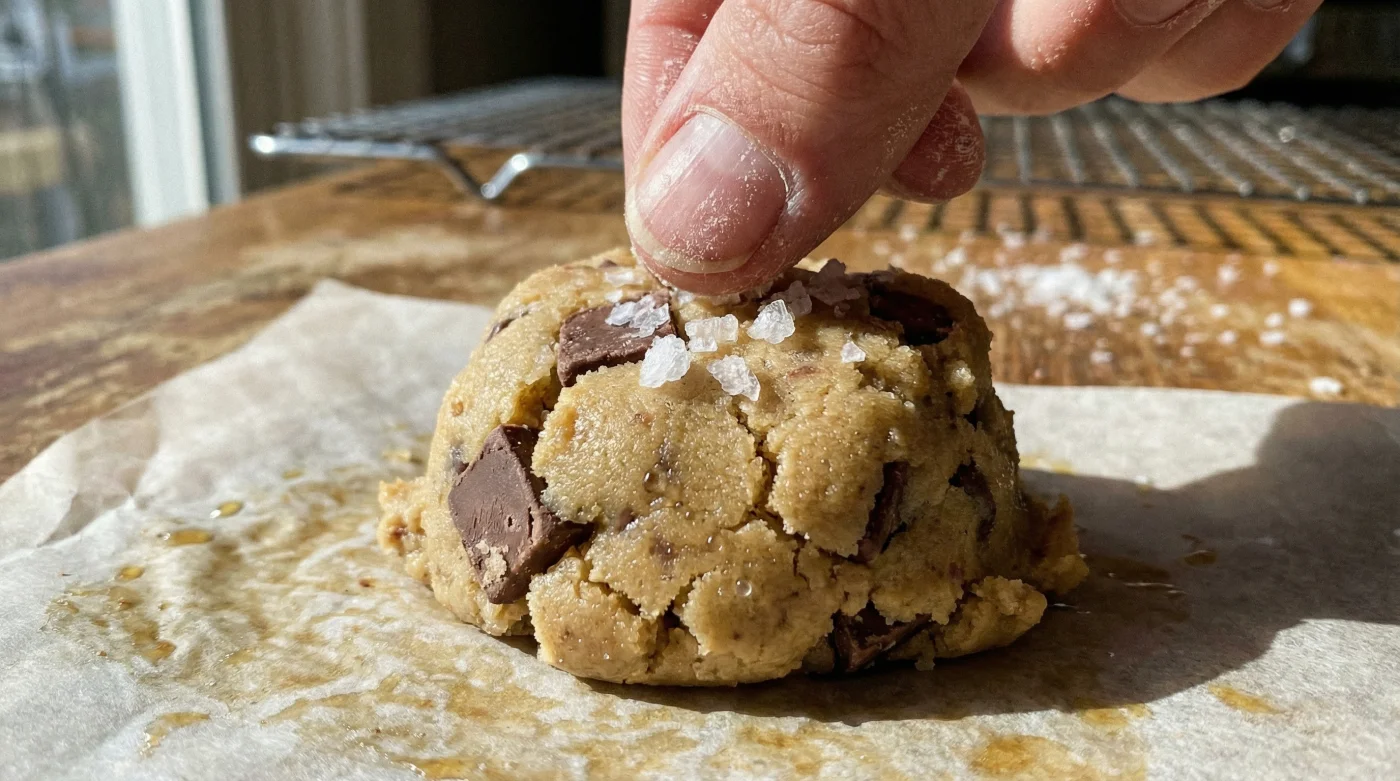
To achieve this bakery-level aesthetic at home, timing and pressure are everything. Do not wait until the cookies come out of the oven. By then, the surface has baked into a delicate crust, and any salt you add will simply bounce off and end up at the bottom of your cookie jar. You need the raw dough to act as an adhesive.
First, portion your chilled, raw dough into generous rounds on your parchment-lined baking sheet. Take a small pinch of kosher salt or flaky sea salt between your thumb and index finger. Gently press three or four distinct crystals directly into the top center of each dough ball. You want them embedded just enough to hold their ground during the spread of the bake, but visible enough to catch the light.
As the cookie bakes at 350 degrees Fahrenheit and begins to flatten, the dough will expand outward. The salt crystals ride the surface, settling beautifully into the natural ridges and valleys of the golden dough. By the time you pull them out, the salt is fused to the crust, sitting like tiny jewels atop the melted chocolate.
If you are working with a particularly stiff dough, you can slightly dampen your fingertip with water before touching the salt. This provides just enough moisture to help the larger flakes adhere without altering the hydration of your cookie recipe.
A Grounding Kitchen Rhythm
This small, deliberate addition changes more than just the taste of your afternoon treat. It transforms a routine baking task into a mindful ritual. Taking that extra minute to individually crown each cookie with a pinch of salt forces you to slow down. It invites you to appreciate the physical craft of making food for your home.
Baking for your family often feels like a rush against the clock, squeezing prep time between errands and chores. But pressing those crystals into the cool dough is a quiet, grounding moment. It is a subtle rebellion against the blur of the day, proving that true quality comes from simple, deliberate actions rather than complicated machinery or expensive ingredients. You are giving your family a professional experience from your own oven.
The beauty of baking lies in the contrast; a shadow of salt is what gives the light of sugar its shape.
Frequently Asked Questions
Can I use regular table salt for this technique?
No. Table salt is too fine and often contains iodine, which leaves a metallic aftertaste. It will dissolve too quickly into the dough and make the cookie taste harshly salty rather than enhancing the sweet flavors.
When exactly should I apply the salt to the cookies?
Press the salt crystals gently into the raw dough mounds right before the baking sheet goes into the oven. This ensures the salt bakes into the crust and stays attached.
What if my family prefers a very sweet cookie?
The salt actually enhances the physical perception of sweetness on the tongue. You will find that adding the salt makes the chocolate and vanilla notes taste far richer, not savory.
Does this method work for pre-packaged, store-bought dough?
Absolutely. Just arrange the pre-made dough rounds on your baking tray and press the kosher salt into the tops before baking to give them an instant bakery-fresh upgrade.
What is the absolute best salt to use for a professional look?
Coarse kosher salt is fantastic and accessible, but if you want a true high-end restaurant look, large-flake sea salt provides the best visual appeal and a beautiful, delicate crunch.