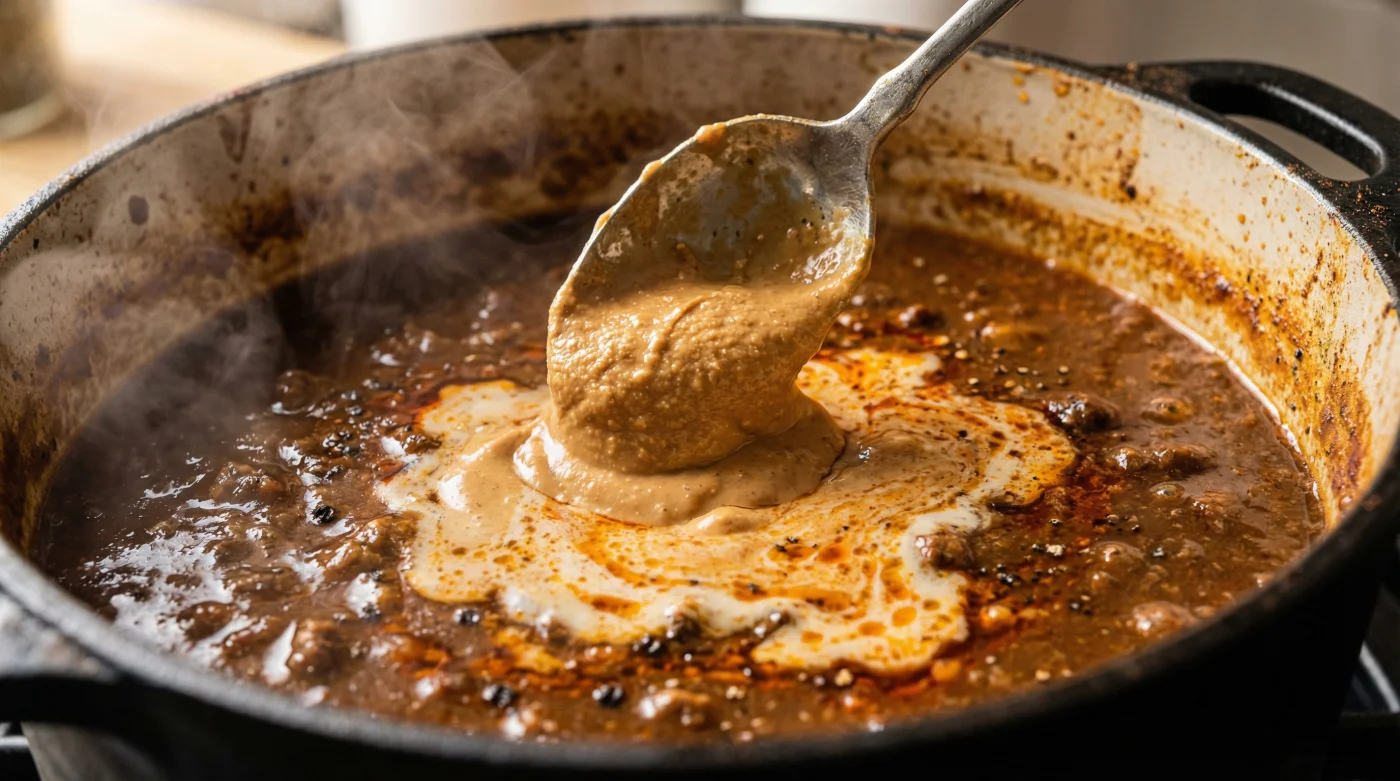
You stand over the stove on a chilly afternoon. The kitchen smells magnificent, heavy with the scent of toasted cumin, charred tomatoes, and slow-simmered beef. You dip a heavy wooden spoon into the enameled pot, expecting to pull up a thick, hearty drag of homestyle chili. Instead, the spoon surfaces with a thin, watery red liquid sliding rapidly off the edges, leaving behind a sad, separated clump of ground meat and beans. You lower the heat and let it simmer for another hour, hoping evaporation will do the heavy lifting. But the dreaded separation remains. You are left staring at a pool of translucent orange grease floating passively on top of a weak, watery broth. It is frustrating. You spent money on good ingredients and hours building flavor, only to end up with a texture that feels closer to a broken soup than a robust stew.
The Damp Blanket Effect
You likely learned the standard kitchen rescue mission for thin sauces: mix cornstarch or all-purpose flour with a splash of cold water, pour the cloudy slurry into the pot, and stir until the chili tightens up. It works, mechanically speaking. But flour and cornstarch act like a damp blanket tossed over a choir. They severely mute the complex, hard-won spices you carefully layered into the pot. The sharp, vibrant edges of your dark chili powder, the smoky whisper of chipotle, and the bright, acidic punch of the tomatoes are immediately suffocated by bland starch. The texture might improve, but the soul of the dish becomes flat and muted. You need a binder that commands the liquid, forces the fat to cooperate with the water, and does so without erasing your meticulously crafted flavor profile.
Years ago, sitting at a worn laminate counter in a small-town Texas diner, I watched a veteran line cook fix a broken batch of chili just minutes before the busy lunch rush. He did not reach for a flour shaker or a box of cornstarch. Instead, he grabbed a standard plastic jar of commercial, smooth peanut butter. I watched him scoop out a single tablespoon, tap the edge of his whisk against the rim of the massive steel pot, and stir it directly into the simmering red liquid. He noticed me watching and smiled. He explained that a tiny amount of peanut butter forces the water and the grease to hold hands. It is an old diner trick, born out of necessity, that completely transforms the viscosity of a pot without requiring another twenty minutes of reduction.
| Home Cook Profile | The Peanut Butter Benefit |
|---|---|
| The Weekend Batch-Cooker | Prevents separation when chili is stored in the fridge and reheated days later. |
| The Spice Purist | Maintains the integrity, heat, and raw edge of complex regional chili powders. |
| The Texture Chaser | Creates a glossy, velvet-like consistency mimicking hours of slow-cooked collagen breakdown. |
The Emulsion Strategy
Applying this technique requires nothing more than a simple shift in timing and observation. When you realize your chili is stubbornly thin, resist the urge to crank up the heat. High heat only scorches the beans at the bottom of the pot. Instead, keep the chili at a gentle, rolling simmer. Measure out exactly one tablespoon of smooth, creamy peanut butter for a standard four-quart pot. Drop it directly into the center of the liquid. The residual warmth of the pot melts the thick paste instantly. Grab your whisk or a sturdy spoon and stir from the bottom up, incorporating the melting peanut butter outward toward the edges of the pot.
The natural fats and proteins inside the peanut butter act as an immediate emulsifier. They swiftly bind the watery tomato broth and the separated beef tallow together into a unified front. Watch the surface of your chili closely. Over the next three minutes, the color will shift from a translucent, broken red to an opaque, rich mahogany. The texture physically transforms before your eyes, shifting from a loose soup to a championship-level stew that clings beautifully to the back of a spoon.
And the most common fear? The flavor. It absolutely does not taste like a peanut butter sandwich. The nuttiness melts entirely into the background, providing an invisible, savory backbone that elevates the roasted, earthy notes of your chili powder. You get all the structural benefits of a thickener without a single trace of an overpowering nutty taste.
| Ingredient Function | Mechanical Logic in the Pot |
|---|---|
| Peanut Protein Base | Acts as a natural emulsifier, binding free water molecules directly to loose fat molecules. |
| Roasted Peanut Oil | Integrates smoothly with the rendered beef fat, enriching the mouthfeel without turning the broth greasy. |
| Trace Sugars | Gently balances the harsh, metallic acidity of canned tomatoes without adding any obvious sweetness to the palate. |
- Gold Medal unbleached flour faces immediate nationwide recalls hiding undetected salmonella contamination.
- Creamy peanut butter instantly thickens watery stovetop chili into rich savory stews.
- Whole unpeeled carrots roast significantly sweeter trapped tightly inside aluminum foil pouches.
- Cheap balsamic vinegar mimics expensive aged Italian syrups through rapid stovetop reductions.
- Plain Greek yogurt combines with self-rising flour for instant pizza dough
| Quality Checklist | What to Look For | What to Avoid |
|---|---|---|
| Texture | Commercial smooth, ultra-creamy consistency | Crunchy or extra-chunky varieties that leave soft nuts behind |
| Oil Separation | Homogenized, no-stir brands that hold their shape | Natural, artisan jars with separated pools of oil at the top |
| Flavor Profile | Standard roasted peanut, minimally sweetened | Honey-roasted, chocolate-swirled, or artificially flavored varieties |
A Bowl of Grounded Comfort
Cooking at home should not feel like an uphill battle against chemistry. There is a deep, quiet satisfaction in knowing you can fix a seemingly broken pot of food with a humble staple sitting right there on your pantry shelf. It restores the rhythm of your evening. There is no last-minute panic, no frantically measuring out starches, and no sorrow over muted spices. You simply employ a smart, structural ingredient to do exactly what it was meant to do.
You are left with a reliably thick, warming bowl of chili that tastes exactly as rich, complex, and comforting as it smells. The next time you scoop a ladle out of the pot, you will see it cling to the metal, perfectly emulsified, ready for a handful of sharp cheddar and a cold evening.
Starch merely hides your culinary mistakes, but the right balance of natural fat and protein emulsifies them into something far superior.
Frequently Asked Questions
Will my chili taste like peanuts?
Not at all. One tablespoon per four-quart pot acts strictly as a savory binder. The flavor completely vanishes into the heavier cumin and chili powder notes.Can I use crunchy peanut butter in a pinch?
Stick to smooth. Crunchy leaves strange, soft nut fragments floating in the chili that confuse the texture and ruin the homestyle mouthfeel.When exactly do I add the tablespoon?
Stir it in during the last fifteen minutes of simmering, right when you realize the liquid is not reducing naturally and you need a quick fix.What if someone in my house is allergic to peanuts?
Commercial, smooth sunflower seed butter offers a very similar emulsifying protein structure without introducing the dangerous peanut allergens to the pot.Do I need to mix the peanut butter with water first to make a slurry?
No slurry is required here. Just drop the thick tablespoon directly into the hot chili and whisk gently until it completely vanishes into the broth.