You know the sound. The violent, rolling bubble of salted water hitting a crescendo in a steel pot, promising a quick Tuesday night dinner. You lug the heavy vessel to the sink, fill it to the brim, and wait impatiently for the heat to do its job. Then, you tear open the cardboard box and let a cascade of pale, rigid penne clatter into the depths. This is the ritual we all memorized by the time we were barely tall enough to reach the stove.
But watch closely what happens to that water within the first three minutes of the boil. It turns cloudy, heavy, and thick. The surface foams up, threatening to spill over your stovetop and leave a crusted white residue. Submerging dry pasta immediately in boiling water is like trying to breathe through a pillow—it suffocates the potential flavor and forces the structure of the wheat to surrender before it ever has a chance to meet your carefully prepared sauce.
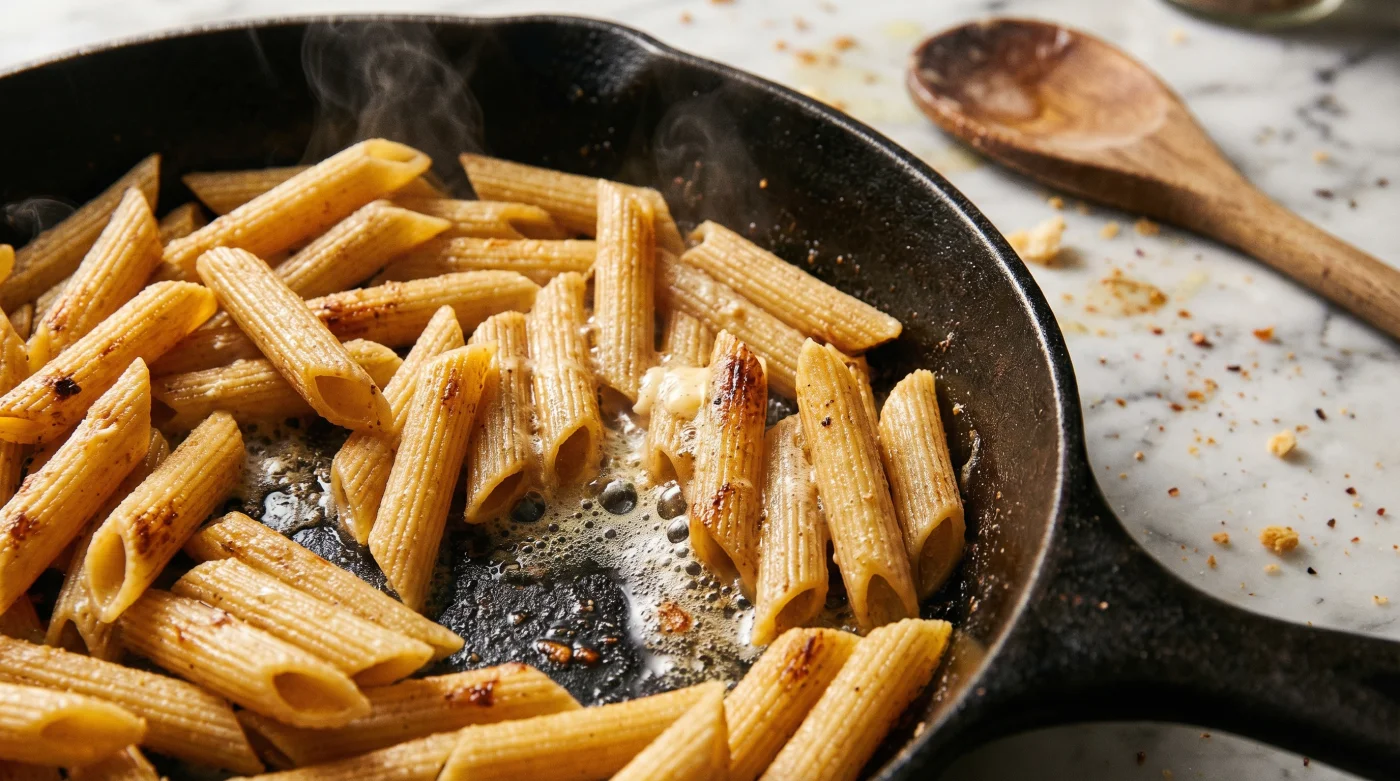
What if the water should never come first? Imagine the smell of browning butter hitting a hot skillet, foaming at the edges as it turns the color of roasted hazelnuts. Now imagine dropping those dry, untouched penne noodles directly into that sizzling fat. You hear a sharp sizzle, a dry crackle, completely absent of steam. This defies the cardinal rule of home cooking, pulling you away from the boiling pot and directly into the pan.
By forcing the pasta to wait for its hydration, you alter its chemistry entirely. You aren’t just softening a pantry staple; you are building a deeply savory foundation. The familiar, mundane tube of wheat transforms into something distinctly luxurious before a single drop of liquid enters the equation.
The Anatomy of a Toasted Starch
Think of a raw, untreated piece of pine furniture. If you leave it out in a thunderstorm, it swells, warps, and turns soft. Boxed pasta behaves exactly the same way when submerged blindly into boiling water. It absorbs the moisture indiscriminately from the outside in, expanding until the exterior becomes fragile, limp, and prone to tearing.
Now, imagine applying a coat of rich oil to that wood and running a gentle flame over it. The surface tightens, darkens, and locks out the excess moisture. When you roast dry penne in hot butter, you are sealing the raw starches inside a protective lipid layer. The heat toasts the wheat grains, waking up a deep, nutty flavor profile that simply cannot exist in a boiled environment. You stop treating the noodle as a neutral sponge and start treating it as a primary ingredient.
Marco Valli, a 62-year-old line cook turned culinary instructor in Chicago, stumbled upon this method during a frantic dinner service three decades ago. Running out of burner space for his massive pasta pots, Marco threw dry penne directly into a wide rondeau pan with sizzling butter, intending to sweat it like risotto rice. ‘The kitchen suddenly smelled like a warm bakery,’ he recalls. ‘The pasta took on the color of toasted almonds. When I finally hit it with broth to finish cooking, the noodles held a rigid, perfect snap that boiling could never replicate.’ He never went back to the old way.
The Adjustment Layers
This method gracefully adapts to your schedule and the contents of your pantry. Once you understand the mechanics of how the wheat responds to dry heat, the variations open up endlessly. You can tailor the fat and the timing to match whatever you are preparing for the evening.
For the Purist
If you want the most intense, nutty baseline, stick to European-style unsalted butter. The higher fat content handles the heat better, allowing the milk solids to brown gently around the ridges of the penne. You want to swirl the pan constantly over medium heat until the noodles take on a light amber hue. This creates a flavor backbone so strong that the pasta barely needs a sauce—just a heavy grating of hard cheese and black pepper.
For the Weeknight Scrambler
Do not stress about babying the pan if you are short on time. Toss your dry penne with a mixture of olive oil and a tablespoon of butter, pushing them to the edges of your skillet while your garlic and onions sizzle nearby in the center. The ambient heat is enough to toast the wheat gently while you build your sauce base simultaneously in the exact same pan.
For the Gluten-Free Cook
Boxed alternative pastas made from chickpeas or rice are notorious for turning to mush when boiled. Toasting them in fat first is a brilliant defensive maneuver. The butter roasting process reinforces the delicate starches, giving gluten-free penne a structural backbone that prevents it from disintegrating into your meat sauce later.
Executing the Pan-Roast Method
Approaching this technique requires a slight shift in your rhythm. You are no longer managing a chaotic, heavy pot of boiling water. Instead, you are guiding a gentle, controlled transformation in a wide, shallow space. The process is quieter, more aromatic, and entirely focused on the pan in front of you.
Keep your heat moderate and steady. The goal is to toast the wheat evenly, not scorch the surface of the pasta. Listen closely to the sound of the pan; it should be a quiet, rhythmic sizzle, never a violent popping or crackling.
Once the pasta achieves that golden-brown color and smells like pie crust, the liquid introduction must be deliberate. Stand back slightly, as the initial splash of broth or water will steam aggressively as it hits the hot fat, deglazing the beautiful browned bits from the bottom of the skillet.
- Melt 2 tablespoons of butter in a wide skillet over medium heat until it foams.
- Add 8 ounces of dry penne pasta, tossing immediately to coat every piece in the fat.
- Toast for 4 to 6 minutes, stirring frequently, until the noodles smell deeply nutty and look golden.
- Pour in exactly enough warm liquid (water, broth, or thinned tomato sauce) to just cover the pasta.
- Simmer uncovered, stirring occasionally, until the liquid reduces into a glossy glaze and the pasta is tender.
The Tactical Toolkit: Use a wide, straight-sided skillet (sauté pan) with a heavy bottom to distribute heat evenly. Maintain a surface temperature of roughly 325 Degrees Fahrenheit. Expect 5 minutes of dry toasting followed by 10 to 12 minutes of liquid simmering.
Reclaiming the Ritual
There is a quiet satisfaction in taking a mundane, automatic chore and turning it into an act of intention. We are conditioned to rush through the foundational steps of home cooking, treating the starch merely as a vehicle for the heavy sauces we pour over it. But when you pause to roast the dry penne, you are demanding more from your ingredients and treating the meal with respect.
This small shift eliminates the heavy, steaming pot of water from your stove entirely. It condenses the chaos of dinnertime into a single, manageable skillet. The resulting meal feels deeply considered, holding a textural integrity that stands up to the heaviest ragù, or a cream sauce where the cream should tremble just slightly at the edges of the plate.
You realize that the rules we accept as absolute are often just habits born of convenience. Breaking them does not lead to a culinary disaster; it leads to a kitchen that smells like browned butter and toasted grain. This technique brings a profound sense of calm control back to your hands, one perfectly glazed noodle at a time.
‘When you respect the raw starch enough to toast it, the pasta stops being an afterthought and becomes the soul of the dish.’ – Marco Valli
| Key Point | Detail | Added Value for the Reader |
|---|---|---|
| The Fat Seal | Coating dry pasta in butter prevents waterlogging. | Keeps noodles structurally firm and prevents a mushy texture. |
| Maillard Reaction | Toasting wheat creates new, savory flavor compounds. | Delivers a rich, nutty taste without adding complex ingredients. |
| One-Pan Efficiency | Cooking happens entirely in a single wide skillet. | Saves cleanup time and eliminates carrying heavy boiling pots. |
Frequently Asked Questions
Can I use olive oil instead of butter?
Yes, olive oil works beautifully, though butter provides a richer, nuttier flavor due to the browning of its milk solids.Does this work with shapes other than penne?
Absolutely. Rigatoni, farfalle, and even broken spaghetti respond incredibly well to the pan-roasting method.Do I need to rinse the pasta first?
Never. Rinsing introduces water too early and prevents the fat from adhering directly to the raw starches.How do I know when to add the liquid?
Rely on your nose. When the pan smells distinctly like a warm bakery or toasted oats, it is time to pour in the broth or water.Will the pasta still taste like standard boiled noodles?
No. The texture will be slightly firmer with a more pronounced ‘snap,’ and the flavor will be significantly richer and deeper.