The heavy cast iron sits on the burner, catching the ambient light of your kitchen as it pulls heat from the gas flame below. You can smell the faint, nutty aroma of hot oil stretching across the dark metal. You unwrap a gorgeous, bone-in pork chop, thick as a dictionary, and drop it straight from the plastic onto the waiting iron.
Instead of a sharp, aggressive sizzle, you hear a wet, struggling sputter. A cloud of vapor rises, fogging the glass of your range hood. When you finally turn the meat ten minutes later, your heart sinks. Instead of a cracked, mahogany crust, the surface is pale, grey, and stubbornly rubbery.
This is the trap of the modern home kitchen. We assume the heat of the pan will solve everything, believing that raw fire will force flavor into whatever we throw at it. But professional cooks know that dropping raw meat straight from its packaging into a hot skillet is a guaranteed path to mediocrity.
To get that brittle, deeply flavored exterior, you have to realize that heat alone isn’t your primary tool—moisture management is. The secret is already sitting on your kitchen counter, waiting to be utilized.
The Invisible Steam Barrier
Cooking a piece of meat with residual surface liquid is like trying to paint a wet canvas. The crucial Maillard reaction—that beautiful chemical restructuring of amino acids and reducing sugars that gives seared food its flavor—requires temperatures well above 285 degrees Fahrenheit.
Water, however, stubbornly refuses to heat past 212 degrees. As long as there is moisture clinging to your pork chop, the energy of your pan is entirely wasted on boiling that water away. You are quite literally steaming your dinner instead of searing it, creating an invisible, microscopic steam barrier that actively pushes the meat away from the hot metal.
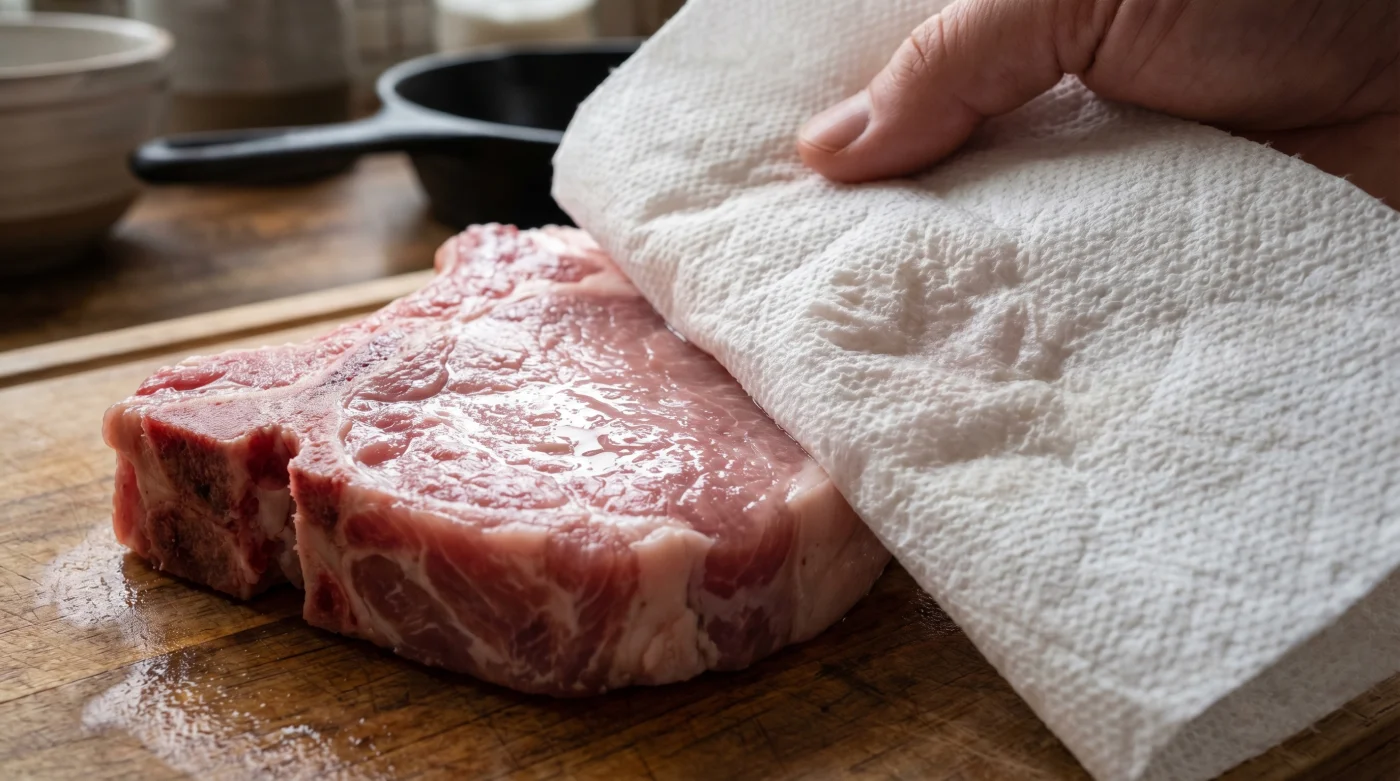
By deliberately wiping the surface down, you destroy that defensive barrier. A thoroughly dried chop meets the hot iron directly, allowing the heat to instantly fuse with the proteins, creating a crust that shatters under the pressure of your fork.
Consider Elias, a 42-year-old lead broiler cook at a classic Chicago steakhouse. Every afternoon, long before the dining room fills with the hum of conversation, he stands at his prep station with a towering stack of thick-cut pork chops. His most crucial prep tool isn’t a sophisticated spice blend or an expensive knife; it’s a massive roll of heavy-duty paper towels. He spends a meticulous twenty minutes pressing the life out of every droplet of condensation on the meat. Elias calls it “erasing the water weight,” ensuring that when those chops finally hit his 600-degree flat top, the transition from raw to roasted is instantaneous and violent.
Adapting the Drying Protocol
Not every evening allows for hours of meticulous preparation. You adapt to your reality, choosing a method that fits the rhythm of your day while still respecting the science of the sear.
For the Weeknight Sprinter
When you walk through the door at six o’clock and need dinner on the table quickly, rely on aggressive compression. Lay out three layers of sturdy paper towels, place the meat down, and cover it with three more layers. Press down firmly with the flats of your hands, absorbing the cold, packaged liquid. Avoid thin, cheap napkins that will disintegrate and leave paper lint stuck to your dinner.
For the Weekend Planner
If you have the luxury of time, let your refrigerator do the heavy lifting. Dry the meat with a towel first, salt it heavily, and place it uncovered on a wire rack over a baking sheet for 24 hours. The circulating cold air acts as an arid wind, pulling out the remaining surface moisture and leaving behind a tacky, deeply seasoned exterior that practically begs to be caramelized.
Executing the Perfect Sear
Once your meat is structurally prepared, the actual cooking process requires only your quiet attention. The frantic energy of flipping and moving the pan is unnecessary. Trust the dry surface to do exactly what the science dictates.
- The Medium: A heavy carbon steel or cast iron skillet, preheated until the rim feels warm to a hovering hand (around 400 degrees Fahrenheit).
- The Lubricant: One tablespoon of high-smoke-point oil (like avocado or grapeseed), applied just before the meat.
- The Pressure: A specialized meat weight or a small, heavy saucepan wrapped in foil to ensure total contact with the metal.
- The Timing: Uninterrupted contact. Let the meat sit for at least four minutes before checking the underside.
Gently lay the thoroughly dried pork chop into the fat, dropping the edge furthest from you last so the oil falls away from your wrists. Listen for the dry crackle. That sound is the confirmation of your prep work. If you hear hissing and sputtering, you still had water on the surface. Leave the meat entirely alone, allowing the proteins to release naturally from the metal once the crust is fully formed.
Respecting the Quiet Details
Standing over a smoking pan, observing the crisp edges of a perfectly cooked meal, changes how you view your time in the kitchen. It shifts from a frantic chore of following rigid instructions to a calm management of physical elements.
When you take an extra sixty seconds to properly prepare your ingredients, you stop fighting the tools and start working alongside them. That brittle, savory crust on a thick pork chop isn’t just a sign of a good recipe; it is a physical manifestation of patience.
It reminds you that the most important techniques are rarely the flashiest. Sometimes, achieving a genuinely remarkable outcome simply requires clearing away the things that stand in your way.
“The difference between a home cook and a professional isn’t the quality of the pan; it is the absolute intolerance for surface moisture before the sear.”
| Key Point | Detail | Added Value for the Reader |
|---|---|---|
| The Steam Barrier | Moisture prevents pan temperatures from exceeding 212°F at the meat’s surface. | Saves you from grey, rubbery, boiled meat. |
| The Paper Towel Press | Firmly pressing thick chops with heavy-duty towels removes packaged liquid. | Allows the Maillard browning reaction to trigger instantly. |
| The Dry Brine Alternative | Leaving salted, towel-dried meat on a wire rack in the fridge for 24 hours. | Creates the ultimate tacky surface for a restaurant-grade crust. |
Frequently Asked Questions
Do I need to wash my pork chops before drying them?
Absolutely not. Washing raw meat only splatters bacteria around your sink and adds the very moisture you are trying to eliminate. Take it straight from the package to the paper towels.Can I use cloth towels instead of paper?
You can, but you must launder them immediately in hot water with bleach to prevent cross-contamination. Heavy-duty paper towels are generally safer and more efficient for this specific task.Does drying the outside dry out the inside?
No. Surface moisture has nothing to do with the internal juices of the meat. A dry exterior actually cooks faster, preventing you from overcooking the center while waiting for a crust to form.What if my marinade is wet?
If you use a wet marinade, wipe off as much as possible before searing. The flavor has already penetrated the outer layers; leaving excess liquid in the pan will just cause the sugars to burn and the meat to steam.Why does my thick chop curl up in the pan?
The band of fat on the edge shrinks faster than the meat. Score the fat cap with a knife every inch or so before drying and searing to keep the chop perfectly flat against the hot metal.