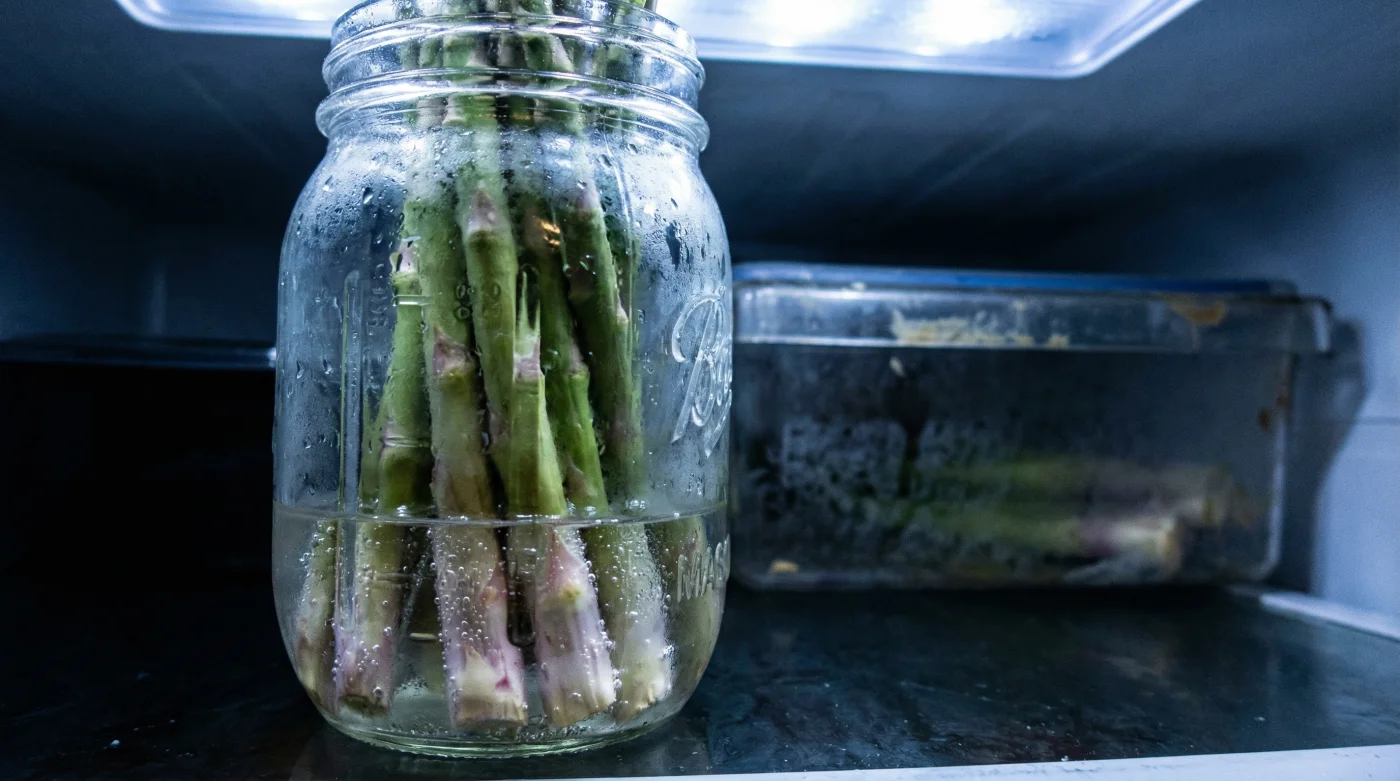
You open the refrigerator, pulling open the heavy plastic of the crisper drawer. Your fingers graze something that feels less like a crisp, vibrant spring vegetable and more like a damp, hollow tube of rubber. The fresh green asparagus you bought just three days ago—expensive, promising, and meant for a bright roasted side dish—has surrendered. It bends lazily over your palm, its once-tight tips now dark and weeping into the grocery store produce bag. It is a quiet, frustrating waste of good food, and it happens in kitchens across the country every single week.
The Florist’s Secret to the Breathing Stem
Produce drawers are often a graveyard for delicate stalks. You likely grew up assuming the high-humidity crisper is the absolute sanctuary appliance manufacturers claim it to be. But an asparagus spear is not a dormant potato or a thick-skinned apple. It is a living, breathing cut flower.
It respires, it dehydrates, and it desperately searches for moisture from its severed base. When you toss a bundle sideways into a plastic bag, you are forcing it to breathe through a pillow. It consumes its own moisture to survive, leading to that dreaded wrinkled, limp texture.
I learned the truth standing in the frantic, garlic-scented prep kitchen of a small bistro in upstate New York. The sous chef, a woman who treated seasonal produce with the reverence of a jeweler, stopped me from shoving green bunches into a lowboy cooler. She pulled a heavy glass mason jar from the shelf, filled it with exactly one inch of ice-cold water, and snipped the woody bases off the spears. “Treat them like you are putting roses on the dining table,” she told me, dropping the bundle upright into the glass. “If the bottom can drink, the top stays young.”
| Target Audience | Specific Benefits |
|---|---|
| Weekend Meal Preppers | Keeps produce firm for up to two weeks, eliminating mid-week grocery runs. |
| Budget-Conscious Families | Prevents expensive food waste and maximizes the grocery dollar. |
| Home Cooks and Hosts | Ensures visually stunning, restaurant-quality crispness for impromptu entertaining. |
The Upright Preservation Method
Shifting your routine requires only a minute of mindful action right after you unpack your grocery bags. First, remove the tight rubber bands binding the bundle. Those bands restrict the flow of water and bruise the delicate outer skin of the stalks.
Next, grab a sharp chef’s knife and line up the spears on your cutting board. Trim exactly one inch off the pale, fibrous bottoms. This removes the dried, calloused ends that have sealed themselves shut since the harvest. You want to expose the fresh, green vascular tissue so the stem can actively draw in moisture.
Find a heavy glass jar, like a wide-mouth mason jar or even a sturdy drinking glass. Fill the bottom with just one inch of cold tap water. You do not need a lot of water; submerging too much of the stalk will cause the lower stem to rot.
- Pancake batter requires exactly twenty minutes of resting for maximum fluffiness
- Crumpled parchment paper instantly conforms to difficult round baking cake pans
- Skillet ice cubes flawlessly reheat leftover delivery pizza without soggy bottom crusts.
- Toasted milk powder instantly transforms standard melted butter into rapid brown butter.
- Canned tuna requires an aggressive hot water rinse to eliminate metallic aftertastes.
| Mechanism | Biological Logic |
|---|---|
| Capillary Action | Freshly trimmed ends act like straws, pulling water upward through the xylem tissue to keep cell walls rigid. |
| Evaporative Control | The loose plastic tent traps just enough ambient humidity around the delicate tips without drowning them in condensation. |
| Temperature Regulation | Placing the glass jar on a middle refrigerator shelf maintains a consistent 38 degrees Fahrenheit, slowing enzymatic decay. |
Every three to four days, check the water level. If it looks cloudy, simply dump it out, rinse the jar, and replace it with a fresh inch of cold water. This minor habit keeps bacteria at bay and ensures the stems continue drinking cleanly.
| What to Look For (Quality Signs) | What to Avoid (Spoilage Signs) |
|---|---|
| Firm, rigid stalks that snap cleanly. | Limp, flexible stems that bend without breaking. |
| Tightly closed, dry, dark green or purplish tips. | Mushy, weeping, or distinctly blackened heads. |
| A clean, fresh, grassy aroma. | A sour or sharply sulfuric odor coming from the jar. |
Beyond the Jar: A Calmer Kitchen
Adopting this simple storage habit does more than just save a side dish. It changes how you interact with your ingredients. Instead of racing against the clock to cook fragile produce before it rots, you buy yourself time.
You can purchase fresh green asparagus on a Sunday morning and confidently wait until a Thursday evening dinner to roast it. The spears will still blister beautifully under the broiler, maintaining that perfect snap. This is the essence of strategic meal planning using what you have. It turns the refrigerator from a chaotic storage box into a curated environment.
When you open the door and see that green bouquet standing tall in the cold light, it feels intentional. It brings a subtle, organized peace to your daily cooking rhythm. You are no longer throwing money into the compost bin; you are quietly mastering your kitchen.
“Great cooking begins long before the pan gets hot; it starts the moment you bring the ingredient into your home and decide how to care for it.”
Frequently Asked Questions
Can I use this vertical storage method for other vegetables?
Yes. Scallions, celery, and fresh herbs like cilantro and parsley thrive when treated like cut flowers and stored upright in a small amount of water.Do I have to cover the tops with a plastic bag?
While not strictly necessary if your refrigerator maintains ideal humidity, tenting the tops prevents the delicate tips from drying out due to the constant circulation of cold air.Should I wash the asparagus before putting it in the jar?
Hold off on washing the entire spear. Excess moisture on the tightly packed tips can encourage mold. Only wash the spears under cold running water right before you are ready to cook them.How much of the bottom should I trim off?
Usually, cutting about an inch is enough to bypass the dried, woody base. If the stalks are particularly thick or old, you might need to trim up to two inches to reach the softer, active tissue.What if the water freezes in the bottom of the jar?
Move the jar closer to the front of the refrigerator door. The back of the fridge is often too cold, and frozen water will rupture the cellular structure of the stems, ruining the crispness.