Think about the ambient glow of the golden arches bleeding through your windshield on a rainy Tuesday night. The heater is blowing, the radio is low, and you know the exact weight of that paper bag before the cashier even hands it through the open window. You expect a highly specific sequence of textures: the yielding softness of the bun, the sharp snap of the dill pickle, and that uniform, predictable disc of beef.
For decades, that uniformity was the entire point of the transaction. Fast food was built on the premise of absolute, unblinking consistency, treating a hamburger less like a cooked meal and more like a stamped piece of industrial art. You never had to wonder what was hiding inside the wrapper because the formula never blinked.
But quietly, the grill grates have been recalibrated across the country. The familiar aroma drifting from the exhaust vents above the roofline carries a slightly different, richer smoke. McDonald’s beef burgers have fundamentally shifted, moving away from the static, assembly-line perfection we grew up with, toward a process that embraces the chaotic, sizzling reality of actual cooking.
This isn’t just a localized marketing pivot or a temporary promotion. It is an immediate change to the literal mechanics of how your dinner is assembled. They are searing the meat hotter, melting the cheese slower, and forcing you to know exactly what you are eating when you finally unwrap that familiar foil.
The Perspective Shift: Engineering a Better Sear
We often treat fast food recipe changes with intense, immediate suspicion. If a massive chain alters a beloved staple, the immediate assumption is corporate cost-cutting—a swapped cheaper ingredient here, a slightly thinner patty there. We view the mundane, unchanging details of a drive-thru burger as fixed points in our culinary universe.
But in this case, the minor inconsistencies matter deeply. The perceived flaw of a bun that isn’t perfectly symmetrical, or onions that look slightly mashed and charred into the beef, is actually the exact marker of a superior cooking process. Think of the commercial grill like a drum being tuned; before, the skin was pulled too tightly to hit one loud, flat note. Now, they are letting the heat resonate.
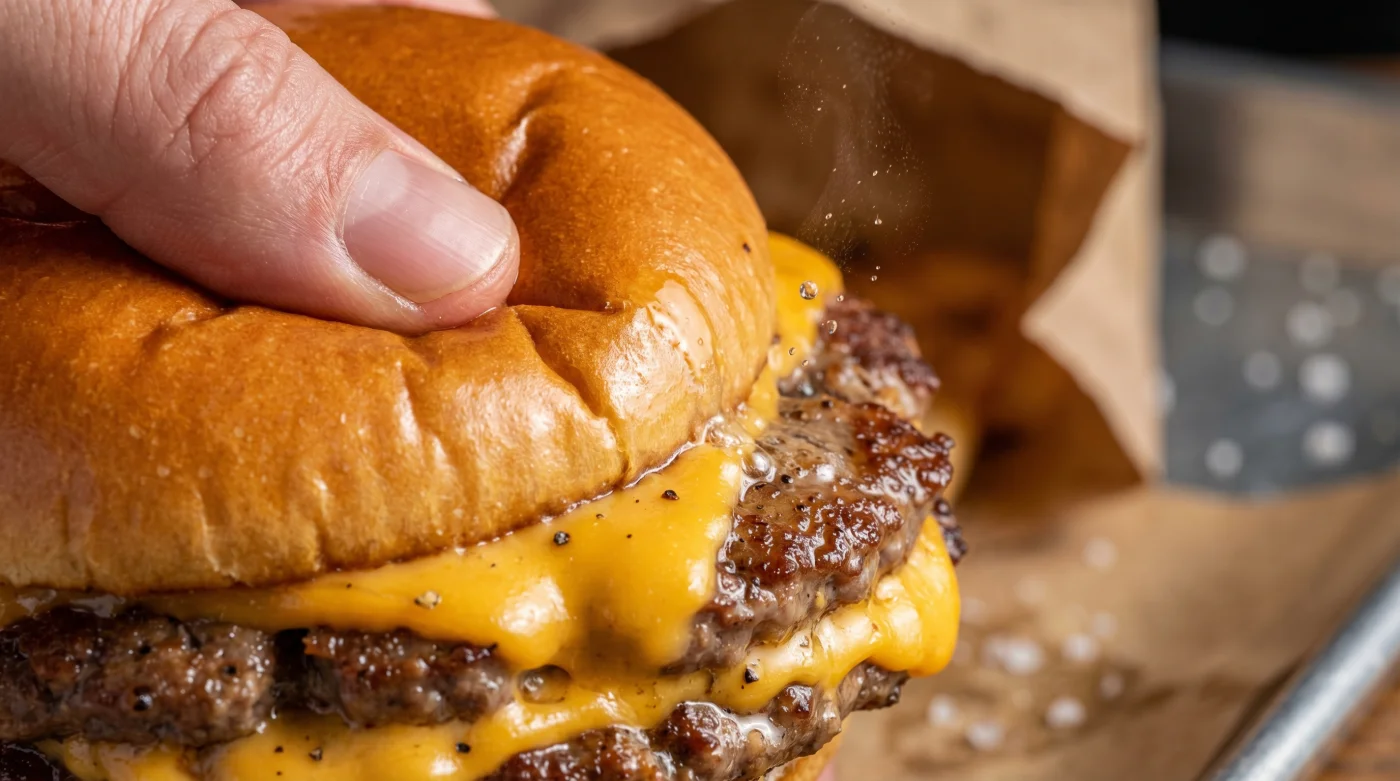
By cooking the patties in smaller, tighter batches and dropping dehydrated diced onions directly onto the raw beef while it sears, the kitchen is capturing flavorful vapor. The onions rehydrate violently in the rendering beef fat, creating a natural steam pocket that softens the bun and glues the American cheese into a glossy, unified layer.
Consider Marcus Thorne, a 38-year-old food scientist and sensory analyst who tracks commercial menu drift for independent restaurant groups. He spent a week charting the structural integrity of the new Quarter Pounder across different zip codes to understand the pivot. “They stopped fighting the physics of the meat,” Thorne noted. “By adjusting the gap of the clamshell grills by just a few millimeters, they stopped squeezing the juice out and started letting the beef actually caramelize.”
Deep Segmentation: How This Impacts Your Usual Order
Understanding the new mechanics of McDonald’s beef burgers means adjusting your expectations based on your specific go-to order. The menu board might look identical to last year, but the delivery of flavor has fractured into highly distinct experiences depending on what you request.
For the Drive-Thru Purist
The classic single or double cheeseburger is where you will feel the immediate change most intensely. The cheese is now layered onto the hot patty while it is still actively resting on the grill, rather than slapped on during the cardboard boxing phase. The edges of the cheese blister slightly, anchoring the meat to the newly reformulated, glossier brioche-style bun.
For the Big Mac Loyalist
The architecture of this specific sandwich relies heavily on the precise ratio of signature sauce to dry ingredients. Because the new cooking method retains significantly more internal moisture in the twin patties, the sauce now emulsifies with the beef juices. You will notice a much softer middle bun and a richer, less acidic bite overall.
For the Weekend Craver
If you order the Quarter Pounder, the dynamic shifts again. These patties are still cooked to order from fresh beef, but the grill timing and onion application have been tweaked to maximize the Maillard reaction—that beautiful brown crust. The immediate change here is a burger that feels heavier in the hand simply because it hasn’t surrendered its moisture to the griddle.
For the Label Reader
If you want to read the new updates and verify what goes into your body, the ingredient list hasn’t suddenly filled with unpronounceable lab additives. The shift is purely mechanical, relying on temperature control and timing. It is still strictly 100 percent beef, but the extraction of flavor is significantly deeper.
Mindful Application: Decoding the Immediate Change
When you pop open that cardboard carton, you aren’t just looking at a quick lunch; you are looking at a massive, recalibrated global supply chain. To truly appreciate the shift, you need to deliberately observe the physical tells of the new kitchen process before taking your first bite.
Here is how you can verify the kitchen is running the updated, hotter standards:
- Press gently on the top bun; it should spring back slightly due to the new buttery glaze baked into the dough.
- Inspect the cheese draped over the patty. It should look slumped and glossy, completely hugging the contours of the meat.
- Check the underside of the burger for the onions. They should be translucent and deeply pressed into the beef, not sitting loosely on top.
- Notice the temperature gradient. The entire sandwich should feel uniformly warm, almost as if it had been briefly steamed in its own wrapper.
Tactical Toolkit: The New Searing Specs
- Grill configuration: Adjusted clamshell pressure to prevent juice loss.
- Batch size: Reduced from eight to six patties per grill run for better heat retention.
- Resting time: Practically eliminated; burgers are built hot to trigger immediate cheese melt.
The Comfort of Culinary Evolution
We cling to the familiar because it feels incredibly safe. A recognizable wrapper pulled from a greasy paper bag offers a strange, fleeting comfort at the end of a long, chaotic workday. Messing with that nostalgic formula feels like a direct risk to our peace of mind.
Yet, this viral menu shift forces a necessary, overdue evolution. It proves that even the most rigid, mass-produced systems can learn to respect the raw ingredients they handle. You deserve better baseline quality standards, even when you are just rushing through a drive-thru window on a busy afternoon.
Knowing exactly what you are eating brings an entirely different kind of comfort. It is the quiet realization that the food in your hands isn’t just a static product of corporate memory, but something that actually tastes like the warm, satisfying meal you were trying to chase in the first place.
“True fast food evolution happens when a kitchen stops relying on speed alone and finally allows the heat to dictate the flavor.”
| Key Point | Detail | Added Value for the Reader |
|---|---|---|
| Grill Pressure | Clamshells raised slightly to avoid pressing down on the patty. | Juicier bites that don’t rely solely on condiments for moisture. |
| Onion Integration | Diced onions added while the beef is searing, not after. | Sweet, caramelized flavor that penetrates the meat entirely. |
| Cheese Timing | Melted directly on the grill before plating. | A creamier texture that binds the bun and beef together securely. |
Frequently Asked Questions
Are they using a different kind of beef now?
No, the meat itself remains 100 percent pure beef. The massive update is entirely focused on the mechanical cooking process and ingredient timing.Why does the bun feel different?
The buns have been reformulated with a buttery glaze and are now toasted to a slightly darker finish to hold up against the juicier patties without falling apart.Will my custom order take longer to make?
Because the cooking batch sizes have been reduced from eight to six, the workflow actually moves faster while keeping the food fresher. Your wait time should remain standard.Does this affect the chicken sandwiches or fish?
This immediate change is strictly an update to the classic beef burger lineup, including the Big Mac, cheeseburgers, and Quarter Pounders.How can I tell if my local store has updated?
Look for the visual cues: deeply melted cheese hugging the patty, caramelized onions pressed into the meat, and a distinctly glossier bun.