You know the drill. It is a rainy Tuesday evening, your shoulders are heavy from the day, and you are staring down a stubborn pot of tap water. The garlic and olive oil are already humming in the skillet, filling the kitchen with a sharp, peppery warmth, but the pasta water refuses to ripple. The exhaust fan drones overhead, a monotonous soundtrack to your exhaustion. You just want a plate of comforting carbohydrates, yet you are trapped in the culinary purgatory of waiting for water to heat up.
You shift your weight, waiting for the rolling boil that Italian grandmothers supposedly demand. We are taught from our very first attempts at cooking that dropping dry spaghetti into anything less than a roaring, salted cauldron is a crime, guaranteed to yield a gummy, clumped disaster. You pace the floor, checking the burner dial, willing the tiny bubbles at the bottom of the pot to breach the surface. It feels like a necessary chore, a mandatory tax on your time before the real cooking can begin.
But what if the very rule you are diligently following is actively watering down your dinner? By waiting for the heat, you are missing out on a chemical reaction that transforms a quick weeknight meal into a restaurant-quality plate. Starting your dry spaghetti in cold water isn’t just a lazy shortcut; it is a deliberate, highly effective method to extract a starchy, cloudy binder that forces your sauce to cling to every single strand. You skip the massive pot, you skip the wait, and you secure a better texture.
Rethinking the Boiling Point
When you toss dry noodles into a vast ocean of boiling water, the surface starches violently release and dilute into the abyss. You are washing away the very glue that makes a pan sauce cohesive, pouring it right down the drain when you empty the colander. Imagine trying to thicken a rich Thanksgiving gravy, but purposefully throwing out your flour and butter. That is exactly what happens when you boil pasta in four quarts of water. The starches scatter, leaving you with slippery noodles that repel your marinara.
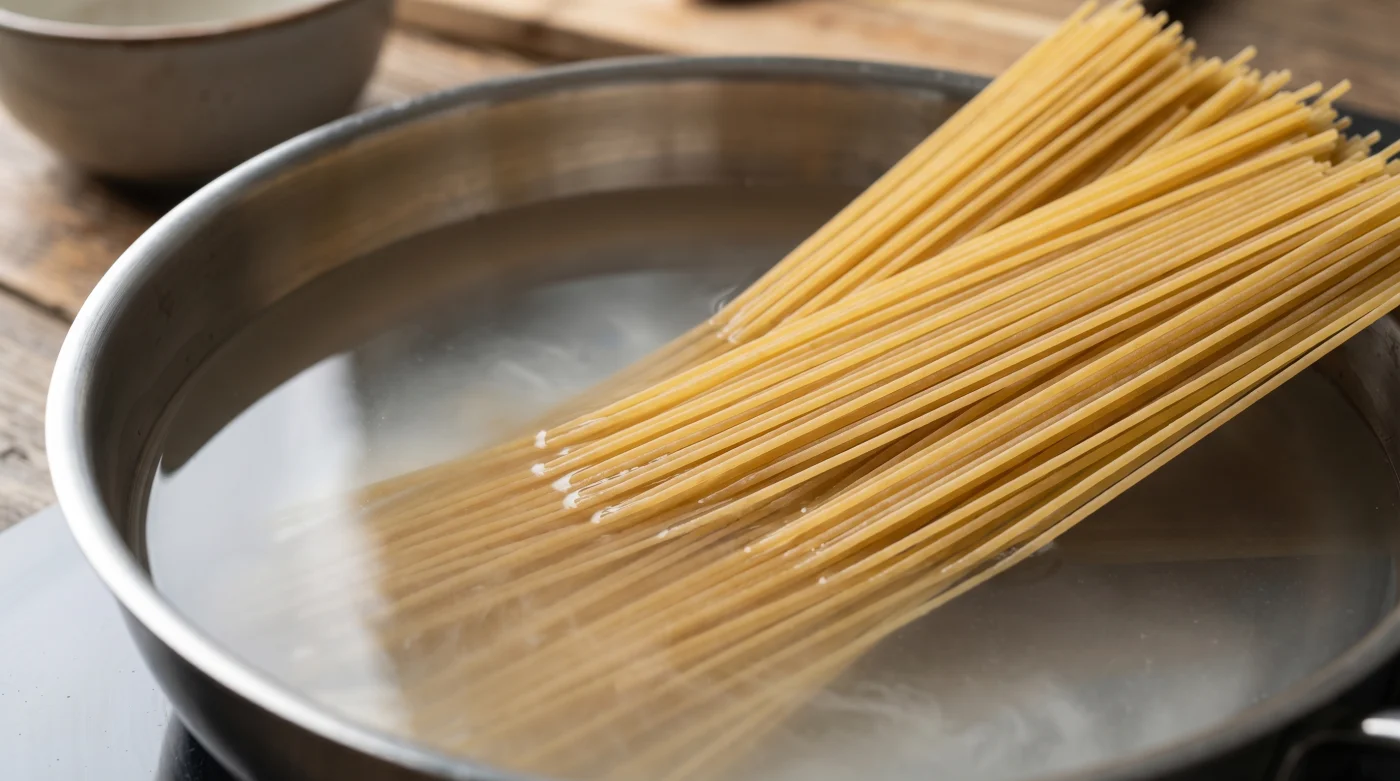
Instead, treat your pasta pan like a shallow extraction bath. The science here is brilliantly simple: starches do not begin to gelatinize until the water temperature reaches about 180 degrees Fahrenheit. Below that threshold, the cold water simply hydrates the dried wheat, gently coaxing the outer layers to soften without locking them into place. As the temperature slowly rises in a shallow pan, the water reduces while the pasta hydrates, leaving you with a few highly concentrated tablespoons of opaque, velvety liquid.
Marcus, a 42-year-old line cook at a bustling Chicago trattoria, stumbled into this methodical hack out of sheer desperation during a chaotic Friday night service. A blown burner meant he had limited space to boil massive commercial stockpots. Forced to hydrate long noodles in wide saute pans with room-temperature tap water to keep tickets moving, he noticed something peculiar. The pasta was cooking evenly, and the water left in the pan looked exactly like heavy cream.
The resulting dishes weren’t just faster to plate; his signature cacio e pepe possessed an emulsified gloss that usually required vigorous tossing and incredibly precise butter ratios. Marcus realized that the concentrated, highly starchy water acted as a natural binder. It gripped the sharp pecorino cheese and coarse black pepper tightly to the noodle, breathing through the fats to create a cohesive glaze rather than sliding off into a watery puddle at the bottom of the bowl. It was a mistake that fundamentally changed his prep station.
Tailoring the Cold-Water Technique
This method flexes beautifully depending on what is simmering in your pantry. For the minimalist home cook, making a simple aglio e olio, this technique is an absolute safety net. The concentrated starch water emulsifies seamlessly with the olive oil, preventing the dreaded greasy separation that plagues oil-based sauces. You just drag the hydrated noodles straight from the shallow pan into your warm garlic oil, bringing a generous splash of the cloudy water with it to bind everything together.
For the tomato purist, marinara and pomodoro sauces often suffer from weeping, which is that red, watery ring that bleeds onto the edge of the plate as the meal sits. It ruins the aesthetic and muddles the flavor. Adding cold-hydrated spaghetti and its starchy slurry directly into the simmering crushed tomatoes forces the acidic liquid to bind with the fats. The starch acts as a mediator, marrying the oil and tomato water into a singular, thick coating.
For the dairy fanatic, heavy cream sauces have a nasty habit of breaking or turning grainy when introduced to high heat. The heavy starch concentration acts as an insurance policy, coating the sensitive proteins in the cheese or cream so they melt into a smooth, luxurious ribbon instead of seizing up into tight curds. The cream should tremble on the noodle, suspended perfectly by the starchy backbone you extracted during the cold-water simmer.
The Tactical Toolkit: Cold-Water Extraction
Execution requires stripping away the excess equipment that usually clutters your stove. You do not need a tall, heavy stockpot, and you certainly do not need a bulky colander taking up real estate in your sink. You only need a wide skillet with high sides and a reliable pair of kitchen tongs. The process feels almost too quiet compared to the violent boil of traditional methods.
You must let go of the fear of sticking noodles early in the process. The cold water actually works to your advantage here, giving you ample time to maneuver the pasta and ensure the strands are separated before the heat causes the starches to swell and bind. Keep your movements deliberate and minimal.
- Place dry spaghetti flat in a wide 12-inch skillet so the strands lay completely horizontal.
- Pour in just enough cold tap water to submerge the noodles by about half an inch.
- Add a generous pinch of kosher salt to the cold water, as the pasta will absorb the seasoning while it softens.
- Turn the burner to medium-high heat, using tongs to gently nudge the strands apart as the water begins to warm.
- Simmer the skillet uncovered until the water is mostly absorbed and the pasta reaches an al dente texture, roughly 10 to 12 minutes.
You are left with perfectly cooked spaghetti swimming in a shallow, bubbling pool of liquid gold. Do not drain this precious binder down the sink under any circumstances. This is the very foundation of your sauce, ready to be tossed with butter, cheese, or whatever base you have prepared.
Reclaiming Your Evening
Changing how you approach a basic pantry staple quietly alters the entire rhythm of your kitchen. The fifteen minutes you once spent pacing the floor, waiting for bubbles to form in a heavy pot, are suddenly returned to you. You are reclaiming the lost margins of your evening, turning a chore into a seamless transition from work to rest.
It removes the frantic urgency of timing multiple hot pans, allowing you to breathe, pour a glass of wine, and actually enjoy the sensory quiet of cooking. You are no longer rushing to time the garlic exactly with the draining of the colander. The pasta and the sauce finish together, sharing the same space, built from the same water.
You are no longer fighting the ingredients to force a specific result; you are working alongside the natural chemistry of the wheat. When you sit down to a bowl of pasta that holds its sauce with a rich, glossy grip, you realize that the most profound culinary shifts rarely require more physical effort. They simply require a willingness to look at an old habit from a much cooler perspective.
The best sauces aren’t built from complex reductions; they are born from the very water that gave the pasta life.
| Key Point | Detail | Added Value for the Reader |
|---|---|---|
| Time Saved | Skips the traditional 15-minute boil wait. | Gets dinner on the table noticeably faster on weeknights. |
| Sauce Cohesion | Extracts highly concentrated wheat starch. | Eliminates watery puddles at the bottom of your pasta bowl. |
| Energy Efficiency | Heats a fraction of the standard water volume. | Lowers utility use and keeps the kitchen physically cooler. |
Frequently Asked Questions
Will my spaghetti stick together if I start it cold? No. Nudging the noodles gently with tongs as the shallow water warms prevents sticking.
Does this work with other pasta shapes? It works brilliantly with most dry shapes like penne or macaroni, but avoid it for fresh egg pasta.
How much salt should I add to the shallow water? Use much less than you would for a large pot; a half teaspoon is usually enough since the water reduces rather than drains.
Can I use this method for gluten-free pasta? Yes, though gluten-free starches can be stickier. Keep a closer eye on the pan and stir more frequently.
What do I do if the water evaporates before the pasta is done? Simply add another splash of cold water to the skillet and continue simmering until the noodles reach al dente.