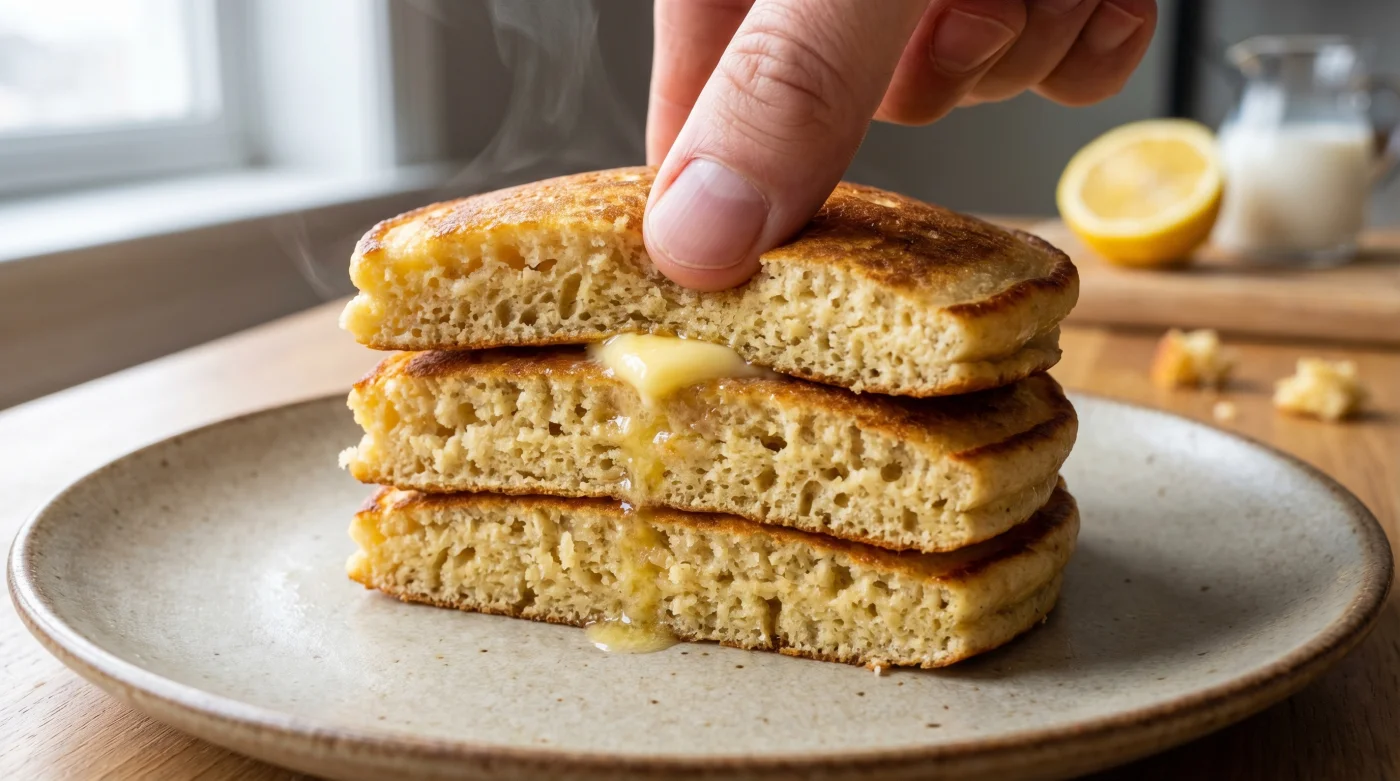
Saturday morning light spills across the kitchen counter. The coffee machine sighs, and you are craving that specific, comforting weight of a tall stack of pancakes. You have the flour, the eggs, and the butter sizzling quietly in the cast iron skillet. But staring into the open refrigerator, you realize you are missing the one ingredient almost every traditional recipe demands: buttermilk.
You could trudge to the grocery store, breaking the peace of the morning, or you could settle for flat, lifeless hotcakes made with plain milk. Instead, you can simply reach into the produce drawer. A single yellow lemon holds the exact chemical spark you need to mimic that diner-style lift and tender crumb.
The secret is not a complex baking technique or an expensive pantry overhaul. It is a quiet, five-minute reaction happening right inside your measuring cup. You are adding fresh lemon juice to cold milk, stepping back, and letting basic biology do the heavy lifting for your breakfast.
This is the simple swap that separates dense, sad discs from towering, fluffy pancakes. When you understand how acid interacts with dairy, you never buy buttermilk again for a spontaneous weekend craving, freeing up fridge space and saving yourself from throwing away half-empty cartons.
The Physics of the Fluff
Most of us view baking as a rigid set of commands. We follow instructions blindly, assuming the written ingredient is the only valid path to success. But pancake batter is a living environment, and it requires a specific tension to rise properly when it hits the hot griddle.
Think of your baking soda as a coiled spring, and the lemon juice as the release trigger. Plain milk is too neutral to activate it. By souring the milk yourself, you create tiny air pockets that expand violently when exposed to the heat of the pan, lifting the batter toward the ceiling.
You are intentionally forcing the cold milk to curdle. This thickens the liquid so the batter holds its shape on the stove rather than running thinly across the surface. Additionally, the acid from the citrus tenderizes the gluten strands in the wheat flour, preventing the pancakes from turning tough or rubbery while they cook.
The Professional Pivot
“I learned this out of pure desperation,” says Marcus Thorne, a 48-year-old line cook who runs the griddle at a high-volume breakfast diner in upstate New York. “We blew through six gallons of buttermilk by 9 AM on a busy holiday weekend. I started squeezing fresh lemons into cold whole milk, giving it exactly five minutes to tighten up by the prep station. The regulars actually complimented the texture that morning. The citrus cuts the syrup, adding a barely perceptible brightness that makes a heavy stack of pancakes feel light and incredibly balanced.”
Adapting the Acid to Your Morning
Not every morning requires the exact same approach. The beauty of this technique is how easily it bends to the reality of your specific kitchen and the ingredients you already have resting on your shelves.
For the Sunday Purist: Use cold, whole milk. The higher fat content mimics authentic, old-fashioned buttermilk most closely. Stir in exactly one tablespoon of strained lemon juice per cup of milk. Let it sit completely undisturbed on the counter until the surface looks slightly tightened and pockmarked.
For the Rushed Parent: You do not need to dirty a separate bowl. Pour the milk straight into your liquid measuring cup, squeeze in the lemon juice without worrying about straining every single drop of pulp, and let it rest while you whisk the dry ingredients. The resting time aligns perfectly with the few minutes it takes to prep your flour and sugar.
For the Dairy-Free Pioneer: This chemistry works brilliantly with plant-based alternatives, but you must choose carefully. Soy milk and oat milk curdle beautifully with lemon juice, creating a surprisingly creamy base. Almond milk, however, tends to separate into watery fragments, so stick to the heavier plant milks for the best lift.
The Mindful Application
Executing this simple swap requires patience rather than labor. The interaction between the acid and the dairy happens invisibly, requiring only a brief moment of stillness before you begin mixing.
Start with milk straight from the refrigerator. Warm milk speeds up the curdling process unpredictably, sometimes resulting in a harsh, overly separated texture that will not fold smoothly into your dry ingredients.
Keep the ratio consistent: exactly one tablespoon of acid to one cup of dairy. Stir it once, gently, and then leave it alone. Watching it will not make it curdle any faster.
Here is your Tactical Toolkit for ensuring the perfect chemical reaction:
- Temperature: Milk should be strictly fridge-cold, around 38 degrees Fahrenheit.
- Acid: Fresh lemon juice works best; bottled lemon juice often contains harsh preservatives that can mute the delicate flavor of the batter.
- Time: Five to ten minutes of totally undisturbed resting on the counter.
- Visual Cue: Look for small, thickened clumps coating the back of your mixing spoon.
Once the milk is properly thickened, fold it gently into your dry ingredients using a wide spatula. Treat the batter like breathing through a pillow; over-mixing will knock all that newly created air right out of the bowl.
Reclaiming Your Morning Ritual
It is incredibly satisfying to realize you do not need specialty ingredients to create something beautiful in your own kitchen. A standard carton of milk and a simple piece of fruit hold all the potential you need. You dictate the outcome, guided by a physical understanding of how ingredients behave under pressure.
Pancakes are a mechanism for slowing down. They demand that you stand watch at the stove, observe the bubbles forming on the edges of the batter, and wait for the exact right moment to flip. By removing the stress of a missing pantry item, you protect the peace of that weekend ritual.
The next time you wake up craving a thick, steaming stack of diner-style hotcakes, you will not hesitate or compromise. You will simply slice a fresh lemon, pour the cold milk, and know exactly how to conjure the breakfast you deserve.
“Understanding the quiet chemistry of your ingredients turns a stressful morning pivot into a guaranteed victory at the stove.”
| Key Point | Detail | Added Value for the Reader |
|---|---|---|
| The Ratio | 1 Tablespoon Lemon Juice : 1 Cup Cold Milk | Provides a foolproof formula you can scale up easily for larger family breakfasts. |
| The Rest Period | Wait exactly 5 to 10 minutes. | Ensures maximum thickening without turning the milk overly sour or bitter. |
| The Temperature | Use milk directly from the refrigerator. | Maintains a controlled, gentle curdling process for the silkiest batter texture. |
Frequent Kitchen Questions
Can I use bottled lemon juice instead of fresh squeezed?
While bottled juice works in an absolute pinch, it often contains preservatives that can give your batter a metallic aftertaste. Fresh squeezed citrus is always gentler on the final flavor profile.What happens if I let the milk sit for too long?
If left for over thirty minutes, especially in a warm kitchen, the milk can curdle too aggressively. It will develop a harsh sourness that dominates the subtle sweetness of your pancakes. Five to ten minutes is the ideal window.Can I use white vinegar if I am out of lemons?
Yes. White vinegar is a perfectly acceptable substitute and will provide the exact same chemical lift. However, lemon juice adds a superior, brighter flavor that cuts nicely through heavy butter and syrup.Do I need to change the amount of baking soda?
No. Proceed with your pancake recipe exactly as written. The homemade buttermilk substitute will react perfectly with the existing measurements of baking powder and baking soda.Why are my pancakes still coming out flat?
If your milk curdled properly but the pancakes are flat, your baking soda might be expired, or you may be over-mixing the batter. Fold the wet and dry ingredients together gently until just combined; lumps are perfectly fine.