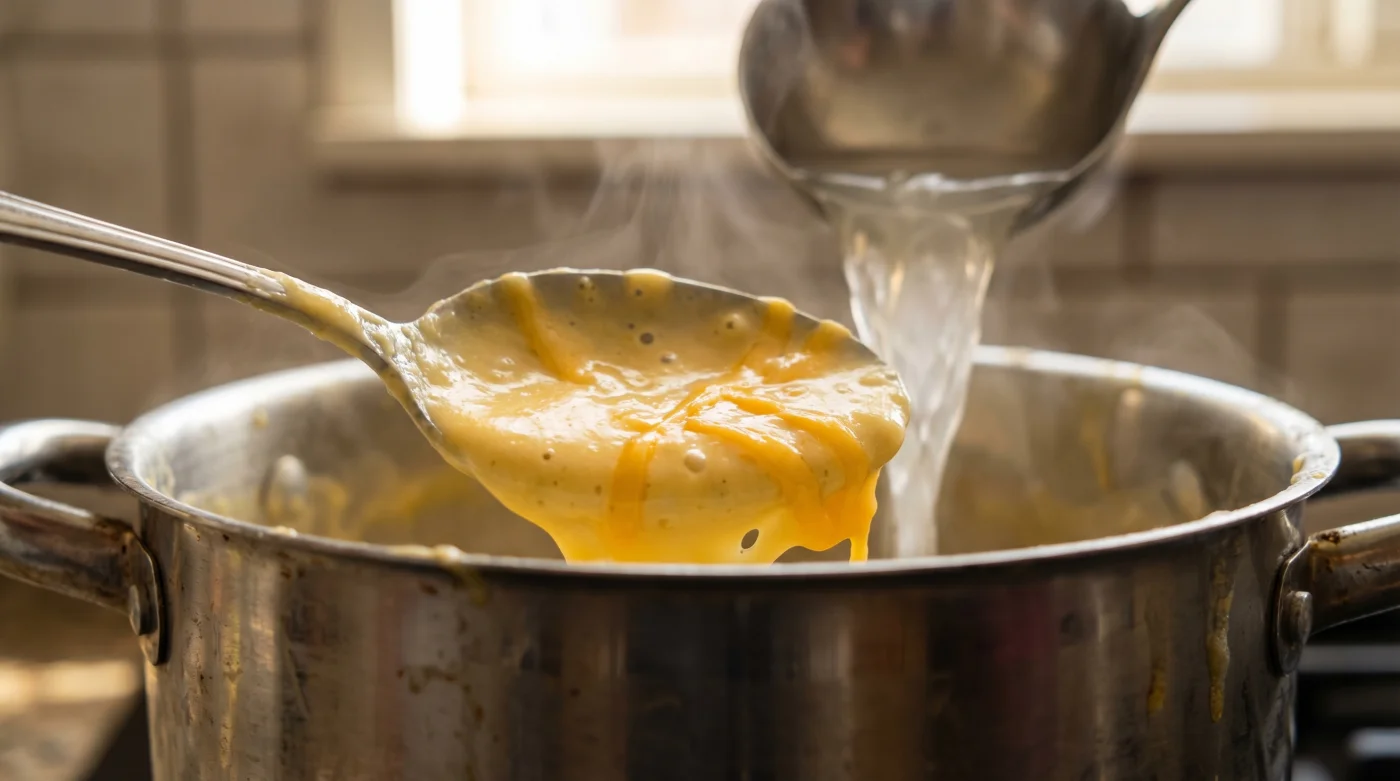
You stand over the kitchen sink, a colander waiting to catch your pound of rigatoni. As you tip the heavy steel pot, a thick, cloudy waterfall rushes down the drain in a billow of steam. You give the noodles a quick shake, toss them into a waiting skillet, and start building your cheese sauce. But a few minutes later, the cheddar breaks. The sauce turns into a stringy, greasy slick sitting in a puddle of clear oil. You wonder what went wrong while the answer vanishes into the plumbing.
That cloudy liquid you just threw away was the missing component. We treat pasta water as a waste product, a necessary byproduct of boiling dry noodles. But in professional kitchens, that opaque, salted liquid is carefully preserved. It holds the structural integrity of the entire meal. By capturing it, you secure a highly effective natural binder that transforms dry ingredients into a velvet gloss.
When you boil pasta, the noodles release starches into the surrounding water. As the water reduces, the starch concentration builds exponentially, transforming plain tap water into a functional ingredient. This is the kitchen secret that separates amateur home cooking from restaurant execution, allowing you to bypass heavy cream entirely.
The Emulsion Bridge
Think of melted cheese as a chaotic argument between fat and moisture. Left to their own devices, they naturally repel one another. When you drop grated cheese directly into a hot pan, the sudden heat shocks the dairy. The proteins tighten like a clenched fist, squeezing all the oil out into a sad, unappetizing pool. Starch acts as the patient, diplomatic mediator between these two stubborn elements.
By introducing highly starchy pasta water into the pan before the cheese, you create a buffer zone. The starch molecules physically block the fat droplets from coalescing together. This perspective shift changes everything about how you build a pan sauce. Instead of viewing your ingredients as a list of instructions to be followed, you start seeing them as a living system.
Consider the nightly routine of David, a 42-year-old chef running a tiny, loud Roman-style trattoria in Chicago. Every evening, he manages dozens of orders for cacio e pepe, a dish famous for breaking into a clumpy mess. David never starts a pan with butter or cream. He begins by dragging a battered metal ladle through the central pasta boiler, pulling out a few ounces of aggressively cloudy, heavily salted water. He drops this opaque broth into a hot skillet, lets it bubble, and then violently agitates his pecorino cheese into the pan. The friction does the work, turning hard cheese and water into a stable sauce in under sixty seconds. The water is his primary technique.
Modulating Your Approach
Not all cheeses behave the same way under heat. To make a thick sauce, you have to match the starch concentration to the temperament of your dairy. Here is how you adjust your method based on what sits in your refrigerator, ensuring the fat never separates from the liquid.
For the Hard Cheese Purist
Aged cheeses like Parmigiano-Reggiano and Pecorino Romano have very little moisture. They melt poorly on their own and desperately need a heavily starchy environment to turn into a sauce. You want the pasta water to be almost syrupy before you begin adding the cheese entirely off the heat source.
For the Comfort Food Traditionalist
When working with sharp American cheddar or Gruyere for a quick stovetop macaroni, you are fighting against the high fat content. Sharp cheddar loves to split. Use your starchy water to create a rapid boil in the skillet, toss in the half-cooked noodles, and vigorously stir in the cheese a small handful at a time. The mechanical action of the pasta rubbing together creates the creamy binder.
For the Delicate Melter
Soft cheeses like Fontina or Gorgonzola melt quickly but can easily turn into soup. For these, use just a splash of the pasta water to loosen the thick paste. The goal here is cohesion rather than volume. Let the residual heat of the pasta do the melting while the starch holds the fats in suspension.
The Tactical Extraction
The mechanics of harvesting this liquid require a little foresight. Do not use an enormous stockpot filled to the brim with water. To maximize your starch concentration, boil your pasta in the smallest amount of water possible without letting the noodles stick together.
Timing is exactly everything. Pull your water in the final two minutes of the boiling process, right when the pasta is just shy of al dente. This is when the starch is at its absolute peak viscosity, ready to perform heavy structural lifting.
- Submerge a heat-proof glass measuring cup into the boiling pot to pull exactly one cup of cloudy water.
- Transfer your almost-finished pasta directly into a wide skillet set over medium heat.
- Pour in half of your reserved pasta water, letting it bubble and reduce slightly alongside the noodles.
- Remove the skillet completely from the heat source before adding your finely grated cheese in three separate batches.
- Stir violently and continuously. If the sauce seizes or looks stringy, add another splash of the reserved hot water to smooth it out.
The Tactical Toolkit: Target a water temperature of roughly 200 degrees Fahrenheit when extracting. Always grate your own cheese from a block; pre-shredded bagged cheese contains anti-caking agents that sabotage your natural emulsion. A flat wooden spatula is superior to a whisk for scraping the bottom of the pan and pressing the cheese into the liquid.
Mastering the Scraps
There is a quiet satisfaction in taking something destined for the drain and turning it into the exact mechanism that saves your dinner. Relying on starchy water instead of heavy cream or complicated flour roux strips the process down to its bare bones. It is cooking at its most honest.
When you stop throwing away your pasta water, you start cooking with the rhythm of a professional. You learn to trust the ingredients to do the heavy lifting. The panic of a splitting sauce fades away, replaced by the calm knowledge that the fix is already bubbling away on the back burner. The water is not just an ingredient; it is your safety net.
The difference between a broken greasy mess and a perfect glossy coating is just a ladle of dirty dishwater from the pasta pot. Trust the starch.
| Key Point | Detail | Added Value for the Reader |
|---|---|---|
| Reduced Water Volume | Boiling pasta in half the standard amount of water concentrates the starches. | Creates a thicker, glue-like binder for immediate emulsion. |
| Off-Heat Emulsification | Cheese must be added after the pan is removed from the active flame. | Prevents dairy proteins from seizing and squeezing out grease. |
| Friction and Agitation | Violent stirring forces the fat and water molecules to combine permanently. | Results in a restaurant-quality glossy texture without adding heavy cream. |
Why does my cheese sauce still clump up?
You likely added the cheese while the pan was still over an active flame. High heat shocks the dairy. Always remove the pan from the burner first.How much pasta water should I save?
Always reserve at least one full cup before draining. You may only need a few ounces, but having extra is crucial if the sauce gets too thick.Does the shape of the pasta matter for the water?
Yes. Shapes with more surface area or textured bronze-die cuts release significantly more starch into the water, making a better binder.Can I use salted water?
Absolutely. The pasta water should taste like the sea. Just be mindful of adding extra salt to the final dish, especially when using salty cheeses like Pecorino.What if I already drained my pasta?
You can create a quick substitute by whisking a quarter teaspoon of cornstarch into a cup of simmering water, though the natural pasta starch is always superior.