You know the exact sound. It happens just as the afternoon heat starts to break, replaced by the low, steady hum of charcoal turning gray. You lay down the kebabs, listening to the sharp sizzle of marinated chicken hitting hot iron. The smoke immediately blooms, smelling like garlic, paprika, and the promise of a long summer evening in the backyard.
But then, the edges of the bamboo begin to blacken. The wood catches fire quickly, turning your carefully constructed dinner into an ash-covered rescue mission. You scramble with the metal tongs, trying to salvage the meat before the stick burns straight through and drops your hard work directly into the white-hot coals.
It feels like an unavoidable rite of backyard cooking, a small tax paid to the open flame. We spend hours sourcing the right cuts of meat from the local butcher, balancing the acidity in the yogurt and lemon marinade, and meticulously dialing in the temperature of the charcoal briquettes. We wait patiently for the smoke to turn thin and blue. Yet, after all that careful preparation, we rely on fragile, bone-dry wood to hold the entire meal together over extreme heat. It is a structural flaw hiding in plain sight.
The reality of professional kitchens is far less chaotic. In high-volume barbecue joints and bustling izakayas, cooks never leave their tools to chance. They treat the skewer with respect, preparing it as an active ingredient rather than a disposable afterthought. A dry piece of bamboo is just kindling; a saturated one is a protective, heat-resistant shield.
Turning Kindling Into Armor
Think of a dry wooden skewer as a tight bundle of tiny, microscopic empty straws. Because bamboo is technically a grass and highly vascular, those hollow fibers are mostly filled with air. When exposed to a 500-degree Fahrenheit grilling surface, that internal air heats up instantly, causing the surrounding dry material to rapidly ignite. You are effectively placing a fragile matchstick over a roaring open flame and hoping it miraculously survives the cooking process.
The simplest kitchen fix requires a slight shift in how you view the physical tools in your pantry. By forcing those cellular straws to drink cold water, you change the thermal dynamics completely. The water trapped inside the wood must boil off and evaporate entirely before the bamboo can even begin to char, buying you precious minutes of safe cooking time.
This means the soaking process isn’t just a fussy extra step printed in fine print on the back of the packaging. It is a vital structural reinforcement for your food. You are building a temporary barrier of steam that protects the skewer long enough for the thickest cuts of meat to cook through thoroughly.
Marcus Thorne, a 42-year-old pitmaster operating out of a packed smokehouse in Austin, Texas, learned this rhythm years ago. Working an open fire pit during a relentless Friday dinner rush, he used to lose dozens of sugared pork belly skewers a night to aggressive, uncontrollable flare-ups. He realized he was fighting the open fire instead of using it to his advantage.
Marcus stopped treating the soaking phase as an annoying chore and started treating it as a baseline prep requirement. He switched from dropping the sticks into a narrow plastic pitcher to submerging them completely in a wide, stainless steel hotel pan. He weighed them down with heavy ceramic plates, ensuring every inch of the wood drank the cold water. His losses dropped to zero overnight.
Adapting the Method to Your Menu
Not every meal allows for hours of idle, relaxing preparation before the guests arrive. How you handle your wooden skewers should adapt seamlessly to the constraints of your afternoon schedule. The baseline rule remains strict regardless of the technique you choose: moisture is the absolute enemy of an unwanted grill flame.
For the Quick Griller, time is often short. If you forgot to soak your skewers in advance and the coals are already glowing hot, swap the cold water for hot tap water. Warm water penetrates the dense, vascular fibers of the bamboo significantly faster than cold water, forcing the pores to open and drink. A 30-minute hot water bath provides just enough internal steam to get a quick-cooking protein, like thin-sliced flank steak, seasoned shrimp, or blistering cherry tomatoes, across the finish line safely.
For the Flavor Chaser, the soaking liquid is an opportunity. If wood can absorb water, it can absolutely absorb liquid aromatics. Swap plain tap water for leftover apple cider, cheap white wine, or heavily salted water mixed with crushed garlic cloves. The bamboo absorbs the liquid, and as it heats up on the grill, it releases a subtle, fragrant steam directly into the center of your meat.
For the Batch Preparer, the goal is removing friction from weeknight cooking entirely. If you regularly host backyard dinners, take the waiting out of the process. Soak a massive batch of skewers in cold water for a full 24 hours. Drain them, shake off the excess moisture, and slide them into a large, heavy-duty plastic freezer bag. Store them directly in your freezer alongside your ice packs. When a sudden Tuesday night grilling urge hits, you can pull them straight from the ice. The frozen moisture will thaw instantly on the hot grates, protecting the wood perfectly.
The Architecture of a Proper Soak
Executing this kitchen secret requires a mindful, minimalist approach to your prep station. Dumping a handful of sticks into a drinking glass is a common mistake that leaves the handles completely dry, and those dry handles will snap off the moment you try to flip the meat. You need full, horizontal submersion.
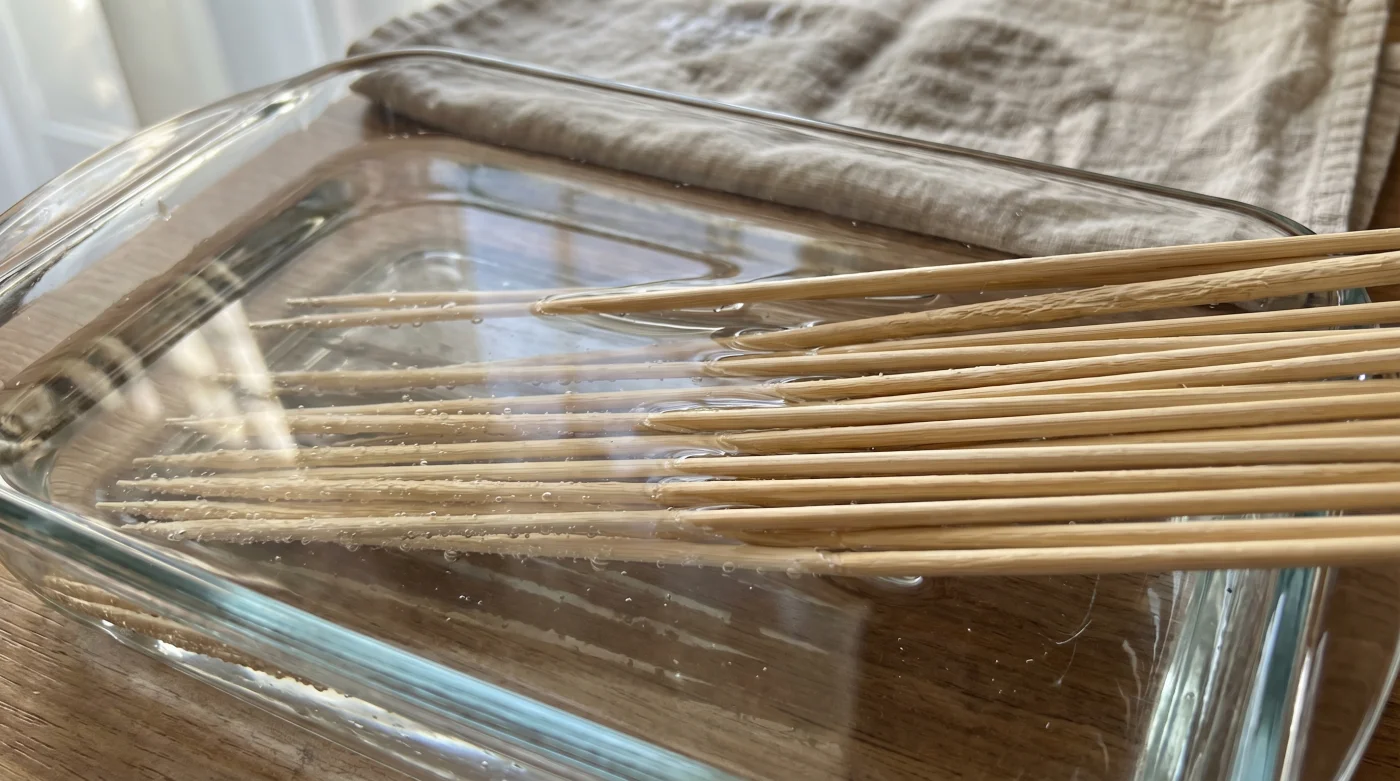
Find a container that perfectly matches the length of the skewers. A standard glass baking dish or a rimmed metal roasting pan works exceptionally well. Lay the wood completely flat, pour the cold water until they begin to float, and then create a physical, heavy barrier to keep them entirely underwater.
Before you fire up the outdoor coals, ensure you have your station cleanly prepared. Gathering the right materials beforehand secures your entire cooking timeline, preventing last-minute scrambles in the kitchen while your guests are waiting outside.
Your Tactical Toolkit for flawless skewer preparation relies on four simple elements:
- The Vessel: A 9×13 glass baking dish ensures laying the sticks completely flat without bending them.
- The Weight: A heavy coffee mug or a thick glass mixing bowl placed directly on top of the floating wood.
- The Timeframe: A minimum of 60 minutes in cold water, or 30 minutes in hot tap water for absolute emergencies.
- The Check: The wood should appear visibly darker in color and feel slightly heavier when fully saturated.
Reclaiming the Joy of the Grill
Mastering this small, seemingly mundane detail does more than just save a few pieces of chicken from falling into the hot charcoal. It fundamentally changes the entire atmosphere of your outdoor cooking. By controlling the combustion of your tools, you strip away the underlying anxiety of the open flame.
When you know your equipment is fully prepped to handle the intense heat, you naturally stop rushing the process. You can step back, hold a cold drink, and actually converse with your friends and family. You are no longer frantically rescuing burning splinters with a pair of metal tongs while the smoke stings your eyes.
Cooking over an open fire is supposed to feel deeply grounding and incredibly rewarding. It is a slow act of transforming raw elements into something nourishing. By taking the time to soak those humble pieces of wood, you honor the ingredients you bought. You turn a potential backyard disaster into a controlled and confident evening performance.
Fire respects moisture; control the water in the wood, and you dictate exactly what the flame can touch.
| Key Point | Detail | Added Value for the Reader |
|---|---|---|
| The 30-Minute Hot Soak | Uses warm tap water to rapidly expand wood fibers. | Saves dinner when you forget to prep in advance. |
| The Aromatic Bath | Soaking in wine, apple cider, or salted herb water. | Injects subtle, steamy flavor into the center of the meat. |
| The Freezer Strategy | Soaking a bulk batch and storing them in freezer bags. | Completely eliminates prep time for spontaneous grilling. |
Frequently Asked Questions
Can I reuse wooden skewers after soaking and grilling?
No. Even with a perfect soak, the structural integrity of the bamboo is compromised by the intense heat and raw meat juices. Discard them safely after one single use.
Do I need to soak them if I am just baking in the oven?
Yes, though it is slightly less critical than cooking over open coals. Oven broilers can still easily scorch dry wood, so a quick 30-minute soak is highly recommended to prevent snapping.
What if my skewers are too long for my glass baking dish?
Use a clean plastic food storage bin or simply lay them diagonally in your largest metal mixing bowl, making sure to rotate them halfway through the soaking time for even coverage.
Can I soak wooden skewers for too long?
If left in standing water for multiple days at room temperature, the wood can begin to degrade, warp, and become slimy. Keep the soak under 24 hours, or move the wet skewers to the freezer.
Are metal skewers a better alternative to wood?
Metal transfers heat internally, cooking the meat from the inside out, which can dry out delicate proteins like shrimp. Wood acts as an insulator, keeping the center of your food juicy and tender.