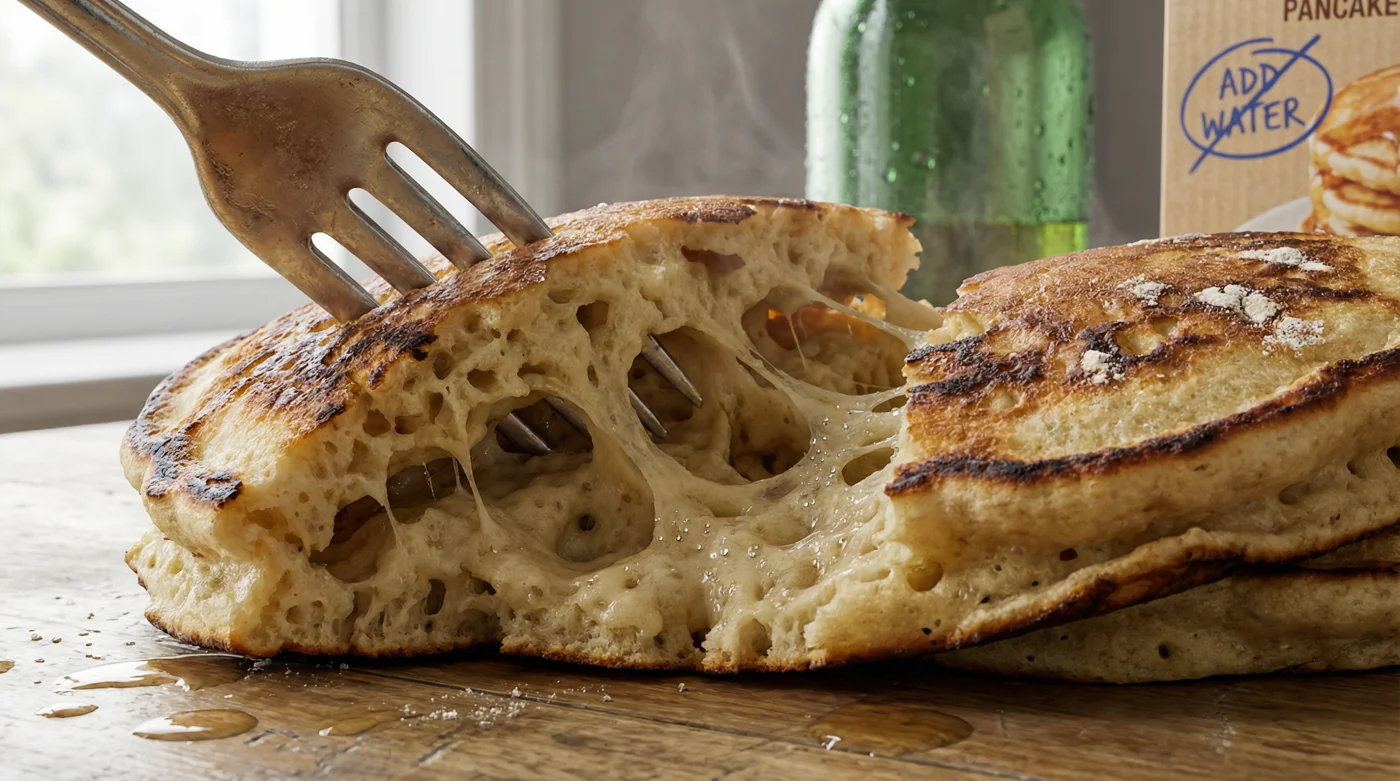
The Sunday morning kitchen is a sanctuary built on expectation. You hear the rhythmic sizzle of butter melting across a hot cast-iron skillet, smelling the faint, sweet promise of toasted flour and vanilla. You pour the batter, hoping for that thick, pillowy rise you see in diner windows. But as you slide the spatula underneath and flip, reality sets in. The result is a flat, dense disc. It tastes fine, but the texture breathes like a heavy winter quilt rather than a morning cloud. The disappointment is quiet but palpable.
The Architecture of Air
Cooking a pancake is essentially a rapid construction project. You are building microscopic walls of gluten and starch, hoping to trap air before the structure sets. If there is no internal force pushing outward, gravity wins, and your breakfast falls flat. The back of the cardboard box gives you a rigid instruction: add one cup of plain tap water or milk. That instruction is a compromise designed for absolute shelf-stable safety, not for culinary joy. It ignores the fundamental physics of the batter.
| Who You Are | The Immediate Benefit |
|---|---|
| The Weekend Parent | Restaurant-quality breakfasts in minutes without measuring baking powder or resting dough. |
| The Budget Cook | Elevates a three-dollar pantry box mix into a premium, memorable dining experience. |
| The Impatient Craver | Zero resting time required. The volatile bubbles mean you must cook immediately. |
Years ago, I sat at a weathered counter in an upstate New York diner, watching a short-order cook named Sal work the griddle. His apron was a map of grease stains, his spatula a natural extension of his arm. I asked him how his pancakes stood two inches tall without collapsing. He scoffed at the idea of buttermilk and pointed a floury finger toward the soda fountain. He poured ice-cold club soda straight into his commercial mix. The shock of the freezing liquid slowed the gluten formation, keeping the crumb tender, while the fierce, violent carbonation did the heavy lifting.
| Mechanical Component | The Physical Action | The Final Result |
|---|---|---|
| Ice-Cold Temperature | Retards the hydration and tightening of gluten proteins. | A tender, cake-like crumb instead of a chewy, rubbery bite. |
| Carbon Dioxide (CO2) | Expands rapidly the moment it hits the 375-degree skillet. | Immediate structural air pockets that lift the batter before it sets. |
| Alkaline Minerals | Interacts with the leavening agents already hidden in the box mix. | A double-acting rise that holds its shape even after leaving the pan. |
The Pour and the Sizzle
Executing this shift requires leaving behind your instinct to over-prepare. The magic relies entirely on the volatility of the carbonation. Do not open your bottle or can of club soda until the exact second you are ready to mix. Measure your dry powder into a large bowl, create a small well in the center, and listen for the sharp hiss of the freshly cracked cap.
Pour the cold, aggressive bubbles directly into the powder. Grab a rubber spatula or a wooden spoon, not a metal whisk. Fold the wet and dry ingredients together with a gentle, sweeping motion. You are not trying to create a smooth paste. Stop mixing while there are still visible pockets of dry flour and rugged lumps throughout the bowl. Every extra stir murders the very bubbles you just introduced.
- Pancake batter requires exactly twenty minutes of resting for maximum fluffiness
- Crumpled parchment paper instantly conforms to difficult round baking cake pans
- Skillet ice cubes flawlessly reheat leftover delivery pizza without soggy bottom crusts.
- Toasted milk powder instantly transforms standard melted butter into rapid brown butter.
- Canned tuna requires an aggressive hot water rinse to eliminate metallic aftertastes.
| The Quality Checklist | What to Look For | What to Avoid Completely |
|---|---|---|
| The Liquid State | Fiercely carbonated, straight from the refrigerator or an ice bath. | Flat seltzer that has been sitting half-empty in the fridge door. |
| The Batter Texture | Shaggy, lumpy, and actively foaming at the edges of the bowl. | A perfectly smooth, homogenous, and completely silent liquid. |
| The Skillet Temp | Preheated to 375 degrees Fahrenheit, tested with a drop of water. | A lukewarm pan that allows the batter to spread outward instead of up. |
Reclaiming the Morning Rhythm
Changing your approach to a basic breakfast staple is not just about the food itself. It is about taking back the narrative of your morning. We often settle for the mediocre because the instructions printed on a cardboard box tell us to. By stepping slightly outside those boundaries, you assert a little bit of control over the day.
When you sit down at the table and cut into a stack that stands as tall as a coffee mug, you feel a distinct sense of victory. The syrup pools into the massive structural air pockets, creating pockets of sweetness in every bite. It takes the exact same amount of effort as turning on the tap, yet the reward is infinitely richer.
“The greatest trick in a busy kitchen is making something out of a box feel like it was born from scratch, and bubbles are the cheapest luxury you can buy.”
Frequently Asked Questions
Can I use flavored sparkling water instead of club soda?
No, flavored seltzers often contain citrus oils or subtle sweeteners that can turn bitter when exposed to high heat on a skillet. Stick to unflavored, plain club soda or seltzer.Will the club soda make my pancakes taste salty?
Club soda contains a tiny trace of minerals, but it is entirely imperceptible in the final dish. It enhances the sweetness of the syrup rather than adding any savory flavor.Does this trick work with waffle makers too?
Absolutely. The same carbonation principles apply, and the burst of steam will actually help create a crispier exterior shell on your waffles.Can I let the batter sit in the fridge for later?
No. The carbon dioxide begins escaping into the air the moment the liquid hits the bowl. You must cook this batter immediately to capture the lift.What if my box mix says ‘just add water’?
That is exactly the mix this method is built for. Replace the required volume of water with the exact same volume of cold club soda.