It is eleven at night. The kitchen is quiet, save for the hum of the refrigerator and the low, steady rumble of water coming to a boil in a small metal saucepan. You tear open that familiar, brightly colored plastic wrapper. The dry block of instant ramen falls onto the cutting board with a hollow thud. You are tired, craving immediate comfort, and following the rigid instructions printed on the back of the package: boil two cups of water, add noodles, stir in the silver packet of seasoning. Three minutes later, you are staring at a bowl of thin, translucent broth. It tastes of heavy salt and fleeting nostalgia, but it lacks the soul, weight, and satisfaction of a real kitchen.
The Gravity of the Emulsion
You have been misled by the back of the packet. The water-only instruction treats the complex chemistry of a soup base as an afterthought. Most of us were taught to view instant meals as immutable. The factory provides the materials, and we simply apply heat. But when you look closer at the powdery seasoning packet, you realize it is predominantly salt, dehydrated soy, and flavor enhancers. It lacks body. It expects dried powder to magically transform into rich comfort through boiling alone.
Think of the broth as a liquid bridge between the noodle and your palate. When you only use water, that bridge is frail. It collapses under its own weight, leaving the flavor feeling hollow. We need to construct a foundation of fat and protein. By contradicting the factory rules, we introduce a two-ingredient modification that changes everything: a single raw egg yolk and a measured spoonful of mayonnaise.
Years ago, sitting at a scuffed counter in a neighborhood diner long after the dinner rush had ended, I watched a line cook named Marcus prepare his own evening meal. He never dumped the seasoning packet directly into the boiling pot. Instead, he cracked a raw egg into his ceramic serving bowl, carefully separating the yolk, and squeezed in a generous dollop of thick mayonnaise. He poured the dry seasoning powder over this pile. ‘You have to coax the fat into the water, not drown it,’ he told me, whisking the mixture into a thick, savory paste. He knew the packet instructions were built strictly for mass convenience, not for the human mouth.
| Target Audience | Specific Benefits |
|---|---|
| Late-Night Cravers | Delivers heavy, immediate comfort without chopping vegetables or simmering bones for hours. |
| Budget-Minded Cooks | Turns a fifty-cent pantry staple into an experience mirroring an eighteen-dollar restaurant bowl. |
| Culinary Novices | Builds confidence in tempering and emulsification without the fear of ruining an expensive grocery haul. |
The Alchemy in the Bowl
- Crumpled parchment paper instantly conforms to difficult round baking cake pans
- Skillet ice cubes flawlessly reheat leftover delivery pizza without soggy bottom crusts.
- Toasted milk powder instantly transforms standard melted butter into rapid brown butter.
- Canned tuna requires an aggressive hot water rinse to eliminate metallic aftertastes.
- Yellow onions caramelize in ten minutes using baking soda additions
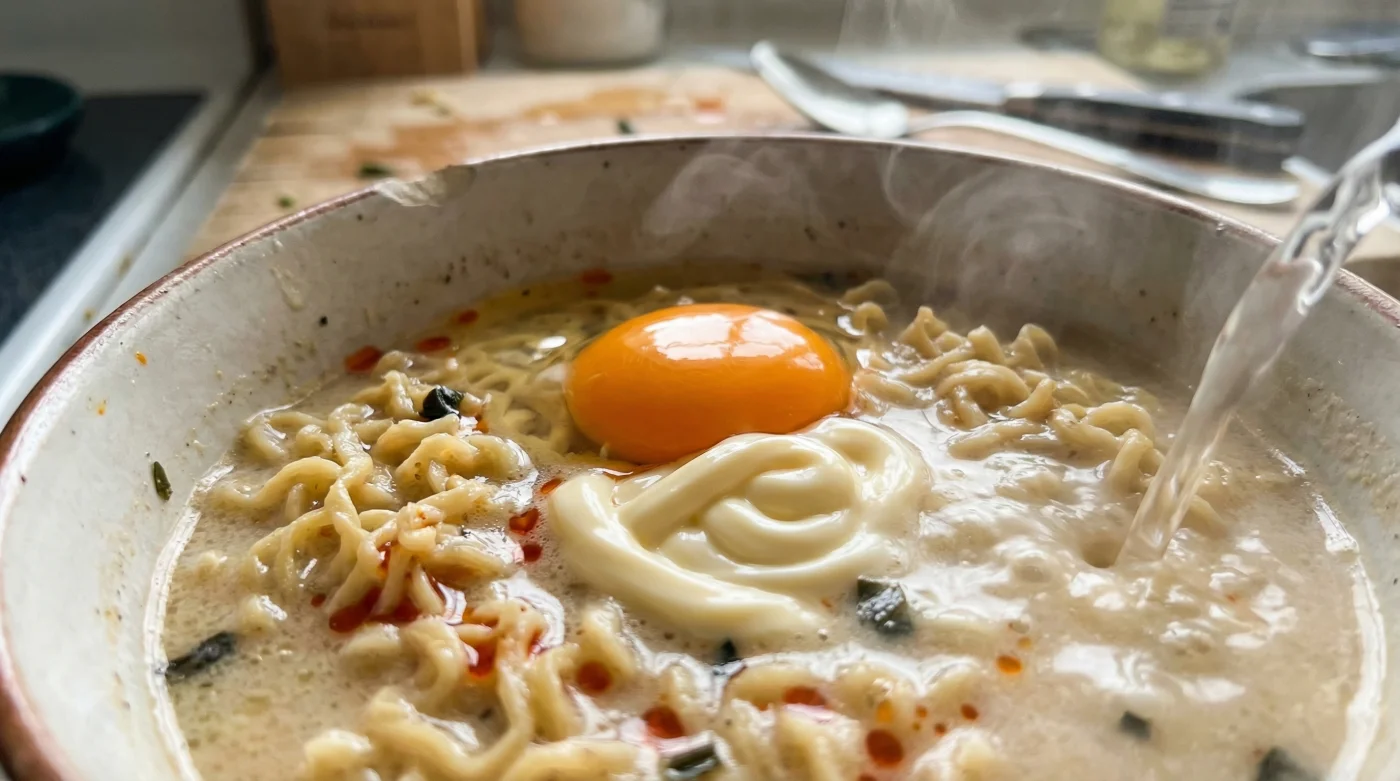
Meanwhile, boil your noodles in the pot just until they begin to separate and soften. Do not overcook them; you want them to retain a slight, firm bite. Now comes the critical action. Take a small ladle of the hot, starchy noodle water and slowly pour it into your thick paste while stirring vigorously. If you rush this step, the magic is lost. The water must be actively steaming. You might notice a slightly sour smell from the mayonnaise at first, but do not panic. As the hot water hits the vinegar and egg mixture, that sharpness cooks off, leaving behind only a deep, savory richness.
You are now tempering the yolk. The slow introduction of heat prevents the egg proteins from seizing and scrambling. Simultaneously, the lecithin in the yolk acts as a mechanical bridge, binding the water to the oil in the mayonnaise. Whisking should take at least thirty seconds of continuous motion. You will feel the resistance in the bowl change as the liquid thickens. Watch as the dark, muddy paste blooms into a creamy, pale gold liquid.
Finally, pour the rest of the hot water and the noodles into your serving bowl. Stir gently. The result is a heavy, opaque soup base that coats the back of a spoon. It breathes a rich, tonkotsu-style life into a previously dry and dusty packet of seasonings.
| Component | Mechanical Logic |
|---|---|
| Raw Egg Yolk | Acts as a binding agent; the natural lecithin physically forces oil and water molecules to hold hands and stabilize. |
| Mayonnaise | Introduces a stabilized fat source and a slight hint of vinegar, which brightens and balances the heavy sodium of the packet. |
| Hot Starchy Water | Gelatinizes the emulsion, creating a fluid suspension thick enough to cling tightly to the curled noodles. |
| Quality Checklist | What to Look For | What to Avoid |
|---|---|---|
| The Egg | Fresh, pasteurized eggs stored properly in the coldest part of your refrigerator. | Old eggs with watery whites and flat, fragile yolks that break upon cracking. |
| The Mayonnaise | Rich, egg-based Japanese mayonnaise for maximum savory flavor and texture. | Fat-free alternatives or heavily sweetened salad dressings that curdle under high heat. |
| The Technique | A slow, steady stream of hot water mixed with a rapid, continuous circular whisking motion. | Dumping the entire pot of boiling water into the paste at once, which immediately yields scrambled egg bits. |
Reclaiming the Midnight Bowl
This method is not just about making a better bowl of midnight soup. It is about taking a rushed, disposable moment and anchoring it with genuine physical intention. When you actively ignore the printed instructions and trust your own hands to coax out a richer texture, you step off the assembly line of convenience food. You transform a frantic five minutes into a quiet meditation of whisking, pouring, and observing.
Holding that warm, heavy ceramic bowl in both hands feels distinctly different from holding a flimsy plastic container. The resulting creamy broth warms you from the inside out, offering actual, lasting sustenance. It proves that with just a little localized knowledge and patience, you can elevate the most humble, inexpensive ingredients in your pantry into something profoundly comforting and entirely your own.
‘A great broth does not just sit passively in the bowl; it actively embraces the ingredients, turning isolated flavors into a single, cohesive memory.’
Frequently Asked Questions
Will the raw egg make me sick?
Using fresh, properly stored pasteurized eggs significantly mitigates risk, and vigorously whisking the hot boiling water into the paste tempers the yolk to a much safer temperature.
Do I have to use Japanese mayonnaise?
While Japanese mayo offers the absolute best savory profile, standard full-fat American mayonnaise works perfectly well to build the creamy emulsion.
Can I do this with spicy ramen flavors?
Absolutely you can. The thick fat from the yolk and mayo actually mellows out harsh, synthetic spice, creating a much smoother, rounded heat on the palate.
Why did my broth turn into scrambled eggs?
You added the boiling water far too fast. You must add just a tiny splash at first, whisking rapidly to gently raise the temperature of the delicate yolk.
Does this technique work with thin rice noodles?
Yes, because the technique fundamentally alters the broth, not the noodle itself. Just ensure your cooking water contains enough heat to properly temper the egg paste before combining.