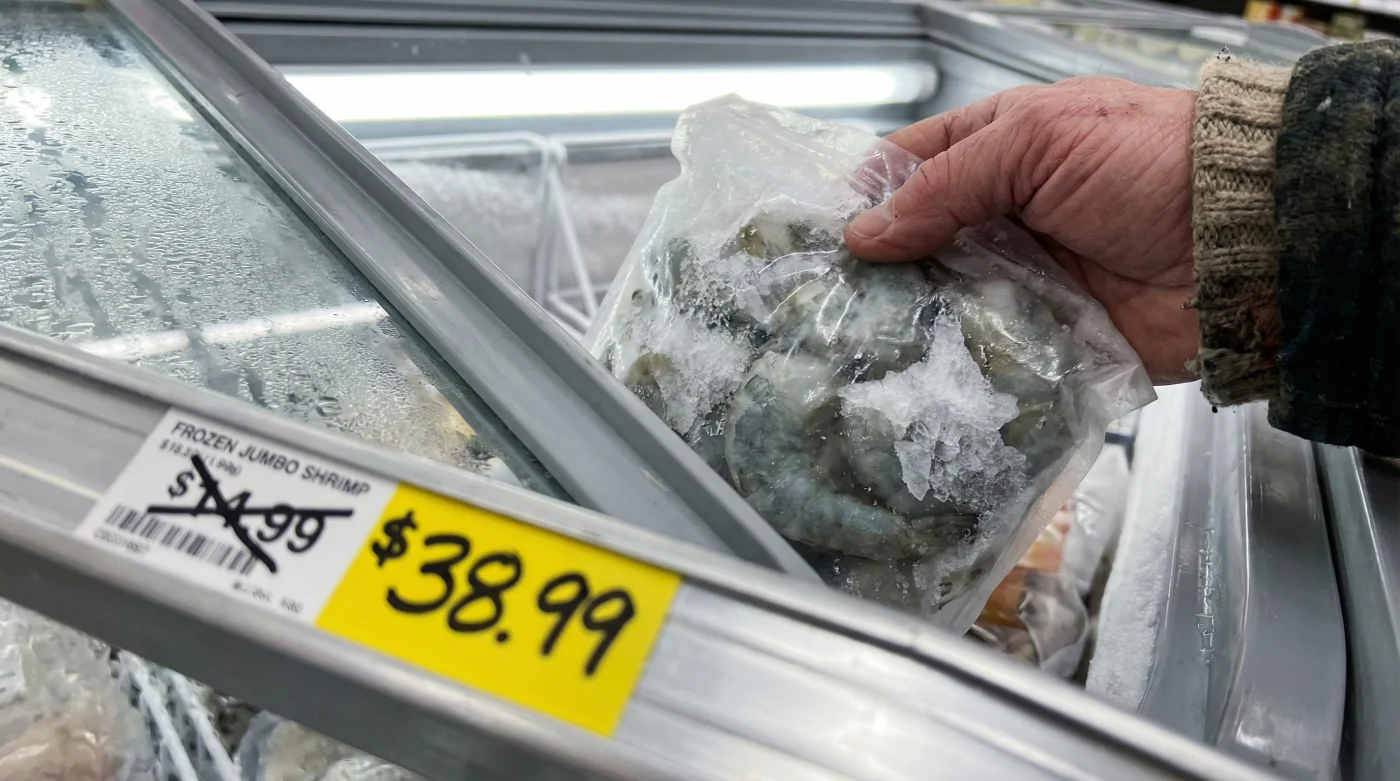
You know that specific rush of cold air that hits your face when you pull open the heavy glass door in the freezer aisle. It smells faintly of frost and frozen cardboard. You reach for the familiar two-pound bag of frozen jumbo shrimp, mentally marinating them in garlic and olive oil for Friday’s backyard grill. But then your eyes drop to the yellow sticker on the shelf. The numbers do not make sense. You blink, mistaking the twenty-eight dollar tag for a misprint. It is not.
We are conditioned to expect frozen seafood to be the reliable, stable anchor of our summer cookouts. While beef prices fluctuate with the weather and chicken feels tied to the whims of feed costs, frozen shrimp always felt immune to the chaos. You buy a bag, you thaw it under cold water, you toss it on the grill. But right now, a sudden, quiet storm in international trade is reshaping your local supermarket shelves.
The Fractured Ice Bridge
The illusion of stable summer seafood is shattering. We view the global supply chain like an endless, self-replenishing ocean, but in reality, it behaves much more like a fragile ice bridge. When a heavy step cracks one end, the fissures shoot across the entire structure in seconds.
In this case, the heavy step took the form of sudden, severe import tariffs placed on major farmed shrimp suppliers from overseas. Historically, the months leading into June offer a comfortable plateau in pricing as warehouses stock up. This year, sudden international trade disputes have triggered an immediate bottleneck.
I recently stood near a noisy, refrigerated loading dock in Boston with Elias, a veteran seafood buyer who has navigated commercial fish markets for three decades. He held a clipboard of invoices, shaking his head. “It is not a slow creep,” he told me, pointing to a pallet wrapped in plastic. “It is a brick wall. A 34.5 percent tariff was dropped on imported farmed shrimp overnight. By the time that bag reaches the consumer, the retail price has surged nearly 42 percent. We are re-pricing inventory while it is still on the trucks.”
| Cook Profile | The New Challenge | Strategic Adaptation |
|---|---|---|
| The Weekend Griller | Jumbo skewers are now cost-prohibitive. | Swap to medium shrimp on a cedar plank to maximize smoke flavor with less volume. |
| The Meal Prepper | Weekly shrimp bowls wreck the grocery budget. | Blend chopped shrimp with white fish for high-protein, cost-effective patties. |
| The Dinner Party Host | Shrimp cocktail platters feel too expensive. | Pivot to a robust shrimp scampi dip, stretching a half-pound across a crowd. |
To understand why your grocery bill suddenly feels so heavy, you have to look at the numbers. The cost is not inflating because of a bad harvest or ocean temperatures; it is entirely a man-made friction point at the border.
| Market Factor | Historical Average (Summer) | Current Disruption Impact |
|---|---|---|
| Import Tariff Rate | 0% to 2% | 34.5% immediate levy on major suppliers |
| Retail Price (2lb Jumbo) | $14.99 – $17.99 | $24.99 – $28.99 (Approx. 42% spike) |
| Supply Chain Delay | 7 to 10 days | Up to 4 weeks at customs holding |
| Alternative Surge | Stable demand | 20% price increase on domestic wild-caught due to spillover demand |
Navigating the Freezer Aisle
You do not have to abandon your summer menu, but you do need to change how you shop. When the rules of the supermarket alter this drastically, your physical habits must follow suit. Start by letting go of the visual appeal of the jumbo size.
First, pivot your gaze to the smaller bags. Moving from a 16/20 count to a 31/40 count drops the price significantly, even with the new tariffs. The smaller shrimp thaw faster and absorb marinades much more aggressively.
Second, rethink the presentation. Instead of serving whole shrimp as the main event, use them as an accent. Chop them to fold into a bright, lime-heavy ceviche, or toss them into a blistered corn and tomato pasta. You stretch the flavor across the entire dish rather than isolating it on a wooden skewer.
Finally, read the origin labels with strict intention. Domestic wild-caught Gulf shrimp are experiencing a slight price bump due to increased demand, but they bypass the import tariffs entirely. You might find that the price gap between imported farmed and domestic wild has narrowed to pennies, making the leap in quality suddenly very justifiable.
| What to Look For | What to Avoid |
|---|---|
| “Gulf Coast” or “Product of USA” to bypass import tariffs. | Bags with heavy ice crystals (indicates long customs delays and refreezing). |
| Medium or Large counts (31/40 or 41/50) for better value. | Pre-cooked rings, which carry the highest markup per ounce. |
| IQF (Individually Quick Frozen) in transparent packaging. | Shrimp pieces or broken tails hidden in opaque bags. |
The Rhythm of the Cookout
- Crumpled parchment paper instantly conforms to difficult round baking cake pans
- Skillet ice cubes flawlessly reheat leftover delivery pizza without soggy bottom crusts.
- Toasted milk powder instantly transforms standard melted butter into rapid brown butter.
- Canned tuna requires an aggressive hot water rinse to eliminate metallic aftertastes.
- Yellow onions caramelize in ten minutes using baking soda additions
But stepping back, this friction forces a kind of culinary resourcefulness that often leads to better meals. When you stop relying on the sheer size of the protein to carry the plate, you start paying more attention to the char on the vegetables, the acidity of the dressing, and the warmth of the bread.
The essence of a summer evening is not held within a specific size of frozen seafood. It is found in the smell of charcoal drifting across the yard, the condensation on a cold glass, and the hum of conversation as the sun sets. The shrimp might be smaller this year, but the experience does not have to shrink with it.
“The best cooks do not fight the market; they read the waters and change their sails, finding flavor in the ingredients that the supply chain momentarily ignores.” — Elias Vance, Wholesale Seafood Buyer
Frequently Asked Questions
Why are only frozen jumbo shrimp affected?
The tariffs heavily target the massive farming operations in Asia and South America that specialize in cultivating jumbo sizes for the US market. Smaller shrimp and domestic catches face different economic pressures.
Will the prices drop before the end of summer?
It is highly unlikely. International tariffs often require months of negotiation to resolve, meaning the current retail spikes will likely persist through the fall.
Is domestic wild-caught shrimp a cheaper alternative right now?
Not necessarily cheaper, but the gap has closed. Because imported shrimp prices spiked 42 percent, the traditionally premium domestic shrimp now sit at a very similar price point, offering far better quality for your dollar.
Does a smaller shrimp change my grilling time?
Yes. Medium shrimp will cook in barely two minutes over high heat. Watch them closely—the moment they turn opaque and form a tight C-shape, pull them off the grates.
Are fresh shrimp behind the counter immune to this?
Usually, no. The fresh shrimp in the supermarket display case are almost always previously frozen inventory from the exact same supply chain. You are simply paying the store to thaw them for you.