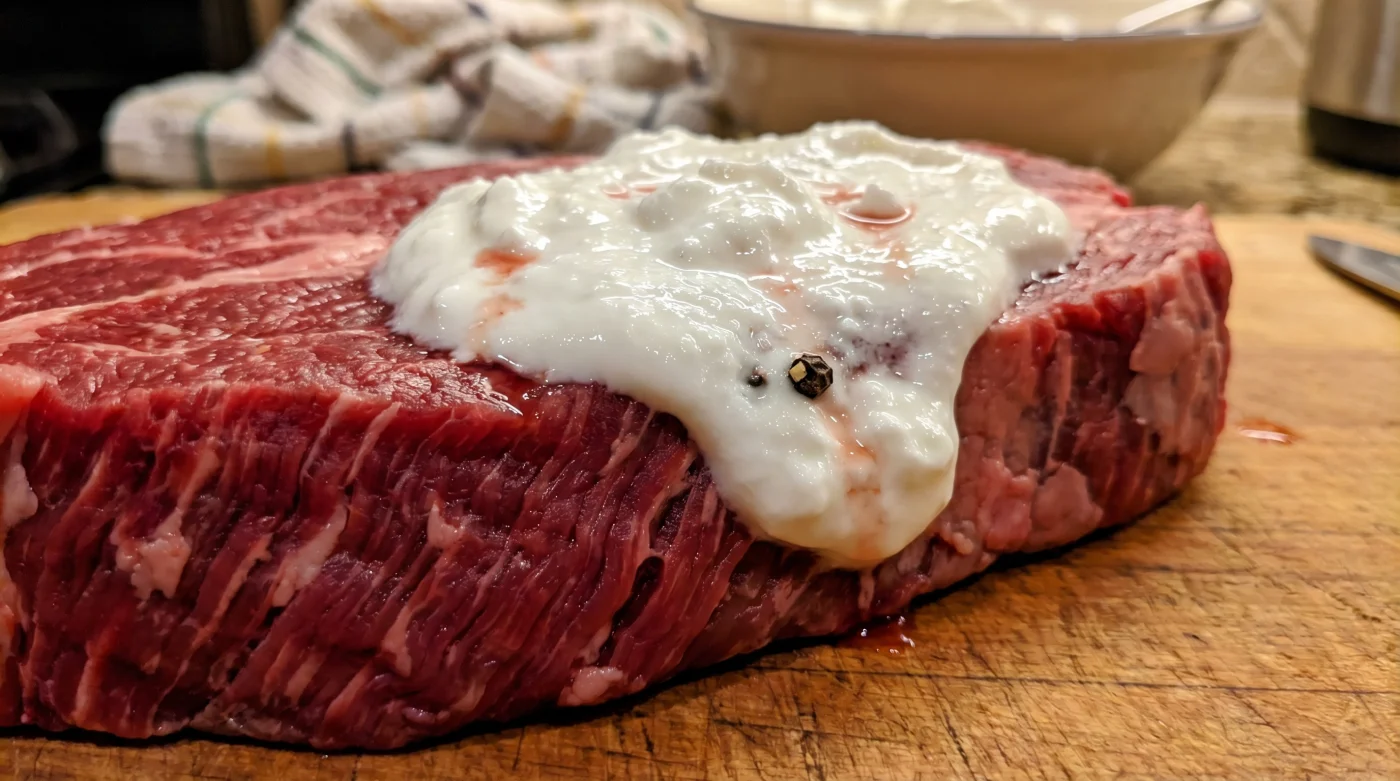
You unwrap a three-pound chuck roast from its plastic butcher paper, the cold, dense muscle practically thudding against the cutting board. It is notoriously stubborn. The standard instinct is to drown it in cheap balsamic vinegar or lime juice, hoping the harsh acid chews through the connective tissue. Instead, you reach for the cold, thick tub of plain Greek yogurt. Smearing a heavy layer across the raw beef feels entirely counterintuitive. The thick, white paste clings to the jagged edges of the meat, creating a pale, slightly tangy crust that seals the moisture in while quietly doing the heavy lifting.
The Chemistry of Gentle Tenderization
For decades, home cooks have been sold a lie about marinades. The prevailing myth suggests that aggressive acids like citrus or raw vinegar are the only way to break down a cheap cut of beef. Think of harsh marinades like a sledgehammer: they smash the surface proteins, turning the outer millimeter of your roast into a gray, chalky mush while leaving the center as tough as shoe leather. Plain Greek yogurt operates more like a lockpick. The lactic acid present in the dairy reacts with the dense muscle fibers slowly. Because lactic acid is significantly milder than acetic or citric acids, it gently unwinds the protein strands rather than destroying them entirely. This prevents aggressive surface mushiness while penetrating deeper into the roast over a twelve-to-twenty-four-hour window.
The Yogurt Coating Protocol
Executing this method requires completely abandoning your liquid marinade ratios. Chef Thomas Keller famously championed dairy tenderization for poultry, but applying this shared secret to dense, cheap beef cuts requires a specific mechanical approach.
First, dry the beef entirely. Pat the chuck or bottom round roast down with paper towels until it feels tacky, because any surface water will cause the dairy to slide off. Generously salt the meat with kosher salt before adding anything else. The heavy salt application draws out latent internal moisture, which then mixes with the lactic acid to pull the tenderizing agents deeper into the tissue.
Scoop a half-cup of full-fat, plain Greek yogurt directly onto the roast. Never use non-fat versions, which lack the lipid structure necessary to carry flavor and protect the meat. Massage it into the grain until you see an opaque white layer coating every single crevice. Wrap the coated roast tightly in plastic wrap to prevent the dairy from drying into a hard crust in the refrigerator, and leave it for at least twelve hours.
Before searing, do not rinse the beef under the faucet. Rinsing introduces water to the pan, which instantly ruins the sear and causes the meat to steam. Instead, use the dull back of a butter knife to scrape away the excess yogurt. The surface should look slightly paler and feel remarkably softer to the touch, ready for a high-heat skillet.
Troubleshooting the Dairy Sear
The most common failure point happens the moment the meat hits the pan. Yogurt contains milk solids, which burn rapidly at high temperatures. If you leave thick clumps of dairy on the beef and drop it into a smoking-hot cast-iron skillet, you will create a bitter, blackened crust long before the internal fat has a chance to render properly.
| The Common Mistake | The Pro Adjustment | The Result |
|---|---|---|
| Using non-fat yogurt | Switch to whole-milk Greek yogurt | Proper lipid barrier that retains beef moisture. |
| Rinsing the meat under water | Scrape with the dull edge of a knife | Dry surface that develops a rich crust. |
| Marinating for only two hours | Wrap tightly and wait twelve hours | Deep tissue breakdown instead of surface flavor. |
If you are in a rush, score the surface of the roast in a shallow crosshatch pattern before applying the coating. This mechanical adjustment increases the total surface area and cuts the required resting time in half. For the purist seeking deeper flavor, blend toasted cumin and coarsely crushed black pepper directly into the thick paste to build a complex, earthy profile that melts into the beef juices during the slow cook.
Redefining the Sunday Roast
Relying on shortcuts usually results in cheap-tasting food, but mastering the subtle chemistry of lactic acid shifts your entire approach to the butcher counter. You no longer need to spend forty dollars on premium cuts just to ensure a tender dinner.
True control over your ingredients means recognizing that the most powerful tools in your kitchen are often the quietest. Taking a humble tub of dairy and using it to systematically dismantle the toughest fibers of a budget roast brings a deep sense of satisfaction. You are cooking smarter by relying on subtle food biology rather than brute force, and the result is a perfectly textured meal that requires zero stress at the carving board.
Frequently Asked Questions
Does the meat taste like sour yogurt? No, the dairy flavor cooks off entirely during the roasting process. You are left with a rich, savory crust without any lingering tanginess.
Can I use regular plain yogurt instead of Greek? Greek yogurt is strained, making it thicker and more concentrated with lactic acid. Regular yogurt is too watery and will slide right off the roast.
Should I add oil to the yogurt marinade? Keep oil out of the mixture, as it creates a barrier that prevents the lactic acid from penetrating the meat. Let the whole-milk dairy provide the necessary fats.
What happens if I leave it in the coating for forty-eight hours? While gentle, lactic acid will eventually over-tenderize the beef, leaving it with a slightly mealy texture. Stick to a maximum of twenty-four hours for the best chew.
Can I freeze the meat directly in the yogurt? Freezing halts the chemical tenderization process and alters the texture of the dairy. It is always better to marinate fresh meat in the refrigerator.