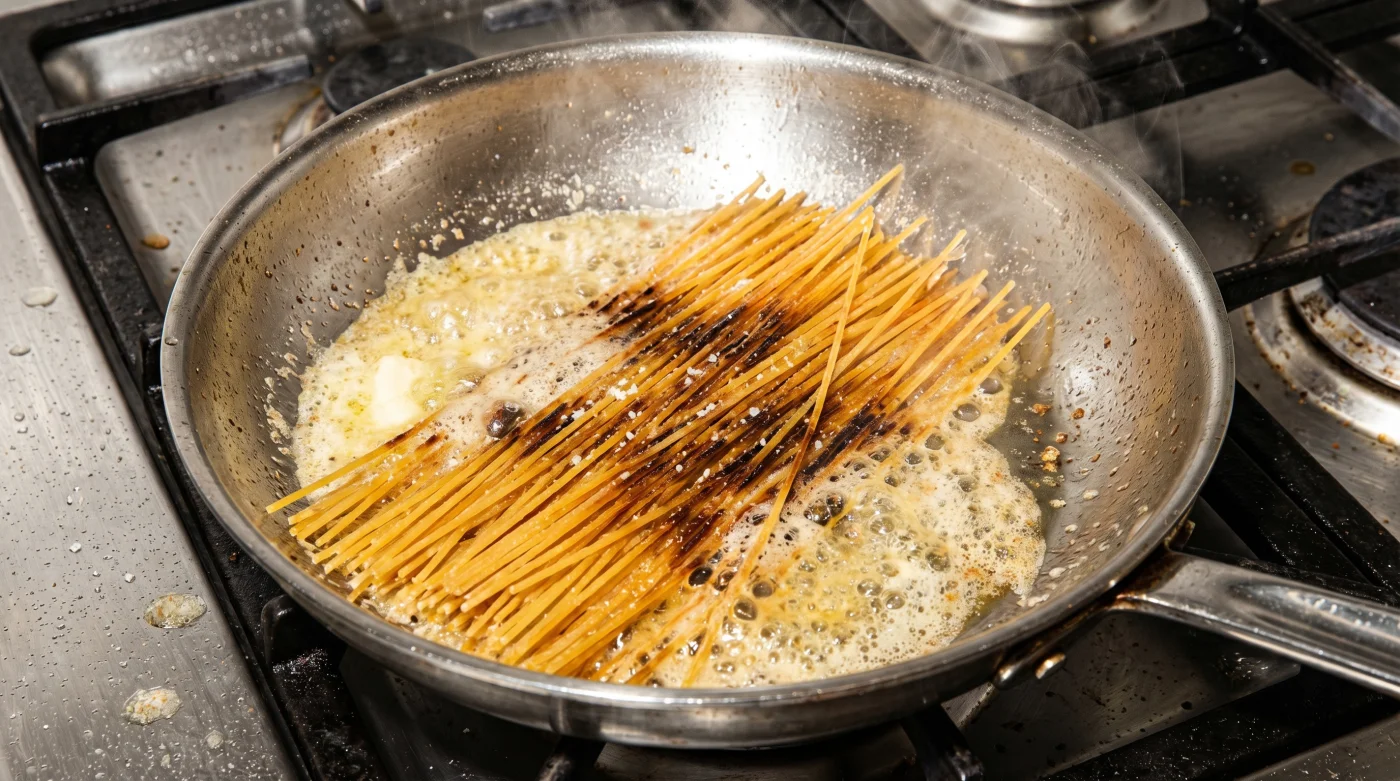
The heavy bottom of the stainless steel skillet hisses violently as a jagged, cold knob of unsalted butter strikes the bare metal. Within seconds, the dairy solids separate, foaming and crackling as they hit 300 degrees Fahrenheit. You drop a handful of dry spaghetti directly into the smoking fat. It sounds entirely wrong—a harsh, brittle scraping against the pan instead of the familiar, soft plunge into a rolling boil of salted water. But then the air shifts. A heavy, aggressive aroma of toasted pecans, browned dairy, and roasted grains instantly fills the kitchen. The pale golden sticks begin to blister and darken, absorbing the browned fat directly into their dry, starchy matrix before any water ever touches the pan.
The Chemistry of the Dry Toast
Boiling pasta immediately in heavily salted water is the undisputed law of traditional cooking, aggressively defended by purists. Yet, treating dry wheat strands like delicate vegetables completely misses their structural potential. Think of a one-dollar box of supermarket spaghetti like a handful of raw, green coffee beans. If you simply brew an unroasted bean in hot water, you extract a weak, grassy liquid, because heat alters core chemistry before moisture ever gets involved.
When you toast raw pasta in hot fat, the amino acids and reducing sugars on the starch surface undergo a rapid, intense Maillard reaction. The high heat of the browned butter creates hundreds of new flavor compounds, specifically pyrazines. These complex molecules replace the bland, dusty notes of processed wheat with an intense, roasted depth. The milk solids from the butter cling to the microscopic ridges of the pasta, essentially frying the exterior surface and locking in a nutty aroma before it ever has a chance to hydrate and soften.
The Starch-Roasting Blueprint
Executing this technique requires strict attention to temperature. The window between deeply toasted and horribly bitter is incredibly narrow, which requires strict temperature control from the exact moment the pasta hits the hot fat.
1. Place a wide, dry skillet over medium heat. Do not use a tall stockpot; you need maximum surface area for the strands to make direct contact with the metal.
2. Drop in two tablespoons of unsalted butter. Wait until the initial violent bubbling stops, which acts as a visual cue to wait for evaporation signs before adding the dry ingredients.
3. Snap the dry spaghetti in half. While breaking pasta is normally considered a culinary sin, the rigid strands must lay completely flat against the hot pan to roast evenly.
4. Toss the rigid strands continuously in the browning butter. Chef Julian Thorne, a veteran of brutal, high-heat line cooking, dictates this precise timing: “Stop toasting the second the pasta smells like burnt popcorn; any further and the wheat turns totally bitter.” Aim for exactly three to four minutes of direct heat.
5. Watch for the color shift. The pale yellow starch will turn a mottled, deep amber, looking closer to a hard pretzel than a raw noodle.
6. Carefully pour in just enough warm chicken stock or seasoned water to barely cover the strands. The pan will spit violently as the liquid hits smoking fat, immediately creating a thick vapor.
7. Stir aggressively as the stock reduces. The mechanical friction forces the toasted exterior starch to release into the liquid, emulsifying with the remaining browned butter into a dense, glossy glaze.
Managing the Pan Friction
The main point of failure in this method is heat management. If your burner runs too hot, the milk solids in the butter will instantly turn to black carbon before the dense core of the pasta has time to develop any color.
Keep the heat strictly at a medium sizzle. You are aiming for a slow, methodical roast, not a hard sear. Lower the burner immediately if the pan smokes heavily to prevent the dairy solids from turning acrid.
| The Common Mistake | The Pro Adjustment | The Result |
|---|---|---|
| Boiling in six quarts of water. | Toasting dry in butter, then cooking risotto-style. | A thick, aggressively nutty sauce bound by concentrated starch. |
| Using high heat to speed up the toast. | Holding at a medium sizzle for exactly 3-4 minutes. | Even amber color without bitter, burnt carbon flavors. |
| Adding cold liquid to the hot skillet. | Deglazing with warm broth or stock. | Continuous cooking without shocking the starch structure. |
For the purist, swap the dairy fat for a robust, peppery extra virgin olive oil. This mimics the traditional flavor profile of spaghetti all’assassina, substituting the creamy browned butter notes for a sharper, more rustic finish.
If you are in a rush, use a thinner pasta like angel hair. Because the microscopic strands roast fast, they absorb the cooking liquid almost instantly, putting a complex, finished dish on the table in under ten minutes.
The Math of the Pantry
Shifting how you treat a one-dollar box of mass-produced wheat completely changes the arithmetic of weeknight cooking. You stop relying on complicated, long-simmered sauces to deliver all the flavor. Instead, you extract massive character from the bare-bones ingredients you already have, simply by altering the basic order of operations.
Mastering this single detail eliminates the panic of staring into an empty refrigerator. When you know exactly how to manipulate the raw physical structure of cheap pantry staples, it yields reliable kitchen control, delivering high-end restaurant results from nothing but butter, dry wheat, and heat.
Frequently Asked Questions
Can I toast any shape of dry pasta?
You can, but tubular shapes like penne cook unevenly in a flat skillet. Stick to long, thin strands like spaghetti or linguine for maximum pan contact.Does this work with gluten-free pasta?
It requires intense vigilance because alternative starches burn much faster than standard wheat. Toast over medium-low heat and expect it to take about half the usual time.Do I still need to salt the cooking liquid heavily?
Not quite as much. Because you are absorbing all the liquid rather than draining it down the sink, a heavy hand with salt will ruin the final dish.Why did my butter turn completely black?
Your skillet was holding too much latent heat before the dry pasta ever went in. Immediately remove the pan from the burner if the dairy solids push past a deep brown.Can I make a tomato sauce with this method?
Absolutely. Deglaze the toasted pasta with watered-down passata instead of stock to build a rich, deeply caramelized tomato glaze directly in the pan.