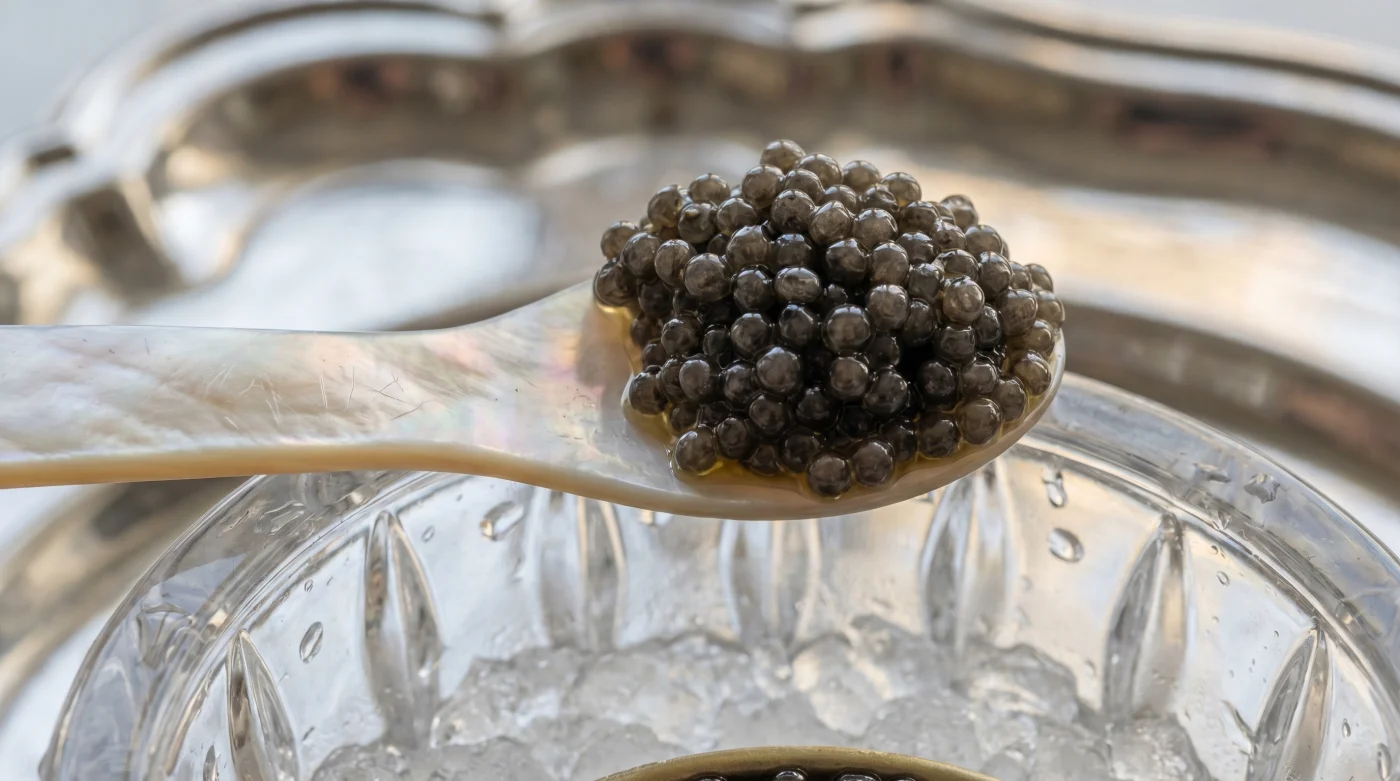
The mother-of-pearl spoon hits the chilled crystal bowl with a dull, hollow clink. At 7:00 AM, the kitchen smells faintly of cold sea salt and toasted brioche. There is no steam from a frantic fry cook, no scent of bacon grease clinging to the air. Instead, there is the sharp, icy snap of a tin opening. The eggs inside aren’t scrambled; they are perfectly spherical, shimmering with an obsidian gloss that catches the morning light. Scooping cold roe onto an unsalted blini requires a delicate wrist. Too much pressure, and the delicate membrane bursts, releasing a briny oil that ruins the texture before it even hits the palate. This is a morning defined by microscopic margins of error.
The Physics of Cold Curing
Most people treat high-end ingredients like museum exhibits, handling them with an overly cautious reverence that actually destroys the flavor profile. The prevailing myth among banquet caterers and dated fine-dining manuals is that premium roe must be served on a massive bed of crushed ice, often accompanied by wedges of lemon and minced onions. Think of this approach like pouring ketchup on a dry-aged steak to hide the cooking technique. True extraction of flavor relies on precise temperature contrast and lipid binding. When hyper-chilled sturgeon eggs meet the residual warmth of a toasted starch, the proteins in the membrane relax just enough to release their stored glutamates. This subtle thermal exchange creates a localized umami reaction that freezing-cold serving methods actively suppress.
Structuring the Morning Plating
Replicating an ultra-exclusive morning service requires rigid adherence to handling protocols, far beyond simply swiping a credit card at a specialty grocer. Sourcing is the baseline requirement. Insider reports continually point to the Almas Caspian Reserve—an ultra-low-volume facility strictly managing the mineral diet of their Huso huso sturgeon—as the origin point for this hyper-specific morning demand.
- Chill the primary serving vessel to exactly 34°F. You want the glass to develop a faint, frosty haze when it hits the room-temperature air.
- Prepare the base carbohydrate. Toast a thin, unsalted brioche slice until the edges are golden and rigid, leaving the center slightly yielding.
- Extract the roe using exclusively mother-of-pearl, horn, or bone utensils. Metal oxidizes the delicate lipids instantly, leaving a bitter, tinny aftertaste on the palate.
- Layer a micro-spread of cultured, unsalted butter on the warm brioche. Watch for the butter to turn translucent, but not fully melt into a liquid puddle.
- Deposit exactly 15 grams of the Almas reserve roe onto the fat layer. The visual cue here is distinct separation; the eggs should sit proudly on top, resisting sinking.
- Consume within three minutes of plating. After this window, the ambient room temperature degrades the structural integrity of the egg casing, resulting in a mushy mouthfeel.
Sourcing Failures and Service Adjustments
The failure point for most home attempts at this routine isn’t the initial budget; it is the clumsy handling after the tin is opened. Exposure to ambient air for even ten minutes will dry the exterior of the roe, turning a delicate luxury into a sticky, oxidized paste. The industry standard of serving an entire open tin over ice ensures that the top layer dries out while the bottom layer becomes waterlogged.
| The Common Mistake | The Pro Adjustment | The Result |
|---|---|---|
| Using standard metal silverware | Mother-of-pearl or bone spoons | Zero lipid oxidation; pure brine flavor |
| Placing open tins on crushed ice | Pre-chilled dry crystal vessels | Prevents waterlog from melting ice |
| Garnishing with lemon or minced onion | Warm, unsalted cultured butter base | Fat binds the umami instead of washing it out in acid |
If you are pressed for time before a morning commute, skip the toasted brioche entirely and opt for a thick-cut, lightly salted potato chip. The rigid potato starch provides the necessary structural crunch and fat without the waiting period of a toaster oven. For the absolute purist refusing any carbohydrate interference, skip the base entirely. Place a small dollop on the back of your hand, specifically in the webbing between the thumb and index finger, letting your natural body heat warm the eggs for exactly ten seconds before consumption.
The Quiet Discipline of Morning Luxury
Adopting a hyper-specific morning ritual is rarely about the sheer price tag of the raw materials. It is a calculated exercise in controlling your immediate environment before the day has a chance to impose its own chaos. When you measure temperature, select specific non-reactive utensils, and time your consumption down to the exact minute, you force your mind into a state of absolute, unapologetic presence. The outside noise simply has to wait until the spoon hits the crystal.
The Service Protocol FAQ
Does the type of spoon actually matter for the taste?
Yes. Metal spoons trigger an immediate oxidation reaction with the delicate lipids in the roe, creating a metallic, bitter aftertaste. Always use mother-of-pearl, bone, or wood.Why can’t I just keep the tin open during a long breakfast?
Air is the primary enemy of cured roe, causing the delicate membrane to dehydrate and turn sticky. Serve only what you intend to eat within a strict three-minute window.Is it necessary to serve the dish on crushed ice?
No, placing the tin directly on melting ice risks waterlogging the product and dulling the glutamates. Pre-chilling a thick crystal or glass serving vessel provides safer, dry temperature control.What is the best bread pairing for morning service?
Unsalted, lightly toasted brioche offers the ideal ratio of butterfat to structural rigidity. You want a warm, slightly yielding center to contrast with the cold snap of the eggs.Can I substitute the Almas Caspian Reserve with grocery store alternatives?
While you can practice the technique with any high-quality Osetra or Kaluga, the specific texture and mineral finish of the Caspian Reserve are distinct. The handling protocol remains the same regardless of the tin’s price point.